Page 6 - Sciencell Research Team

-
- May 14, 2025
In cellular and molecular research, the quality and reliability of your reagents are paramount to achieving reproducible and meaningful results. ScienCell offers a selection of high-quality
cell culture reagents designed to support critical steps in your experimental workflows!
-
- May 14, 2025
Building and maintaining consistent 3D spheroid models can traditionally involve long and complex workflows sometimes described as tedious and rate limiting.
Our featured ready-to-use 3D spheroid kits address this challenge. These innovative products allow researchers to obtain highly homogenous and
-
- May 12, 2025
Achieving physiologically relevant in vitro models is paramount for groundbreaking research. The extracellular matrix (ECM) plays a critical role in cell behavior, influencing everything from adhesion and spreading to growth and differentiation.
To provide your cells with the optimal environment,
-
- May 11, 2025
ScienCell’s trusted GoldNStart TaqGreen qPCR Master Mix just got even better. Our latest upgrade features an integrated 2-color tracking system designed to make your qPCR workflow faster, easier, and more accurate—without sacrificing any of the reliability you know and trust.
-
- May 08, 2025
As the demand for advanced models in regenerative medicine and hair restoration therapies grows, so does the need for reliable, physiologically relevant primary cells.
ScienCell Research Laboratories offers a suite of human hair follicle cell types to empower your research — each isolated from human
-
- May 06, 2025
ScienCell Research Laboratories offers over 5,400 individual primer sets for human and mouse gene expression analysis, plus our GeneQuery™ qPCR Array Kits for high-throughput studies. Each lyophilized primer set is pre-validated and provides enough material for 100 x 20µL qPCR reactions—perfect for
-
- May 04, 2025
NK Cells
NK cells are a type of cytotoxic lymphocyte that plays a critical role in the innate immune system’s defense against infected and cancerous cells. Unlike T cells, which are part of the adaptive immune response, NK cells do not require prior activation to kill their targets. Instead, they can
-
- May 01, 2025
ScienCell Research Laboratories offers a robust foundation for skeletal muscle research with our high-purity Human Skeletal Muscle Cells (HSkMC, Cat. #3500). These cells are isolated from adult human skeletal muscle and cryopreserved at passage one to ensure optimal viability and physiological relevance. -
- April 30, 2025
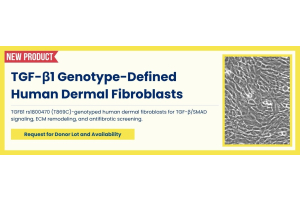
Dermal fibroblasts, derived from the embryonic mesoderm are fundamental components of the skin's dermis layer. Their versatility and ease of culture make them extensively used in cellular and molecular studies. Due to their durability, they are also suitable for a variety of manipulations, such as gene
-
- April 08, 2025Hepatic stellate cells (HSCs) are essential to liver function, playing a central role in homeostasis, extracellular matrix maintenance, repair, and regeneration. ScienCell Research Laboratories provides high-quality primary human hepatic stellate cells (HHSteC) to support cutting-edge research into liver