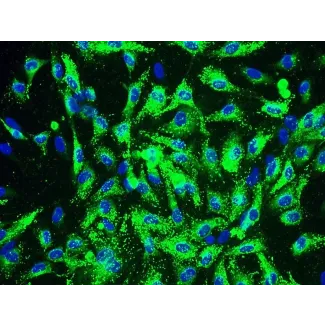
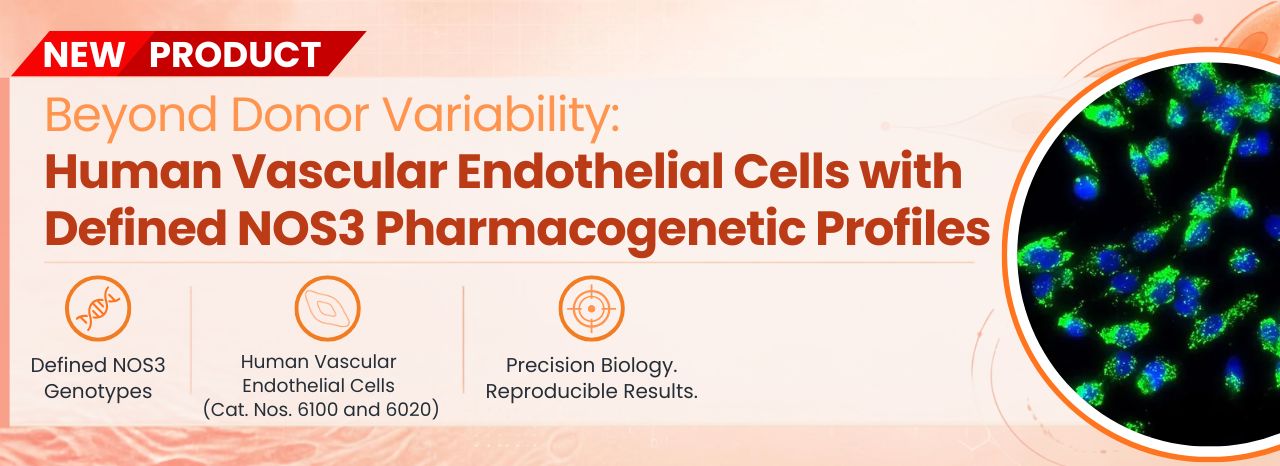
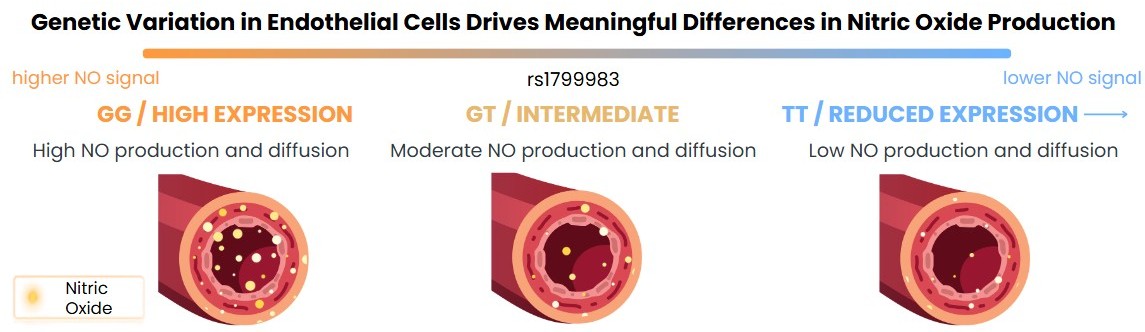
The NOS3 gene encodes endothelial nitric oxide synthase (eNOS), a key regulator of vascular tone, angiogenesis, inflammation, and endothelial barrier function. Naturally occurring NOS3 variants influence nitric oxide (NO) production and endothelial phenotype, making genetic background an important variable in cardiovascular research.
ScienCell now offers genotype-defined primary Human Aortic Endothelial Cells and Human Coronary Artery Endothelial Cells with verified NOS3 rs1799983 (T>A,G) (Glu298Asp) and NOS3 rs2070744 (C>G,T) genotypes. These authenticated cells enable direct genotype–phenotype studies without the need for in-house donor screening, providing a physiologically relevant model for cardiovascular research, pharmacogenomics, and precision medicine.
Why NOS3/eNOS Matters in Endothelial Biology
Endothelial nitric oxide synthase regulates critical vascular functions:
- Vascular tone & relaxation
- Angiogenesis
- Endothelial migration
- Platelet function
- Inflammation control
- Oxidative stress balance

| Cell Type | NOS3 rs1799983 (T>A,G) (Glu298Asp) | NOS3 rs2070744 (C>G,T) |
|---|---|---|
| Human Coronary Artery Endothelial Cells (Cat. No. 6020) |
✅ GG (Wild Type)
✅ GT (Heterozygous)
✅ TT (Homozygous Variant)
|
✅ TT (Wild Type)
✅ CT (Heterozygous)
|
| Human Aortic Endothelial Cells (Cat. No. 6100) |
✅ GG (Wild Type)
✅ TT (Homozygous Variant)
|
✅ TT (Wild Type)
✅ CT (Heterozygous)
✅ CC (Homozygous Variant)
|
Product Advantages
Natural donor genetic background
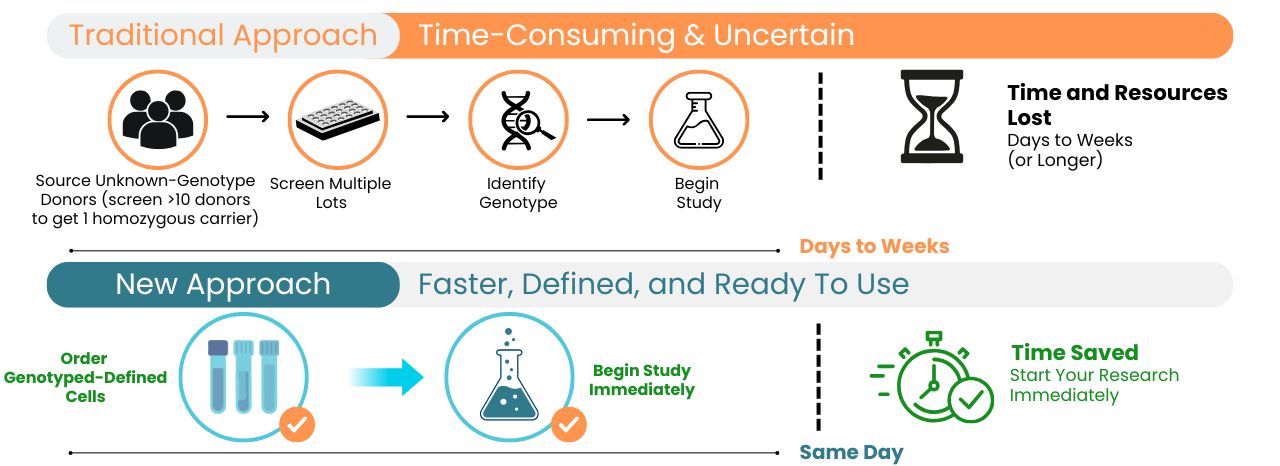
No donor screening needed
Certificate of Analysis included
Begin immediately
Why Genotype-Defined Cells?
Research Applications
Endothelial dysfunction, hypertension, atherosclerosis
Drug response variability, stratification
eNOS signaling, vascular homeostasis
Genotype-dependent efficacy testing
RNA-seq, proteomics, pathway analysis
NO production, migration, barrier function


Need technical assistance? We’re here to help.
Kindly send us a message