Skip RNA Extraction. Go Directly to RT-qPCR
RNA extraction remains one of the most time-consuming and loss-prone steps in RT-qPCR workflows. Column-based purification adds multiple handling steps, increases the risk of sample loss and RNA degradation, and adds reagent and plasticware costs. For laboratories performing gene expression analysis at scale, these inefficiencies can quickly add up.
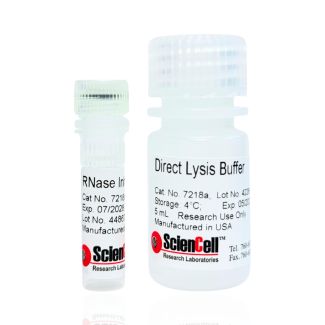
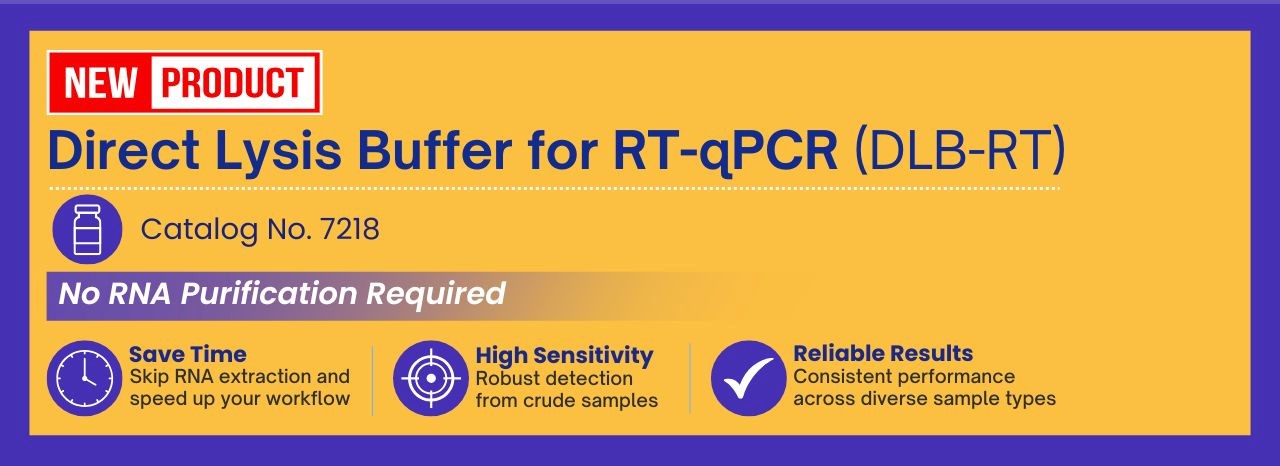
ScienCell’s Direct Lysis Buffer for RT-qPCR (DLB-RT, Cat. No. 7218) eliminates the need for RNA extraction by enabling direct lysis of cultured mammalian cells and allowing the resulting lysate to proceed directly into cDNA synthesis in a streamlined workflow.
What Is DLB-RT and How Does It Work?
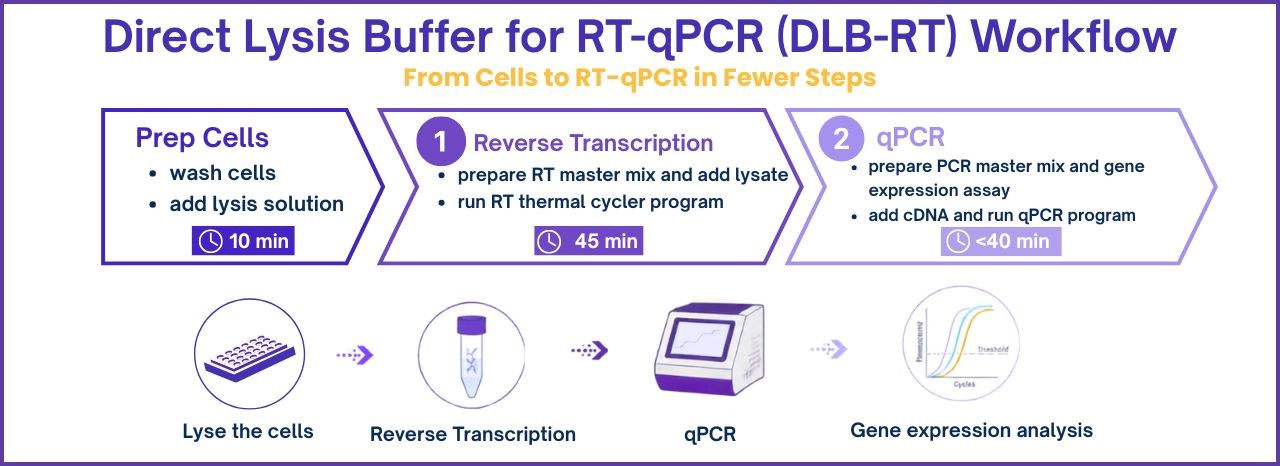
DLB-RT is a ready-to-use lysis buffer designed to lyse adherent and suspension mammalian cells directly in the culture vessel, releasing total RNA in a form compatible with reverse transcription and qPCR amplification. The workflow from cell lysis to an RT-qPCR-ready lysate can be completed in under 15 minutes.
Compatible with 100 to 50,000 cells per reaction and validated with standard commercial reverse transcriptase enzymes, DLB-RT integrates into both one-step and two-step RT-qPCR workflows without the need for RNA purification.
Why Switch to Direct Lysis?
- No RNA extraction — eliminate column-based purification and multiple transfer steps
- Faster sample preparation — go from cells to RT-qPCR-ready lysate in under 15 minutes
- Low-input compatible — supports 100–50,000 cells per reaction
- Less sample handling — reduce opportunities for sample loss and RNA degradation
- RNase inhibitor included — RNase Inhibitor (Cat. No. 7218b) helps protect RNA integrity from the moment of cell lysis through reverse transcription
- Lower per-reaction cost — reduce reagent and plasticware use, with less than $1 per reaction
- Workflow flexibility — compatible with both one-step and two-step RT-qPCR workflows
- Broad cell compatibility — suitable for adherent and suspension mammalian cells
From Cells to RT-qPCR—Without the Extraction Step
Simplify your workflow, reduce hands-on time, and lower per-reaction costs without adding an RNA purification step.