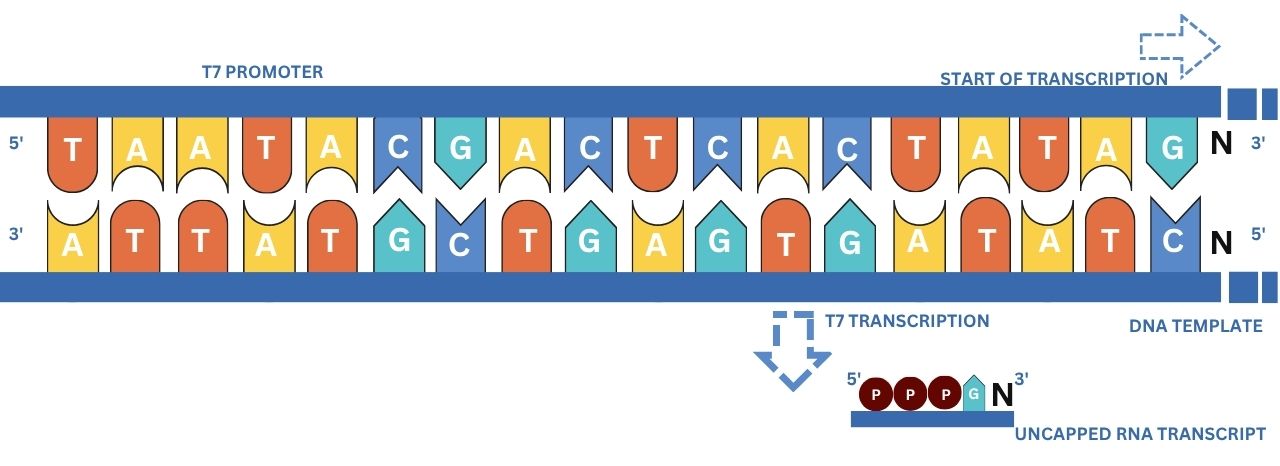
Reliable, high-yield RNA synthesis should support your research — not slow it down. In vitro transcription (IVT) remains one of the most widely used approaches for cell-free RNA synthesis, enabling rapid generation of RNA from DNA templates using the high specificity and processivity of T7 RNA polymerase. However, obtaining consistent, high-quality RNA often depends on carefully optimized reaction conditions, enzyme quality, and buffer composition.
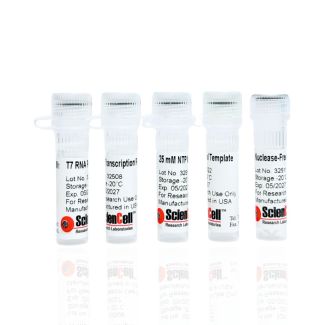
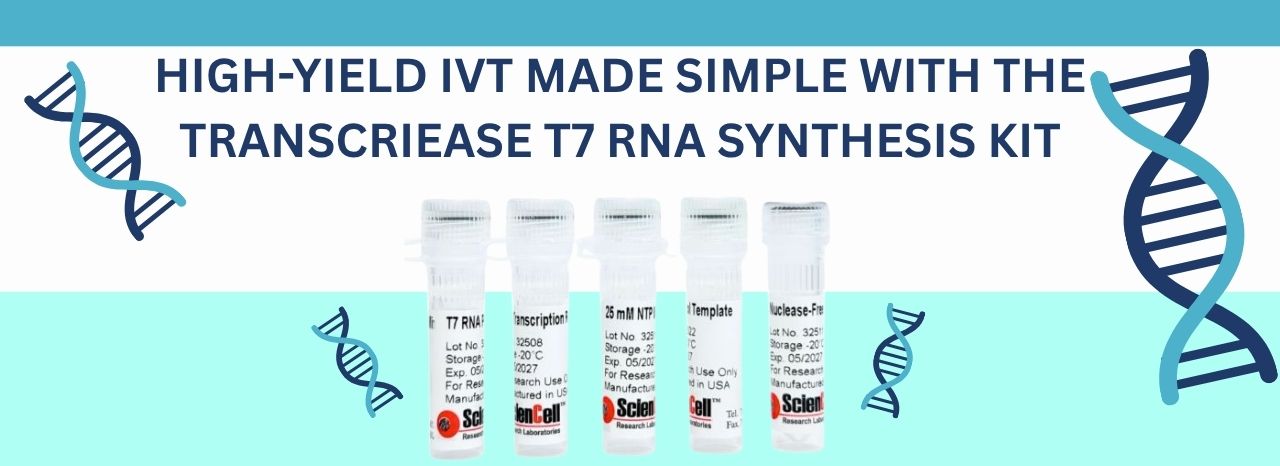
To simplify this workflow, we developed the TranscriEase T7 RNA Synthesis Kit — a streamlined IVT system designed to deliver robust RNA synthesis with minimal optimization.
Key features of the TranscriEase T7 RNA Synthesis Kit:
- Highly pure, DNase-free T7 RNA polymerase
- Optimized enzyme system designed to minimize unwanted byproducts
- High-yield RNA production — up to 50 µg RNA from 1 µg template DNA
- Convenient premixed reaction components for rapid setup
- Compatible with both standard and modified nucleotides
Designed for broad IVT applications
By combining optimized reaction chemistry with a simplified workflow, TranscriEase enables reliable production of high-integrity RNA suitable for demanding downstream applications.
The TranscriEase T7 RNA Synthesis Kit supports a wide range of RNA synthesis workflows, including:
- In vitro translation studies
- RNA probe generation
- Antisense RNA production
- RNA structure and interaction analysis
- General-purpose T7-driven RNA synthesis
Frequently Asked Questions About IVT:
Question-1: What are the common causes of low RNA yield?
Answer: Low RNA yield often stems from poor template quality. Incomplete DNA linearization, residual prep contaminants, or nicked and damaged templates can interfere with T7 RNA polymerase activity and compromise transcription efficiency. Always run a small amount on a gel to confirm it's 100% linearized and check its purity with a spectrophotometer.
Question-2: How do I stop the reaction and remove the DNA template?
Answer: After the incubation period, you need to degrade the DNA template so it does not interfere with your downstream applications. Add DNase I (RNase-free) to the reaction mixture, and incubate for 15 minutes at 37°C to remove DNA.
Question-3: How can I prevent RNA degradation?
Answer: Because RNA is highly vulnerable to RNase-mediated degradation, strict RNase-free handling is essential. Using nuclease-free water, tubes, and pipette tips, along with maintaining a clean workspace, is critical for preserving RNA integrity. Useful tips: 1) Use an RNase inhibitor: Adding an RNase inhibitor to the IVT reaction helps protect newly synthesized RNA from degradation and improves overall transcript stability. 2) Store RNA correctly: For long-term preservation, store purified RNA at −80 °C in nuclease-free water or a suitable RNase-free storage buffer.
Question-4: How can I make my mRNA more stable for cellular delivery?
Answer: For cellular delivery, mRNA stability depends on more than the transcript sequence alone. Incorporating a proper 5′ cap, optimized UTRs, and a poly(A) tail can protect the transcript from degradation and support efficient translation.
Modified nucleotides may further improve stability and reduce innate immune activation, while purification steps that remove dsRNA byproducts help improve cellular compatibility. Combined with RNase-free handling and an effective delivery system, these design elements can substantially enhance mRNA performance in cells.
Question-5: Do I need to add a Poly(A) tail?
Answer: A poly(A) tail is not required for every IVT application, but it is strongly recommended for transcripts intended for use in eukaryotic systems. Polyadenylation enhances RNA stability by protecting transcripts from cellular exonucleases and also improves translational efficiency within cells.
For applications focused on protein expression, inclusion of a poly(A) tail is generally essential for achieving robust expression levels. In contrast, applications such as RNA probe generation, in vitro biochemical assays, or certain structural studies may not require polyadenylated transcripts
For more specific inquiries or troubleshooting tips related to in vitro transcription, please contact our technical support to find answers to common questions about IVT or our products.