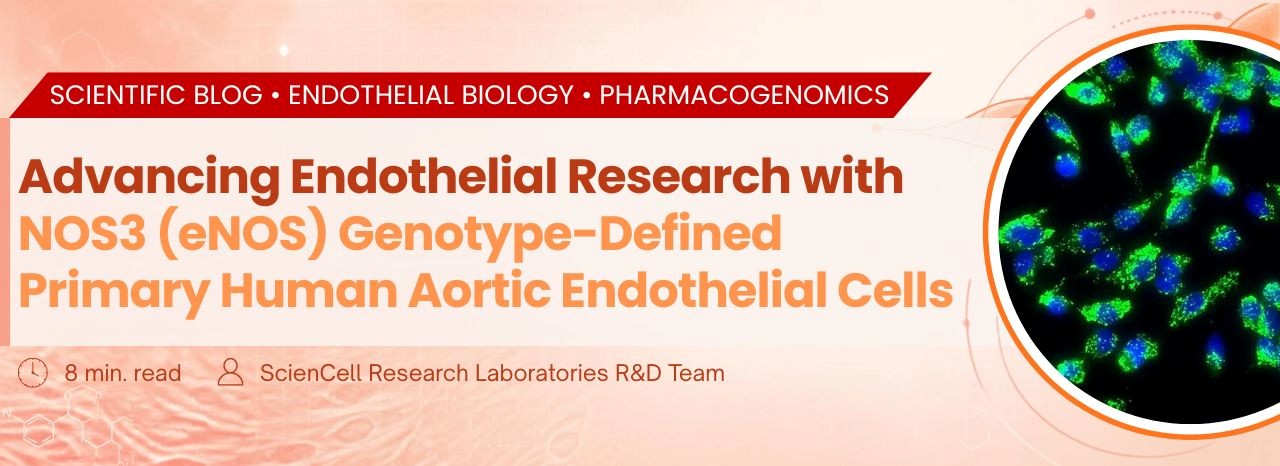
Understanding the Impact of Genetic Variation on Endothelial Cell Function
Endothelial dysfunction is a hallmark of cardiovascular disease and is closely associated with hypertension, diabetes, vascular aging, inflammation, and oxidative stress. Because endothelial nitric oxide synthase (eNOS), encoded by the NOS3 gene, plays a central role in vascular homeostasis, genetic variation in NOS3 may contribute to differences in endothelial function and vascular responses between individuals [1,2].
To support pharmacogenomic and vascular biology research, we are introducing our NOS3 (eNOS) Genotype-Defined Human Aortic Endothelial Cell Bundle. These primary human endothelial cells have verified NOS3 rs1799983 (GG or TT) genotypes, with donor genotype information also available for rs2070744 (-786T>C), enabling more consistent studies while reducing donor-to-donor genetic variability.

Why NOS3 (eNOS) Matters in Endothelial Biology
Nitric oxide (NO) produced by endothelial nitric oxide synthase is a major regulator of vascular homeostasis. Endothelial NO signaling contributes to vascular tone, angiogenesis, endothelial migration, vascular permeability, platelet regulation, and inflammatory responses.
eNOS activity is also influenced by physiological stimuli, including blood-flow-associated shear stress. Proper regulation of eNOS and NO production is essential for maintaining endothelial function, whereas impaired NO bioavailability and increased oxidative stress are important features of endothelial dysfunction. Because NO regulates multiple endothelial functions, impaired eNOS signaling has been implicated in cardiovascular disease, hypertension, metabolic disease, vascular inflammation, and vascular aging.
As a result, many endothelial cell-based assays—including angiogenesis, migration, permeability, oxidative stress, and inflammatory signaling—can reflect differences in eNOS-dependent biology [1,2].
Two Complementary NOS3 Variants
rs1799983 (Glu298Asp; G894T)
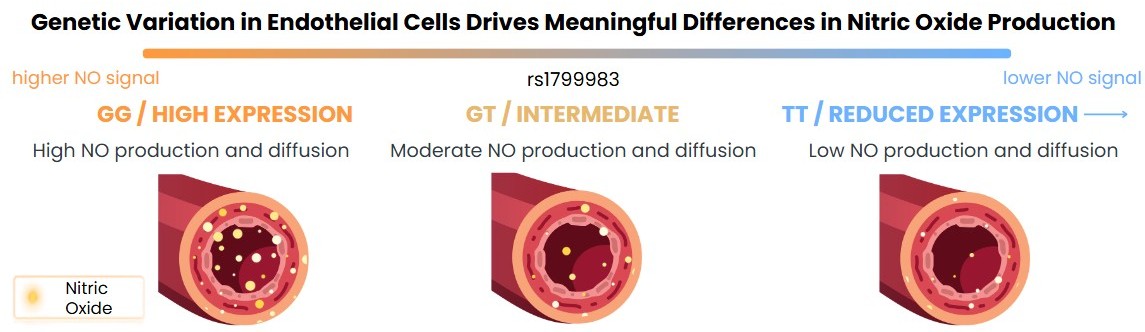
The NOS3 rs1799983 variant is located in exon 7 and results in a Glu298Asp amino acid substitution in the eNOS protein. Functional studies have associated this variant with altered eNOS activity and NO production [3,5].
A 2023 systematic review and meta-analysis that included 39 studies found an association between the NOS3 Glu298Asp polymorphism and acute coronary syndrome or premature coronary artery disease, with effects varying across ancestry groups [4]. Because eNOS-derived NO is involved in multiple aspects of endothelial function, differences associated with rs1799983 may be relevant to studies evaluating:
- Nitric oxide production
- Angiogenesis
- Endothelial migration
- Inflammation
- Oxidative stress
- Barrier function
- Pharmacological responses [1,3–5]
rs2070744 (-786T>C)
Unlike rs1799983, rs2070744 is located in the promoter region of the NOS3 gene and can influence NOS3 transcription. The C allele has been associated with reduced promoter activity, in part through increased binding of the transcriptional repressor RPA1, resulting in lower NOS3 expression and potentially reduced NO availability [3,5].
Recent studies continue to investigate the relationship between rs2070744 and endothelial function. A 2023 study evaluated NOS3 rs2070744 in relation to endothelial dysfunction and vascular phenotypes in hypertensive patients, demonstrating genotype-associated differences in carotid intima-media thickness and endothelial function markers [5]. Other studies have continued to examine the relationship between NOS3 polymorphisms and cardiovascular phenotypes [6].
Because basal eNOS expression contributes to endothelial migration, angiogenesis, inflammatory signaling, oxidative balance, and vascular homeostasis, NOS3 promoter variation may contribute to biological variability among endothelial cell donors [1,3,5].
Together: Two Complementary NOS3 Variants
The two variants affect complementary aspects of eNOS biology:
- rs1799983: protein structure and function
- rs2070744: NOS3 promoter activity and gene expression
Together, these variants provide useful genetic markers for investigating endothelial function, nitric oxide signaling, vascular inflammation, cardiovascular phenotypes, and genotype-dependent responses to experimental treatments [3–6].
Why Genotype Matters in Endothelial Cell Research
Primary endothelial cells from different donors are not biologically identical. Genetic background can contribute to differences in gene expression and cellular responses, while other factors—including culture conditions—can also substantially affect endothelial phenotypes.
Donor genetic background and culture conditions can influence the transcriptomic profiles and functional characteristics of primary endothelial cells [7]. These sources of variability can complicate comparison between experiments and interpretation of treatment-dependent effects.
When donor genotype is unknown, inherited genetic differences may therefore contribute to observed variation between experimental groups. Genotype-defined primary cells provide researchers with an opportunity to control or stratify this biological variable when studying genotype-dependent cellular responses.
The Challenge with Conventional Endothelial Models
Most endothelial studies rely on one of three experimental models:
- Primary endothelial cells from donors of unknown genotype
- Immortalized endothelial cell lines
- CRISPR-edited or iPSC-derived endothelial cells
Each model has advantages and limitations. Primary cells provide physiologically relevant human endothelial biology but may vary between donors. Immortalized cell lines provide experimental convenience and reproducibility but may not fully reproduce the characteristics of primary human endothelium.
CRISPR-edited and iPSC-derived endothelial models are powerful tools for investigating individual genetic variants under controlled conditions. However, naturally occurring primary endothelial cells retain the broader genetic background and biological characteristics of the original human donor.
Genotype-defined primary endothelial cells therefore provide a complementary model for studying naturally occurring human genetic variation while preserving the characteristics of primary human endothelium.
Many laboratories perform donor genotyping before experiments to identify the genetic background of their cell models. Providing genotype information with primary cells can simplify study design and reduce the need for additional donor screening.
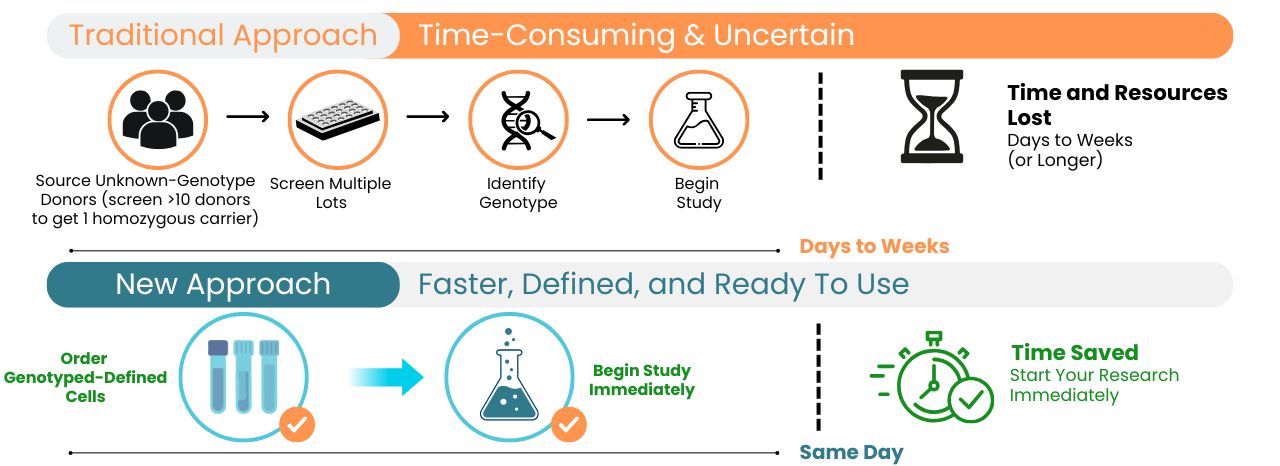
Introducing NOS3 Genotype-Defined Human Aortic Endothelial Cells
Our Human Aortic Endothelial Cells – NOS3 (eNOS) Pharmacogenetic Genotype Bundle addresses these challenges by providing authenticated primary endothelial cells with verified genotype information.
Available Genotypes
| Cell Type | NOS3 rs1799983 (G>T) / (Glu298Asp) | NOS3 rs2070744 (-786T>C) |
|---|---|---|
| Human Coronary Artery Endothelial Cells (Cat. No. 6020) |
✅ GG (Wild Type)
✅ GT (Heterozygous)
✅ TT (Homozygous Variant)
|
✅ TT (Wild Type)
✅ CT (Heterozygous)
|
| Human Aortic Endothelial Cells (Cat. No. 6100) |
✅ GG (Wild Type)
✅ TT (Homozygous Variant)
|
✅ TT (Wild Type)
✅ CT (Heterozygous)
✅ CC (Homozygous Variant)
|
Researchers can directly compare endothelial responses associated with NOS3 genotype while preserving the physiological characteristics of native human endothelium.
Why Primary Genotype-Defined Cells Matter
CRISPR-edited and iPSC-derived endothelial models are powerful approaches for studying individual genetic variants under controlled conditions. However, naturally occurring primary endothelial cells retain the complete donor genetic background and native biological characteristics that can influence cellular behavior.
Rather than replacing engineered models, genotype-defined primary cells provide a complementary experimental system for studying naturally occurring human variation. They are particularly useful when researchers want to investigate genotype-dependent responses while maintaining the broader biological context of primary human endothelial cells.
Research Applications
NOS3 genotype-defined endothelial cells support a wide range of applications, including:
- Cardiovascular Research — study endothelial dysfunction, hypertension, atherosclerosis, vascular inflammation, and vascular aging [1,2,4,6].
- Pharmacogenomics — investigate genotype-dependent responses to therapeutic compounds and support precision-medicine research.
- Nitric oxide biology — study eNOS signaling, NO production, vascular homeostasis, and mechanisms regulating endothelial function [1,2,3,5].
-
Functional assays — use genotype-defined cells for studies of:
- NO production
-
Oxidative stress
-
Inflammation
-
Angiogenesis
-
Cell migration
-
Permeability
-
Endothelial barrier function
-
Drug response
-
Multi-omics studies —combine genotype-defined primary endothelial cells with transcriptomics, proteomics, pathway analysis, and other multi-omics approaches to investigate how inherited genetic variation influences endothelial biology.
Looking Ahead
Precision medicine depends on experimental models that better reflect the genetic diversity present in human populations.
Incorporating genotype-defined primary endothelial cells into experimental design can help researchers distinguish genotype-associated biological variation from treatment-dependent effects and improve the interpretation of donor-to-donor differences [5–7].
As pharmacogenomic research advances, genetically characterized primary cells can serve as valuable complementary models for connecting naturally occurring human genetic variation with cellular phenotype and therapeutic response.
Conclusion
Understanding how naturally occurring genetic variation influences endothelial function is important for developing more predictive models of cardiovascular disease, vascular biology, and drug response [1,4,6].
Our NOS3 Genotype-Defined Human Aortic Endothelial Cells provide researchers with a practical model for studying the relationship between genotype, endothelial phenotype, nitric oxide signaling, and therapeutic response while preserving the biological characteristics of primary human cells.
Whether investigating nitric oxide signaling, vascular inflammation, endothelial dysfunction, angiogenesis, or precision medicine, genotype-defined endothelial cells provide a more informed approach to studying naturally occurring human genetic variation.
Explore the Products
The Human Aortic Endothelial Cells (Cat. No. 6100) and Human Coronary Artery Endothelial Cells (Cat. No. 6020) – NOS3 (eNOS) Pharmacogenetic Genotype Bundle are available with genotype-defined donor options.
For Human Aortic Endothelial Cells, GG and TT genotypes are available for rs1799983, with TT, CT, and CC genotype information available for rs2070744.
For Human Coronary Artery Endothelial Cells, GG, GT, and TT genotypes are available for rs1799983, with TT and CT genotype information available for rs2070744.
Kindly contact our technical support team to discuss the right genotype configuration for your study. We are here to help.
References:
[1] Förstermann U, Xia N, Li H. Roles of vascular oxidative stress and nitric oxide in the pathogenesis of atherosclerosis. Circulation Research. 2017;120(4):713–735. doi:10.1161/CIRCRESAHA.116.309326.
[2] Daiber A, Steven S, Weber A, Shuvaev VV, Muzykantov VR, Laher I, Li H, Lamas S, Münzel T. Targeting vascular (endothelial) dysfunction. British Journal of Pharmacology. 2017;174(12):1591–1619. doi:10.1111/bph.13517.
[3] Oliveira-Paula GH, Lacchini R, Tanus-Santos JE. Endothelial nitric oxide synthase: From biochemistry and gene structure to clinical implications of NOS3 polymorphisms. Gene. 2016;575(2):584–599. doi:10.1016/j.gene.2015.09.061.
[4] Rai H, Fitzgerald S, Coughlan JJ, Spence M, Colleran R, Joner M, Byrne RA. Glu298Asp variant of the endothelial nitric oxide synthase gene and acute coronary syndrome or premature coronary artery disease: A systematic review and meta-analysis. Nitric Oxide. 2023;138–139:85–95. doi:10.1016/j.niox.2023.07.001.
[5] Sydorchuk A, Sydorchuk L, Gutnitska A, Vasyuk V, Tkachuk O, Dzhuryak V, Myshkovskii Y, Kyfiak P, Sydorchuk R, Iftoda O. The role of NOS3 (rs2070744) and GNB3 (rs5443) genes' polymorphisms in endothelial dysfunction pathway and carotid intima-media thickness in hypertensive patients. General Physiology and Biophysics. 2023;42(2):179–190. doi:10.4149/gpb_2022060.
[6] Yi K, Wang W, Zhang X, Dong X, Fan Z, Ma Y, Gao J, Li X, You T. Association between NOS3 gene polymorphisms and genetic susceptibility to congenital heart disease: A systematic review and meta-analysis. Cytokine. 2024;173:156415. doi:10.1016/j.cyto.2023.156415.
[7] Orban PT, Aya-Ay R, Fuerst A, et al. Endothelial cell transcriptome heterogeneity depends on cell origin and is modulated by inflammatory activation. Arteriosclerosis, Thrombosis, and Vascular Biology. 2020;40(12):2915–2929. doi:10.1161/ATVBAHA.120.314987.