Visualizing Cellular Signals
Cells constantly sense and adapt to their environment. Nutrients, stress, and signaling molecules can switch genes on or off, and tracking these events is crucial for understanding cell behavior, disease mechanisms, and therapeutic responses. But how can we observe these molecular conversations in real time?
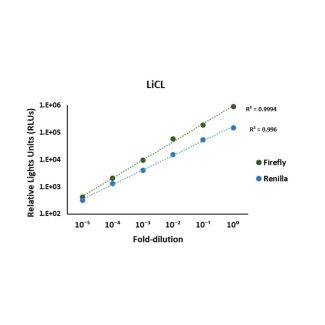
Dual-reporter vectors offer an elegant solution. By linking one luciferase enzyme to a promoter of interest and a second luciferase as an internal control, researchers can monitor multiple cellular signals simultaneously. This design enables precise, reproducible detection of gene activation in live cells.
Quick facts:
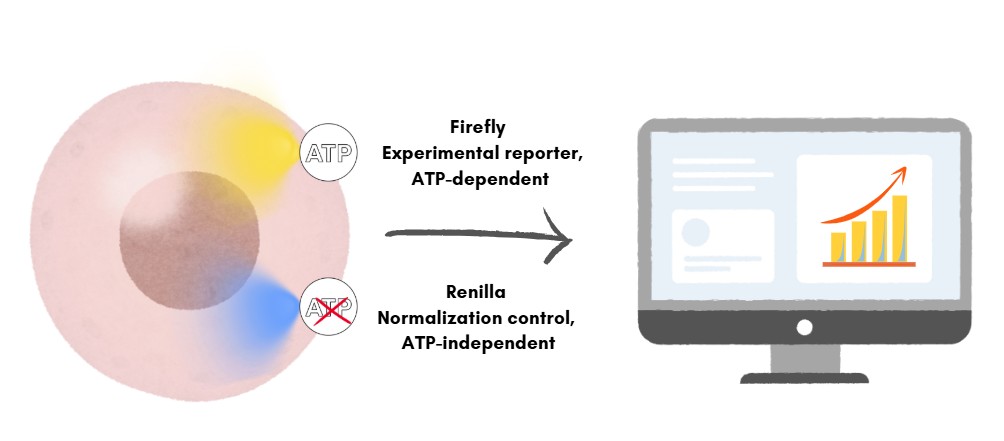
- Firefly luciferase produces yellow-green light (~560 nm) in an ATP-dependent reaction.
- Renilla luciferase emits blue light (~480 nm) independently of ATP.
The separation in emission spectra allows both signals to be quantified from the same sample, reducing cross-talk and improving accuracy.
From Fireflies to Functional Studies
Luciferase originated in nature—fireflies use it to generate bioluminescent flashes for communication. Scientists adapted this enzyme for molecular biology, placing it under the control of specific promoters to “report” gene activity. Dual-reporter vectors expand this approach by pairing a responsive Firefly luciferase with a Renilla internal control, allowing simultaneous pathway monitoring and normalization.
Here is a closer look at the available vectors:
- Wnt/TCF-LEF Reporter Vector
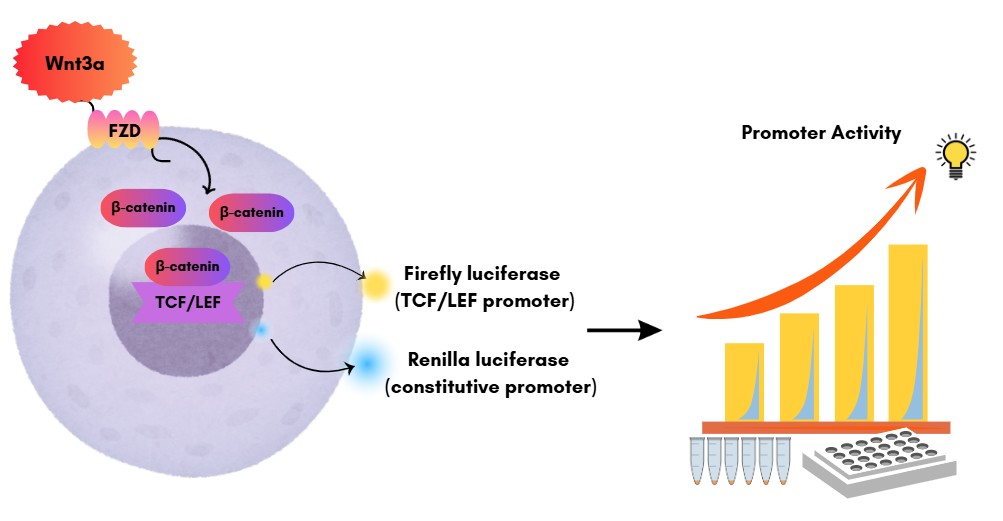
- Mechanism: Contains TCF/LEF responsive elements upstream of Firefly luciferase. When the canonical Wnt pathway is activated, β-catenin translocates into the nucleus, binds TCF/LEF transcription factors, and drives Firefly expression.
- Applications: Studying developmental biology, stem cell differentiation, and cancer-related Wnt activation.
- Example Experiment: Treat cells with Wnt ligands or pathway inhibitors and monitor Firefly luminescence as a readout of pathway activation, normalized to Renilla luminescence.
- NF-κB Reporter Vector
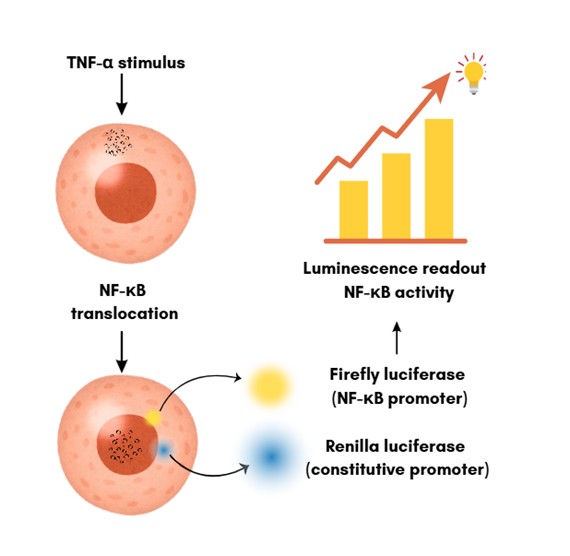
- Mechanism: Contains NF-κB binding elements upstream of Firefly luciferase. Upon stimulation (e.g., cytokines like TNF-α), NF-κB translocates into the nucleus and initiates transcription of the luciferase gene.
- Applications: Investigating inflammation, immune signaling, stress responses, or drug effects on NF-κB activity.
- Example Experiment: Expose cells to pro-inflammatory stimuli and measure Firefly luminescence over time to assess pathway dynamics.
- HRE/HIF-1 Reporter Vector
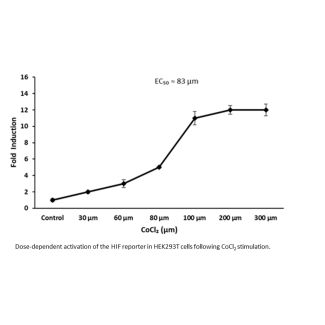
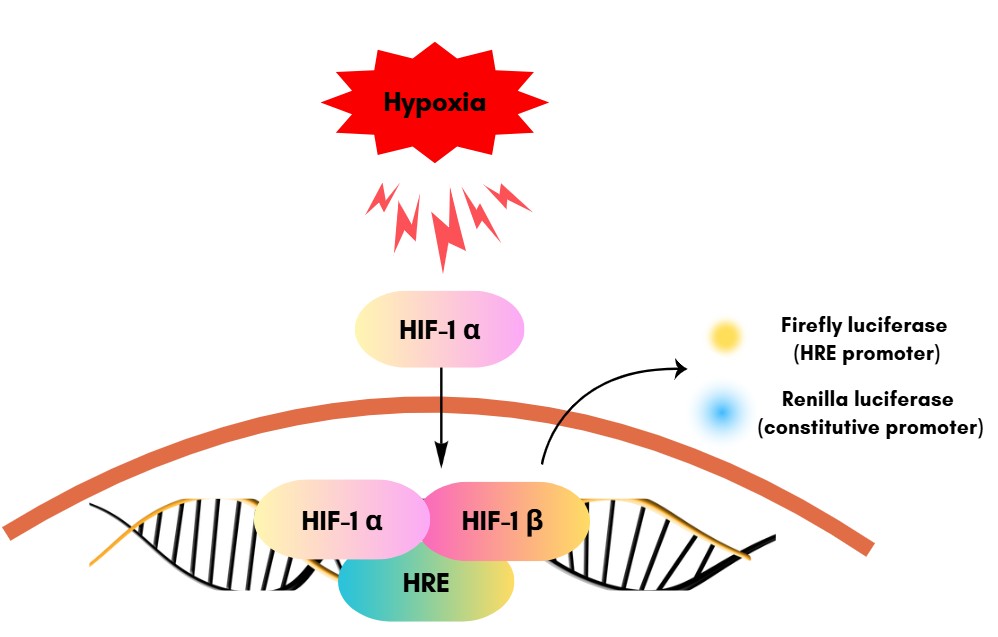
- Mechanism: Firefly luciferase is driven by hypoxia-responsive elements (HREs). Under low oxygen conditions, HIF-1α accumulates, dimerizes with HIF-1β, binds HREs, and activates transcription. Chemical mimetics like CoCl₂ can also stabilize HIF-1α to mimic hypoxia.
- Applications: Studying cellular adaptation to hypoxia, tumor biology, angiogenesis, or HIF-1-targeted therapies.
- Example Experiment: Culture cells under hypoxic conditions or treat with CoCl₂ and monitor Firefly luminescence to quantify HIF-1 activity.
By providing pathway-specific responsiveness, these vectors allow researchers to directly visualize cellular responses to environmental cues or drug treatments. The dual-reporter design ensures that variability in cell number or transfection efficiency does not skew results, yielding more accurate and reproducible measurements.
Why Dual-Reporter Systems Shine
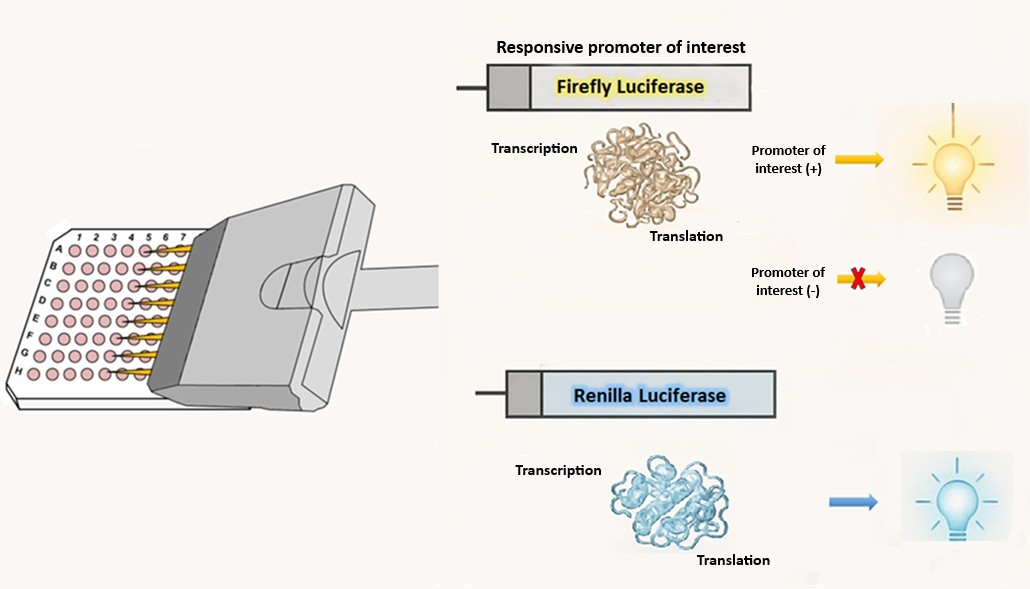
Single-reporter assays can provide useful data, but variability in transfection efficiency or cell density can impact results. Dual-reporter vectors overcome this challenge by pairing a primary experimental reporter with a normalization control:
- Measure Firefly luminescence to assess pathway-specific activation.
- Quench Firefly activity and measure Renilla luminescence from the same sample.
This sequential measurement reduces experimental noise, allows internal normalization, and ensures reliable comparison across different conditions.
ScienCell Dual-Reporter Vectors: Precision and Versatility
ScienCell’s dual-reporter vectors are engineered for consistent, reliable results across multiple signaling pathways. Key advantages include:
Accurate normalization to account for differences in transfection efficiency and cell number
High sensitivity to detect subtle transcriptional changes
Flexibility for use across Wnt/TCF-LEF, NF-κB, and HRE/HIF-1 pathways
Compatibility with high-throughput formats for efficient workflows
By minimizing variability and maximizing reproducibility, these vectors allow researchers to focus on interpreting pathway dynamics rather than troubleshooting experimental artifacts, providing a robust platform for discovery.
Illuminating the Path Forward
Dual-reporter vectors translate complex cellular signals into measurable light, offering precise, normalized readouts of transcriptional activity. They empower scientists to capture subtle changes with confidence, turning observation into actionable insight.
Whether exploring Wnt-driven proliferation, NF-κB-mediated stress responses, or HIF-1-controlled hypoxia adaptation, dual-reporter vectors provide a window into the molecular decisions that shape cellular behavior.
With ScienCell’s thoughtfully designed vectors, discovery becomes faster, reproducible, and highly informative.
To learn more about ScienCell dual-reporter vectors and our full suite of cell-based assays, visit www.sciencellonline.com or contact info@sciencellonline.com.