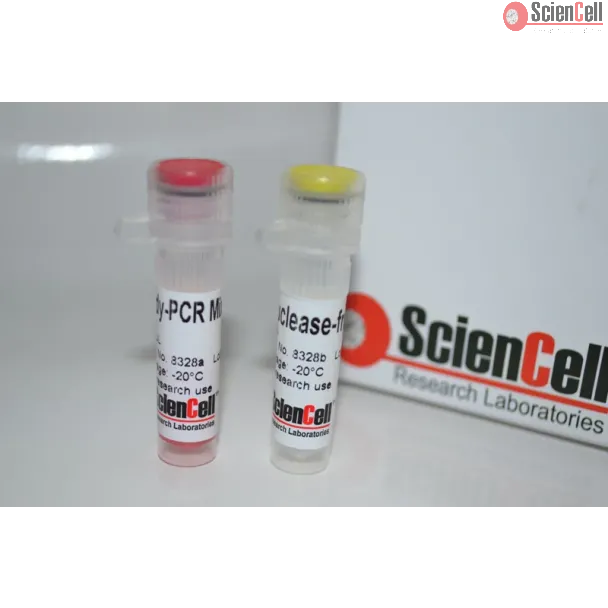
Human Mesenchymal Stem Cell Chondrogenesis Detection qPCR Kit
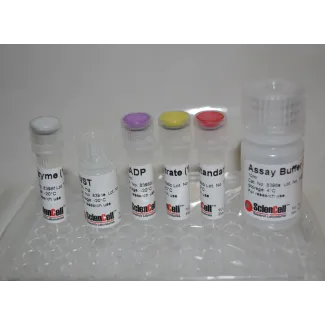
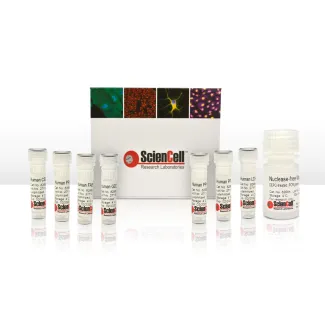
Each primer set included in HMSC-C-qPCR kit arrives lyophilized in a 2 mL vial. All primers are designed and tested under the same parameters: (i) an optimal annealing temperature of 65°C (with 2 mM Mg2+, and no DMSO); (ii) recognition of all known target gene transcript variants; and (iii) specific amplification of only one amplicon.
Human mesenchymal stem cells (MSCs) are a population of multipotent cells that can be differentiated into multiple lineage-specific cells, which can form bone, fat, cartilage, muscle and tendon. The process of cartilage formation from condensed mesenchyme tissue is known as chondrogenesis. ScienCell has created a convenient qPCR kit for the assessment of human mesenchymal stem cell chondrogenesis. SOX9 and COL2A1 qPCR primers included in the kit allow for the detection and quantification of early-to-mid- and late-stage of human MSC chondrogenesis, respectively1.
Note: all gene names follow their official symbols by the Human Genome Organization Gene Nomenclature Committee (HGNC).
Four qPCR controls are included in this kit to verify successful reverse transcription of messenger RNA (mRNA) to complementary DNA (cDNA), reveal the presence of genomic DNA (gDNA) contamination in cDNA samples, and detect qPCR inhibitor contamination. Good quality cDNA is a critical component for successful gene expression analysis.
Each primer set included in HMSC-C-qPCR kit arrives lyophilized in a 2 mL vial. All primers are designed and tested under the same parameters: (i) an optimal annealing temperature of 65°C (with 2 mM Mg2+, and no DMSO); (ii) recognition of all known target gene transcript variants; and (iii) specific amplification of only one amplicon. Each primer set has been validated by qPCR by melt curve analysis and gel electrophoresis.
| Catalog No. | 8328 |
|---|---|
| Country of Manufacture | United States |
| Product Code | HMSC-C-qPCR |
| Size/Quantity | 100 reactions |
| Product use | This product is for research use only. It is not approved for use in humans, animals, or in vitro diagnostic procedures. |
| Storage | Upon receipt, the vials should be stored at 4°C and are good for up to 12 months. For long-term storage (>1 year), store the vials at -20°C in a manual defrost freezer. |
| Shipping | This product is shipped at ambient temperature. |
Product Sheets

Search for a Certificate of Analysis by Lot Number below:
Find answers to common questions about ScienCell products, cell culture, handling, and research applications.
No Publication available at this time.