Hair follicles are self-renewing structures that cycle and regenerate throughout life and also provide a critical niche for keratinocyte stem cells. The interplay between keratinocytes and the underlying mesenchyme are critical for hair follicle morphogenesis and cycling. Several key developmental pathways are involved in determining follicular keratinocyte fate as well as the differentiation into several distinct cellular layers of the follicle during the growth phase of hair. Studies indicate that follicular keratinocytes are distinct from epidermal keratinocytes in proliferative capacity and CD34 expression.
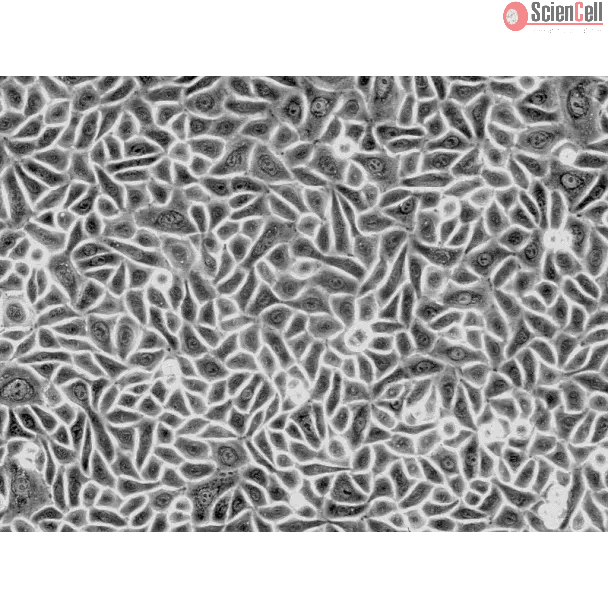
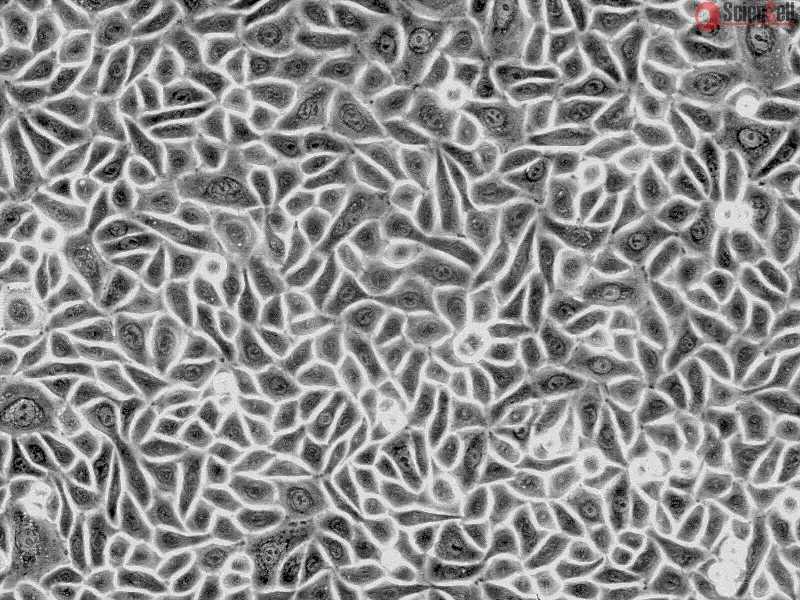
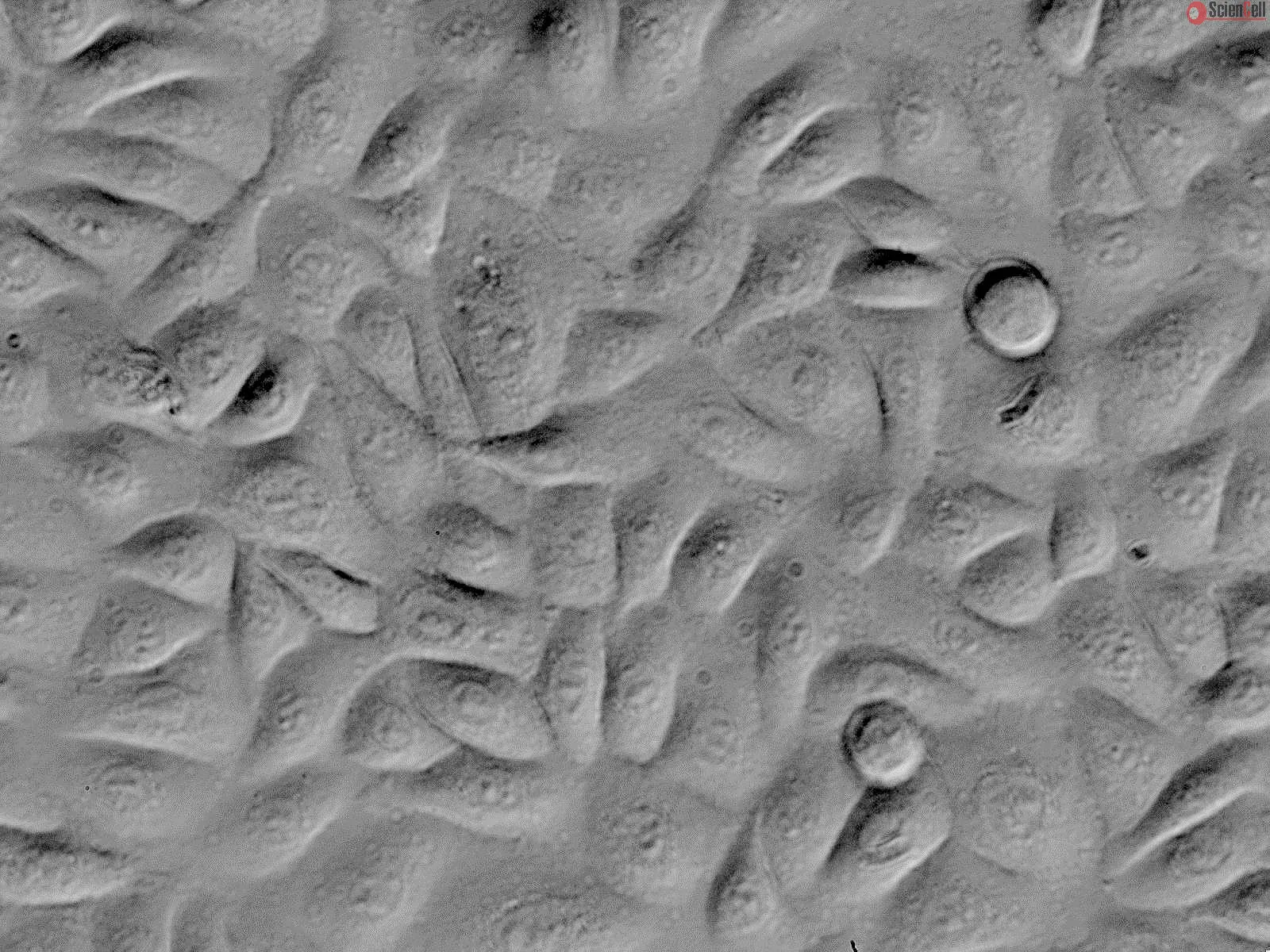
HHFK from ScienCell Research Laboratories are isolated from the human scalp. HHFK are cryopreserved at passage one and delivered frozen. Each vial contains >5 x 10⁵ cells in 1 ml volume. HHFK are characterized by immunofluorescence with antibody specific to cytokeratin-18. HHFK are negative for HIV-1, HBV, HCV, mycoplasma, bacteria, yeast, and fungi. HHFK are guaranteed to further expand for 15 population doublings under the conditions provided by ScienCell Research Laboratories.
Recommended Medium
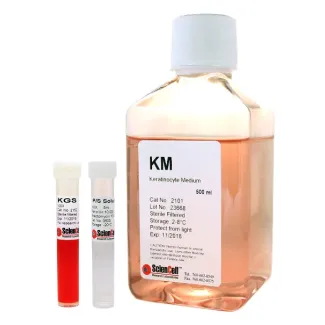
It is recommended to use Keratinocyte Medium (KM, Cat. #2101) for culturing HHFK in vitro.
Product Sheets
 2440
2440
Search for a Certificate of Analysis by Lot Number below:
In vitro models of human hair follicle-like tissue could be fundamental tools to better understand hair follicle morphogenesis and hair drug screening. During prenatal de... More
In vitro models of human hair follicle-like tissue could be fundamental tools to better understand hair follicle morphogenesis and hair drug screening. During prenatal development and postnatal cyclic hair regeneration, hair follicle morphogenesis is triggered by reciprocal interactions and the organization of the epithelial and mesenchymal cell populations. Given this mechanism, we developed an approach to induce hair peg-like sprouting in organoid cultures composed of epithelial and mesenchymal cells. Human fetal/adult epithelial and mesenchymal cells were cultured in a medium supplemented with a low concentration of either Matrigel or collagen I. These extracellular matrices significantly enhanced the self-organization capabilities of the epithelial and mesenchymal cells, resulting in spherical aggregation and subsequent hair peg-like sprouting. The length of the hair peg sprouting and associated gene expression significantly increased in the presence of a well-known hair drug, minoxidil. This approach may be beneficial for testing hair growth-promoting drug candidates. Less
The dermal papilla, located in the hair follicle, expresses androgen receptor and plays an important role in hair growth. Androgen/Androgen receptor actions have been imp... More
The dermal papilla, located in the hair follicle, expresses androgen receptor and plays an important role in hair growth. Androgen/Androgen receptor actions have been implicated in the pathogenesis of androgenetic alopecia, but the exact mechanism is not well known. Recent studies suggest that balding dermal papilla cells exhibit premature senescence, upregulation of p16(INK4a), and nuclear expression of DNA damage markers. To investigate whether androgen/AR signaling influences the premature senescence of dermal papilla cells, we first compared frontal scalp dermal papilla cells of androgenetic alopecia patients with matched normal controls and observed that premature senescence is more prominent in the dermal papilla cells of androgenetic alopecia patients. Exposure of androgen induced premature senescence in dermal papilla cells from non-balding frontal and transitional zone of balding scalp follicles but not in beard follicles. Overexpression of the AR promoted androgen-induced premature senescence in association with p16(INK4a) upregulation, whereas knockdown of the androgen receptor diminished the effects of androgen. An analysis of γ-H2AX expression in response to androgen/androgen receptor signaling suggested that DNA damage contributes to androgen/androgen receptor-accelerated premature senescence. These results define androgen/androgen receptor signaling as an accelerator of premature senescence in dermal papilla cells and suggest that the androgen/androgen receptor-mediated DNA damage-p16(INK4a) axis is a potential therapeutic target in the treatment of androgenetic alopecia. Less
The dermal papilla, located in the hair follicle, expresses androgen receptor and plays an important role in hair growth. Androgen/Androgen receptor actions have been imp... More
The dermal papilla, located in the hair follicle, expresses androgen receptor and plays an important role in hair growth. Androgen/Androgen receptor actions have been implicated in the pathogenesis of androgenetic alopecia, but the exact mechanism is not well known. Recent studies suggest that balding dermal papilla cells exhibit premature senescence, upregulation of p16(INK4a), and nuclear expression of DNA damage markers. To investigate whether androgen/AR signaling influences the premature senescence of dermal papilla cells, we first compared frontal scalp dermal papilla cells of androgenetic alopecia patients with matched normal controls and observed that premature senescence is more prominent in the dermal papilla cells of androgenetic alopecia patients. Exposure of androgen induced premature senescence in dermal papilla cells from non-balding frontal and transitional zone of balding scalp follicles but not in beard follicles. Overexpression of the AR promoted androgen-induced premature senescence in association with p16(INK4a) upregulation, whereas knockdown of the androgen receptor diminished the effects of androgen. An analysis of γ-H2AX expression in response to androgen/androgen receptor signaling suggested that DNA damage contributes to androgen/androgen receptor-accelerated premature senescence. These results define androgen/androgen receptor signaling as an accelerator of premature senescence in dermal papilla cells and suggest that the androgen/androgen receptor-mediated DNA damage-p16(INK4a) axis is a potential therapeutic target in the treatment of androgenetic alopecia. Less
ScienCell Research Laboratories (SRL) takes pride in being a resource for researchers all over the world. The publications listed here are not meant as an endorsement or confirmation of the reliability of the products.



,-1-mg-ml--2.jpg)