

Human Coronary Artery Smooth Muscle Cells
Human Coronary Artery Smooth Muscle Cells (HCASMC) are a primary focus in cardiovascular research due to their central role in maintaining vessel integrity and their contribution to the pathology of atherosclerosis and hypertension. These cells are essential for modeling the mechanisms of intimal thickening, a process involving smooth muscle migration and proliferation that frequently leads to the failure of coronary artery bypass grafts. Much of the current knowledge regarding vascular repair and tissue remodeling is rooted in in vitro findings, making primary HCASMC culture a standard tool for advancing cardiovascular medicine. These cells are a cornerstone for developing next-generation targeted therapies and biocompatible medical devices.
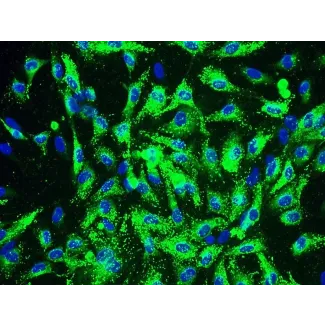
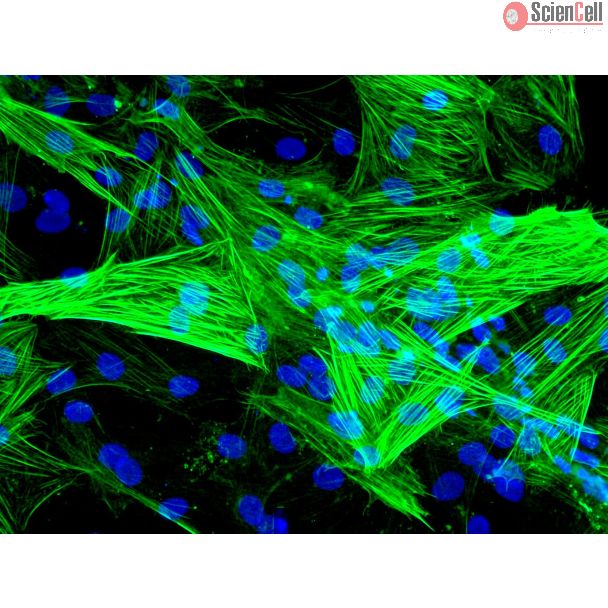
HCASMC from ScienCell Research Laboratories are isolated from human coronary artery tissue. HCASMC are cryopreserved at passage one and delivered frozen. Each vial contains >5 x 10⁵ cells in 1 ml volume. HCASMC are characterized by immunofluorescence with antibodies specific to α-smooth muscle actin. HCASMC are negative for HIV-1, HBV, HCV, mycoplasma, bacteria, yeast, and fungi. HCASMC are guaranteed to further expand for 15 population doublings under the conditions specified by ScienCell Research Laboratories.
Recommended Medium
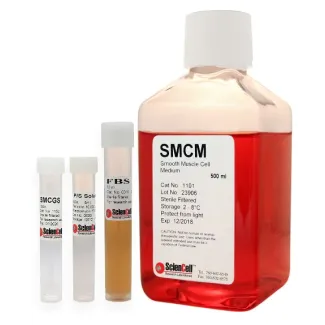
It is recommended to use Smooth Muscle Cell Medium (ECM, Cat. #1101) for culturing HCASMC in vitro.
| Catalog No. | 6030 |
|---|---|
| Country of Manufacture | United States |
| Product Code | HCASMC |
| Size/Quantity | 5 x 10⁵ cells/vial |
| Product use | This product is for research use only. It is not approved for human or animal use, or for application in in vitro diagnostic procedures. |
| Storage | Upon receiving, directly and immediately transfer the cells from dry ice to liquid nitrogen and keep the cells in liquid nitrogen until they are needed for experiments. |
| Shipping | Dry ice. |
Product Sheets

Search for a Certificate of Analysis by Lot Number below:
Find answers to common questions about ScienCell products, cell culture, handling, and research applications.
No Publication available at this time.