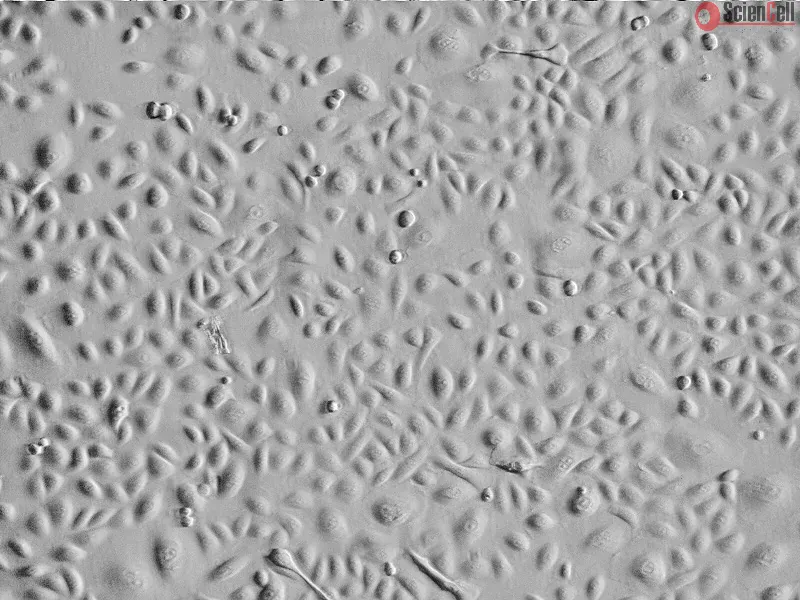
Human Conjunctival Epithelial Cells
Isolated from human conjunctiva. HConEpiC are cryopreserved at passage one and delivered frozen. Each vial contains >5 x 10⁵ cells in 1 ml volume.
The conjunctiva is a translucent membrane that lines the inner surface of the eyelids and covers the sclera. It is overlaid by two layers of stratified, non-keratinized conjunctival epithelial cells (ConEpiC). ConEpiC can be distinguished from the corneal epithelium by a specific expression profile of keratins. ConEpiC is covered by mucin-rich glycocalyx, which promotes tear adherence, prevents pathogen penetrance, and provides lubrication. Decrease or loss of mucin/glycocalyx production generates squamous metaplasia, which may lead to dry eye and ocular surface diseases. ConEpiC also respond to histamine by stimulating phosphatidylinositol turnover and secreting cytokines, and as a result may be a good target when developing topical ocular drugs to treat allergic conjunctivitis.
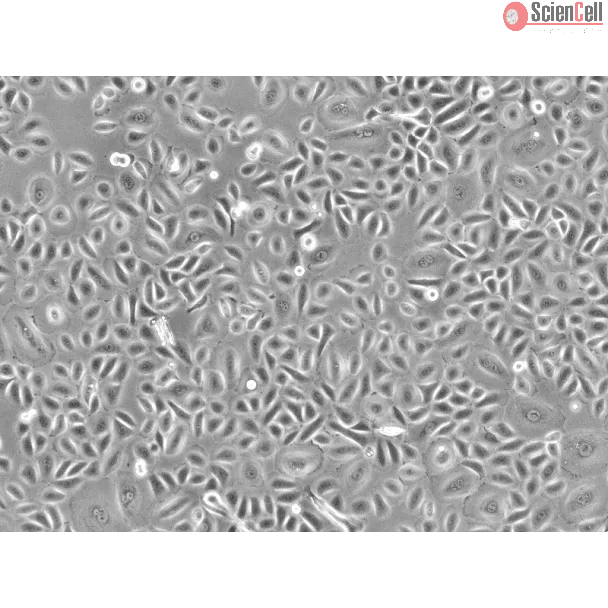
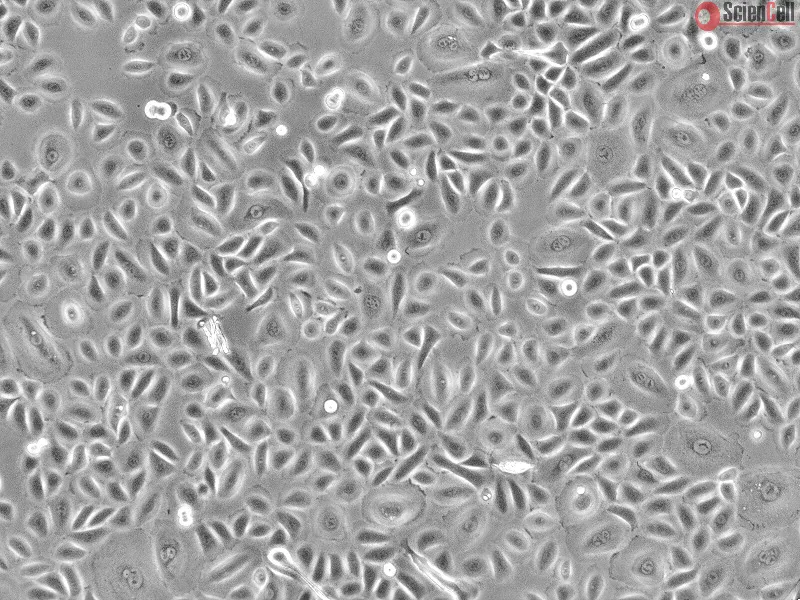
HConEpiC from ScienCell Research Laboratories are isolated from human conjunctiva. HConEpiC are cryopreserved at passage one and delivered frozen. Each vial contains >5 x 10⁵ cells in 1 ml volume. HConEpiC are characterized by their cobble stone morphology in serum-free culture medium and immunofluorescence with antibodies specific to cytokeratin-18 and/or cytokeratin-19. HConEpiC are negative for HIV-1, HBV, HCV, mycoplasma, bacteria, yeast, and fungi. HConEpiC are guaranteed to further expand for 10 population doublings under the conditions provided by ScienCell Research Laboratories.
Recommended Medium
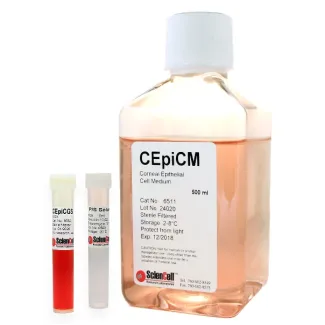
It is recommended to use Corneal Epithelial Cell Medium (CEpiCM, Cat. #6511) for culturing HConEpiC in vitro.
| Catalog No. | 6630 |
|---|---|
| Country of Manufacture | United States |
| Product Code | HConEpiC |
| Size/Quantity | 5 x 10^5 cells/vial |
| Product use | This product is for research use only. It is not approved for use in humans, animals, or in vitro diagnostic procedures. |
| Storage | Directly and immediately transfer cells from dry ice to liquid nitrogen upon receiving and keep the cells in liquid nitrogen until cell culture needed for experiments. |
| Shipping | Dry ice. |
Product Sheets

Search for a Certificate of Analysis by Lot Number below:
Find answers to common questions about ScienCell products, cell culture, handling, and research applications.
ScienCell Research Laboratories (SRL) takes pride in being a resource for researchers all over the world. The publications listed here are not meant as an endorsement or confirmation of the reliability of the products.
,-1-mg-ml--2.jpg)