Degeneration of the intervertebral disk is a major pathological process implicated in low back pain. The causes of low back pain include genetics, environmental factors, and psychosocial factors. The anulus fibrosus makes up the peripheral portion of the disk structure, and is composed of fibrocartilage and type I and II collagen. Cells of the intervertebral disc are influenced by both biophysical and mechanical factors in their local environment. The annulus fibrosus cells can be stimulated by interleukin 1 beta to produce factors implicated in local degradative and inflammatory processes. Although mechanical stress is an important modulator of degeneration, the underlying molecular mechanism remains unclear. Human annulus fibrosus cells provide an in vitro model for the study of cellular and molecular events involved in disc degeneration, tissue engineering and cell therapy for spinal disc disorders.
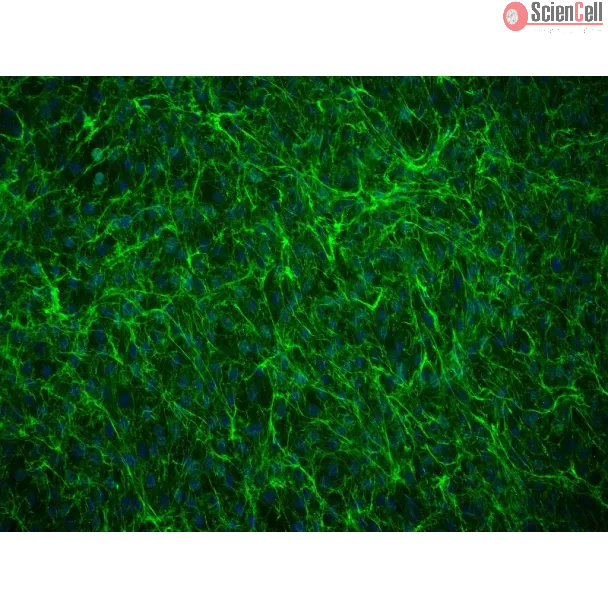
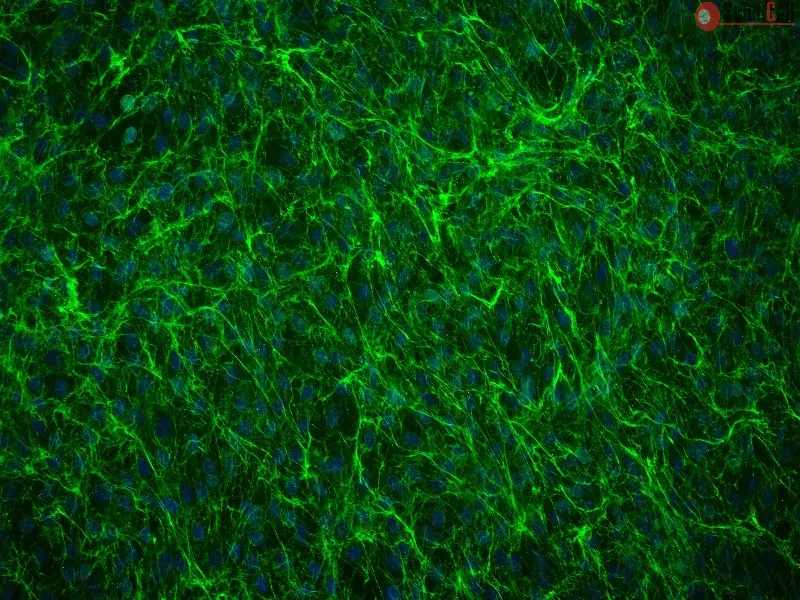
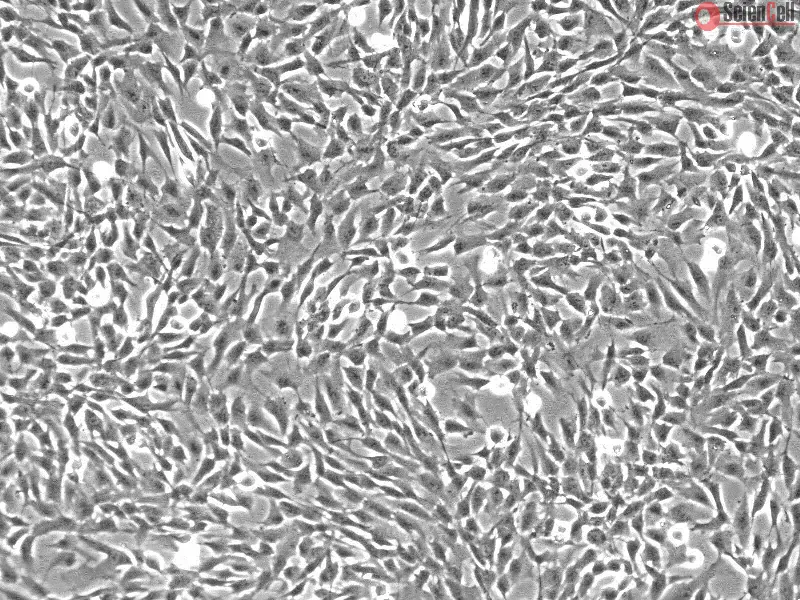
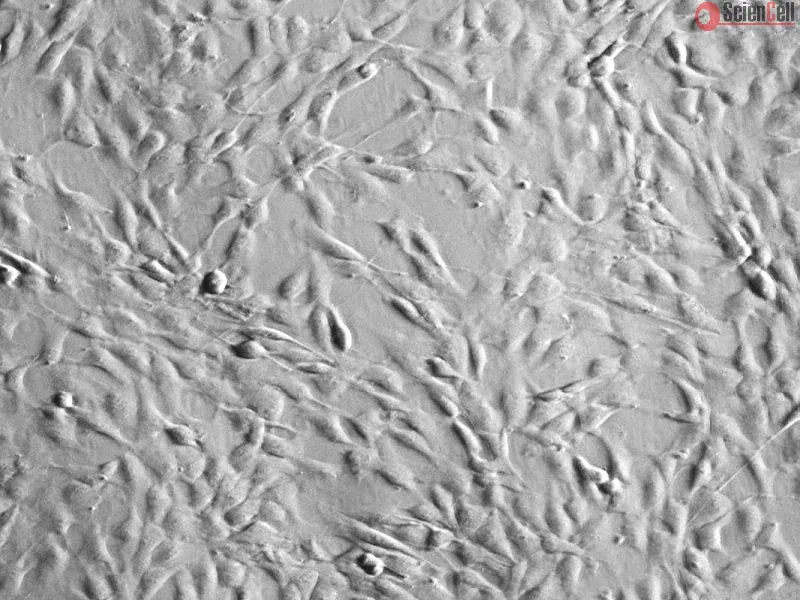
HAFC from ScienCell Research Laboratories are isolated from the annulus fibrosus of human intervertebral disc. HAFC are cryopreserved at passage one and delivered frozen. Each vial contains >5 x 10⁵ cells in 1 ml volume. HAFC are characterized by immunofluorescence with antibodies specific to fibronectin and vimentin. HAFC are negative for HIV-1, HBV, HCV, mycoplasma, bacteria, yeast and fungi. HAFC are guaranteed to further expand for 15 population doublings under the conditions provided by ScienCell Research Laboratories.
Recommended Medium
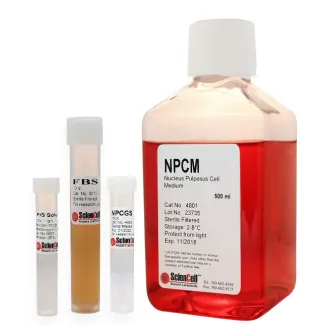
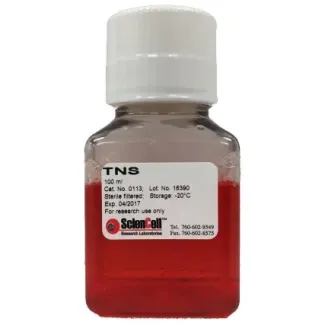
It is recommended to use nucleus pulposus cell medium (NPCM, Cat. #4801) for the culturing of HAFC in vitro.
Product Sheets
 4810
4810
Search for a Certificate of Analysis by Lot Number below:
Objectives Interleukin 18 (IL-18) is a regulatory cytokine that degrades the disc matrix. Bone morphogenetic protein-2 (BMP-2) stimulates synthesis of the disc extracellu... More
Objectives Interleukin 18 (IL-18) is a regulatory cytokine that degrades the disc matrix. Bone morphogenetic protein-2 (BMP-2) stimulates synthesis of the disc extracellular matrix. However, the combined effects of BMP-2 and IL-18 on human intervertebral disc degeneration have not previously been reported. The aim of this study was to investigate the effects of the anabolic cytokine BMP-2 and the catabolic cytokine IL-18 on human nucleus pulposus (NP) and annulus fibrosus (AF) cells and, therefore, to identify potential therapeutic and clinical benefits of recombinant human (rh)BMP-2 in intervertebral disc degeneration. Methods Levels of IL-18 were measured in the blood of patients with intervertebral disc degenerative disease and in control patients. Human NP and AF cells were cultured in a NP cell medium and treated with IL-18 or IL-18 plus BMP-2. mRNA levels of target genes were measured by real-time polymerase chain reaction, and protein levels of aggrecan, type II collagen, SOX6, and matrix metalloproteinase 13 (MMP13) were assessed by western blot analysis. Results The serum level of patients (IL-18) increased significantly with the grade of IVD degeneration. There was a dramatic alteration in IL-18 level between the advanced degeneration (Grade III to V) group and the normal group (p = 0.008) Furthermore, IL-18 induced upregulation of the catabolic regulator MMP13 and downregulation of the anabolic regulators aggrecan, type II collagen, and SOX6 at 24 hours, contributing to degradation of disc matrix enzymes. However, BMP-2 antagonised the IL-18 induced upregulation of aggrecan, type II collagen, and SOX6, resulting in reversal of IL-18 mediated disc degeneration. Conclusions BMP-2 is anti-catabolic in human NP and AF cells, and its effects are partially mediated through provocation of the catabolic effect of IL-18. These findings indicate that BMP-2 may be a unique therapeutic option for prevention and reversal of disc degeneration. Cite this article: S. Ye, B. Ju, H. Wang, K-B. Lee. Bone morphogenetic protein-2 provokes interleukin-18-induced human intervertebral disc degeneration. Bone Joint Res 2016;5:412–418. DOI: 10.1302/2046-3758.59.BJR-2016-0032.R1. Keywords: Bone morphogenetic protein-2 (BMP-2), Interleukin-18 (IL-18), Nucleus pulposus and annulus fibrosus cells, Intervertebral disc degeneration (IVD) Less
Inflammation and cytokines have been recognized to correlate with intervertebral disc (IVD) degeneration (IDD), via mediating the development of clinical signs and sympto... More
Inflammation and cytokines have been recognized to correlate with intervertebral disc (IVD) degeneration (IDD), via mediating the development of clinical signs and symptoms. However, the regulation mechanism remains unclear. We aimed at investigating the regulatory role of interleukin (IL)β and high mobility group box 1 (HMGB1) in the inflammatory response in human IVD cells, and then explored the signalling pathways mediating such regulatory effect. Firstly, the promotion to inflammatory cytokines in IVD cells was examined with ELISA method. And then western blot and real time quantitative PCR were performed to analyse the expression of toll-like receptors (TLRs), receptors for advanced glycation endproducts (RAGE) and NF-κB signalling markers in the IL-1β- or (and) HMGB1-treated IVD cells. Results demonstrated that either IL-1β or HMGB1 promoted the release of the inflammatory cytokines such as prostaglandin E2 (PGE2), TNF-α, IL-6 and IL-8 in human IVD cells. And the expression of matrix metalloproteinases (MMPs) such as MMP-1, -3 and -9 was also additively up-regulated by IL-1β and HMGB1. We also found such additive promotion to the expression of TLR-2, TLR-4 and RAGE, and the NF-κB signalling in intervertebral disc cells. In summary, our study demonstrated that IL-1β and HMGB1 additively promotes the release of inflammatory cytokines and the expression of MMPs in human IVD cells. The TLRs and RAGE and the NF-κB signalling were also additively promoted by IL-1β and HMGB1. Our study implied that the additive promotion by IL-1β and HMGB1 to inflammatory cytokines and MMPs might aggravate the progression of IDD. Keywords: high mobility group box 1 (HMGB1); interleukin (IL)β; intervertebral disc degeneration (IDD). © 2016 The Author(s). Less
ScienCell Research Laboratories (SRL) takes pride in being a resource for researchers all over the world. The publications listed here are not meant as an endorsement or confirmation of the reliability of the products.

,-1-mg-ml--2.jpg)