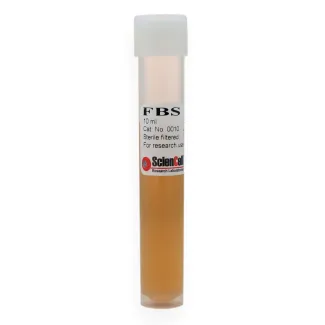
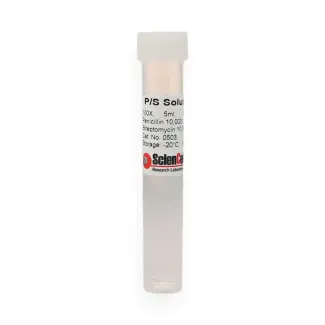
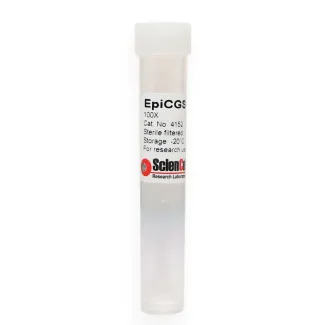
Alveolar Epithelial Cell Medium (AEpiCM), when used with Epithelial Cell Growth Supplement (EpiCGS, Cat #4152) and 10 ml of fetal bovine serum (FBS) is a complete medium designed for optimal growth of normal epithelial cells in vitro. It is a sterile, liquid medium which contains essential and non-essential amino acids, vitamins, organic and inorganic compounds, hormones, growth factors, trace minerals and a low concentration of fetal bovine serum (2%). The medium is HEPES and bicarbonate buffered and has a pH of 7.4 when equilibrated in an incubator with an atmosphere of 5% CO2/95% air. The medium is formulated (quantitatively and qualitatively) to provide an optimally balanced nutritional environment that selectively supports the growth of normal epithelial cells in vitro.
Alveolar regeneration requires coordinated alveolar type 1 (AT1)/alveolar type 2 (AT2) responses and an intact epithelial barrier. In vitro systems, however, rarely coupl... More
Alveolar regeneration requires coordinated alveolar type 1 (AT1)/alveolar type 2 (AT2) responses and an intact epithelial barrier. In vitro systems, however, rarely couple lineage control with high resistance. Here we establish a concise workflow in which human AT2-like progenitors are expanded in a medium containing a small-molecule cocktail (Y-27632/A-83-01/CHIR99021; YAC), followed by air–liquid interface (ALI) culture in medium without the YAC cocktail (hereafter referred to as the YAC(−) condition). Compared with submerged culture, ALI increased AT1 (AQP5, AGER, and PDPN) and AT2 (SFTPB, SFTPC, and SFTPD) markers. Within ALI, β-catenin inhibition by XAV939 elevated AT1 features while retaining AT2 protein expression, but was accompanied by reduced AT2 marker expression at the transcriptional level compared with the YAC(−) condition. Transepithelial electrical resistance entered the kΩ range by ALI day 10 and remained high across ALI conditions, with hematoxylin and eosin staining confirming a continuous single-layer epithelium. Passage reduced absolute marker levels and resistance but preserved the rank order across conditions. In scratch assays, ALI monolayers closed wounds over 24–48 h, and spatial immunofluorescence staining showed surfactant protein-C enrichment at the leading edge and podoplanin predominantly behind the front. Collectively, these findings demonstrate that β-catenin modulation within ALI biases the alveolar epithelial profile toward AT1-like features, whereas the YAC(−) condition sustains a balanced AT1/AT2 state with superior epithelial barrier performance and repair capacity. This platform provides a single-monolayer system suitable for dissecting alveolar epithelial differentiation and functional maintenance. Less
Idiopathic pulmonary fibrosis (IPF) is a chronic, progressive and usually lethal fibrotic lung disease with largely unknown etiology and pathogenesis. Evidence suggests m... More
Idiopathic pulmonary fibrosis (IPF) is a chronic, progressive and usually lethal fibrotic lung disease with largely unknown etiology and pathogenesis. Evidence suggests microRNAs (miRNA) contribute to pathogenesis of IPF. In this study, we sought to identify miRNA expression signatures and determine the role of miR-130b-3p in lung fibrosis. The miRNA expression profile of the lungs from patients with IPF and normal donors was determined by Affymetrix microarray, and transcriptome with Affymetrix array. The functions and signal pathways as well as miRNA-mRNA networks were established by bioinformatics analysis. Luciferase assays and ELISA were used to confirm the miRNA target gene. The effect of miRNA-transfected epithelium on fibroblast activities was assessed using a co-culture system. The fibroblast activities were determined by qRT-PCR, western blotting, Transwell and BrdU assays. Seven miRNAs were significantly decreased in IPF lungs, with miR-130b-3p being the highest in the miRNA-mRNA network. Insulin-like growth factor (IGF-1) was a target gene of miR-130b-3p in the epithelium. miR-130b-3p inhibition in the epithelium induced collagen I expression and enhanced the proliferation and migration ability of fibroblast in co-culture systems, which mimicked the functions of exogenous IGF-1 on fibroblasts. Neutralizing IGF-1 with an antibody significantly reduced the modulatory effects of miR-130b-3p inhibitor-transfected epithelium on the activation of fibroblasts. Our results show that miR-130b-3p was downregulated in IPF lungs. miR-130b-3p downregulation contributed to the activation of fibroblasts and the dysregulated epithelial-mesenchymal crosstalk by promoting IGF-1 secretion from lung epithelium, suggesting a key regulatory role for this miRNA in preventing lung fibrosis. Less
ScienCell Research Laboratories (SRL) takes pride in being a resource for researchers all over the world. The publications listed here are not meant as an endorsement or confirmation of the reliability of the products.

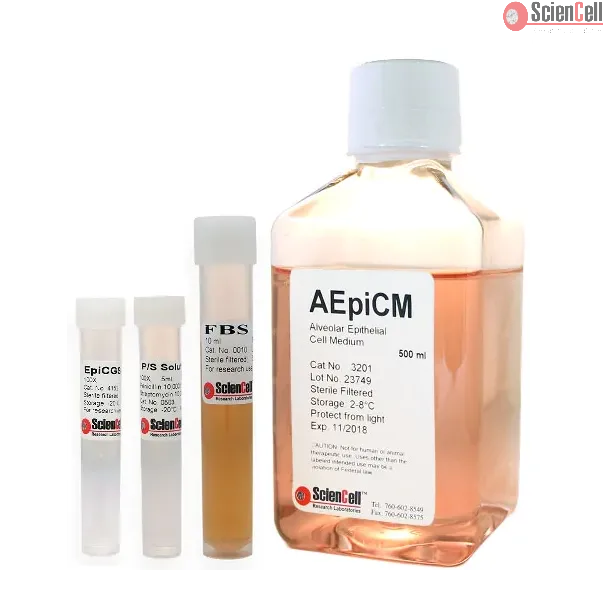
 3201-b-prf (Basal & Phenol Red Free Medium)