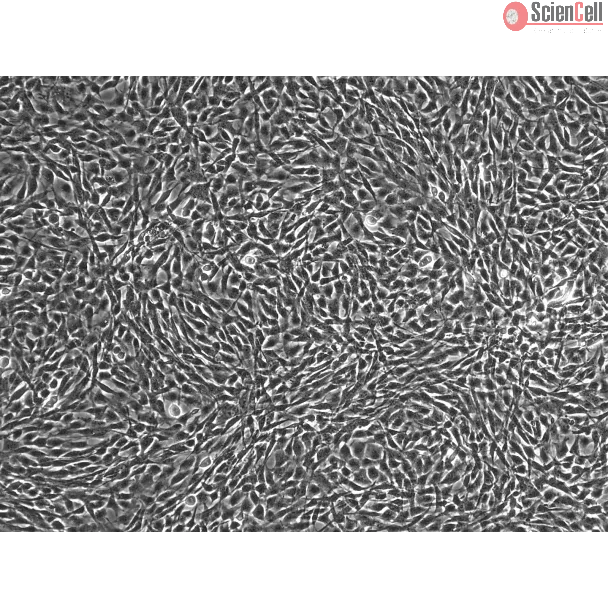
人类骨骼肌肌母细胞
来源于人体胸带肌肉。人类骨骼肌肌母细胞 (HSkMM) 在第一代时经冷冻保存,并以冷冻形式运输。每个冻存管含有超过 5 x 10⁵ 个细胞,体积为 1 毫升。
骨骼肌通过单核成肌前体细胞——肌母细胞的增殖来实现再生,这些肌母细胞最终融合并整合成多核的肌管,随后这些肌管成熟为肌纤维。该过程不仅发生于胚胎时期的肌肉组织发生,也发生在出生后因损伤引起的肌肉再生过程中,或见于如杜氏肌营养不良症等疾病中。肌母细胞的融合是骨骼肌特有的过程,未形成肌纤维的肌母细胞将分化为卫星细胞。骨骼肌肌母细胞表达 FGF 受体,且在培养过程中分化时 IGF 的表达水平会上升。人类骨骼肌肌母细胞培养是一种便捷的体外模型,可用于研究细胞发育与分化、胰岛素代谢以及组织修复。
ScienCell Research Laboratories 提供的 HSkMM 来源于人体胸带肌肉。HSkMM 在第一代时经冷冻保存,并以冷冻形式运输。每个冻存管含有超过 5 x 10⁵ 个细胞,体积为 1 毫升。HSkMM 通过针对肌球蛋白和/或肌动蛋白的抗体进行免疫荧光鉴定。HSkMM 经检测为 HIV-1、HBV、HCV、支原体、细菌、酵母菌和真菌阴性。在 ScienCell Research Laboratories 提供的条件下,HSkMM 可保证扩增至少 15 次群体倍增。
推荐培养基
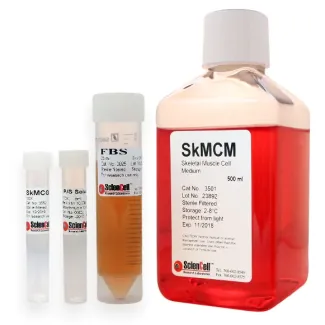
建议使用 Skeletal Muscle Cell Medium(SkMCM,目录号 #3501)进行体外培养 HSkMM。
| 目录编号 | 3520 |
|---|---|
| 制造国家 | 美国 |
| 产品编码 | HSkMM |
| 规格/数量 | 5 x 10^5 cells/vial |
| 产品用途 | 本产品仅供研究使用。未经批准,不得用于人体、动物或体外诊断程序。 |
| 储存 | 收到后请立即将细胞从干冰中直接转移至液氮中保存,并在进行实验所需的细胞培养前,始终将其储存在液氮中。 |
| 运输 | 干冰。 |
Product Sheets

Search for a Certificate of Analysis by Lot Number below:
Find answers to common questions about ScienCell products, cell culture, handling, and research applications.
ScienCell Research Laboratories (SRL) takes pride in being a resource for researchers all over the world. The publications listed here are not meant as an endorsement or confirmation of the reliability of the products.