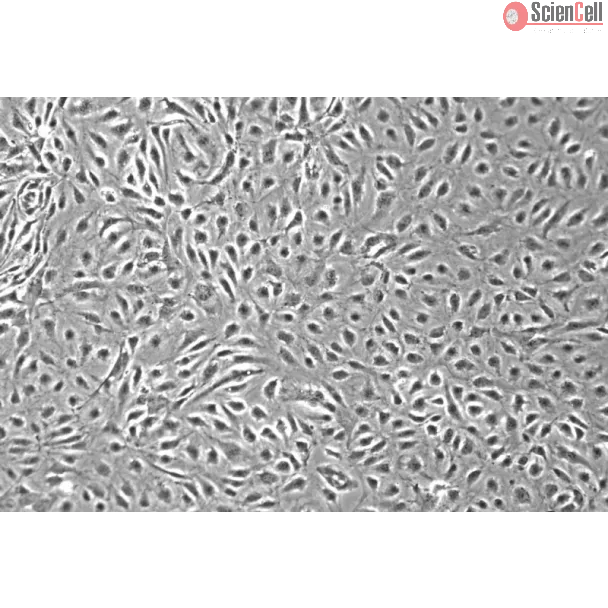
人肠道微血管内皮细胞
分离自人肠道组织。人肠道微血管内皮细胞 (HIMEC) 在第一代(P1)阶段进行冻存,并以冷冻形式运输。每瓶含有超过 5 × 10⁵ 个细胞,总体积为 1 ml。
Endothelial cells lining the microvasculature are known to play a critical “gatekeeper” role in the inflammatory process through their ability to recruit circulating immune cells into tissues and foci of inflammation. Studies show that intestinal microvascular endothelial cells (IMEC) exhibit a strong immune response to LPS challenge and play a critical regulatory role in gut inflammation. Pharmacological inhibition of NOS in activated HIMEC resulted in a significant increase in leukocyte binding. Gene expression profile studies revealed that intestinal endothelial cells express biotinidase, which is involved in biotin recycling. HIMEC cultures have enabled scientists to perform systematic analyses of cytokine profiles with regard to mRNA expression and protein secretion, and to compare these data with cytokine profiles from other endothelial cells.
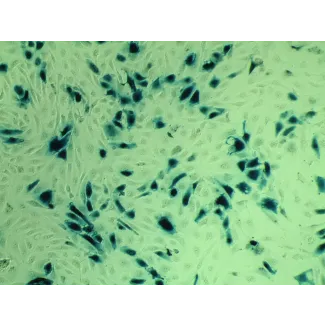
HIMEC from ScienCell Research Laboratories are isolated from human intestinal tissue. HIMEC are cryopreserved at passage one and delivered frozen. Each vial contains >5 x 10⁵ cells in 1 ml volume. HIMEC are characterized by immunofluorescence with antibodies specific to vWF/Factor VIII and/or CD31 (PECAM1). HIMEC are negative for HIV-1, HBV, HCV, mycoplasma, bacteria, yeast and fungi. HIMEC are guaranteed to further expand for 10 population doublings under the conditions provided by ScienCell Research Laboratories.
Recommended Medium
It is recommended to use Endothelial Cell Medium (ECM, Cat. #1001) for culturing HIMEC in vitro.
衬覆于微血管内壁的内皮细胞在炎症过程中发挥关键的“守门员”作用,能够募集循环免疫细胞进入组织及炎症病灶。研究表明,肠道微血管内皮细胞(IMEC)在脂多糖(LPS)刺激下表现出强烈的免疫反应,并在肠道炎症过程中发挥重要的调节作用。在活化的人肠道微血管内皮细胞(HIMEC)中,药理学抑制一氧化氮合酶(NOS)可显著增加白细胞的黏附。基因表达谱研究显示,肠道内皮细胞表达参与生物素再循环的生物素酶(biotinidase)。HIMEC 培养物可用于系统分析细胞因子在 mRNA 表达和蛋白质分泌水平上的变化,并将这些数据与其他类型内皮细胞的细胞因子谱进行比较。
ScienCell Research Laboratories 提供的人肠道微血管内皮细胞(HIMEC)分离自人肠道组织。HIMEC 在第一代(P1)阶段进行冻存,并以冷冻形式运输。每瓶含有超过 5 × 10⁵ 个细胞,总体积为 1 ml。HIMEC 通过使用针对 von Willebrand 因子(vWF)/凝血因子 VIII 和/或 CD31(PECAM1)的特异性抗体进行免疫荧光染色鉴定。HIMEC 经检测不含 HIV-1、HBV、HCV、支原体、细菌、酵母菌及真菌。在 ScienCell Research Laboratories 提供的培养条件下,HIMEC 可保证进一步扩增至少 10 次群体倍增。
推荐培养基
建议使用内皮细胞培养基(Endothelial Cell Medium,ECM,产品编号 #1001)对 HIMEC 进行体外培养。
| 目录编号 | 2900 |
|---|---|
| 制造国家 | 美国 |
| 产品编码 | HIMEC |
| 规格/数量 | 5 x 10^5 cells/vial. |
| 产品用途 | 本产品仅供研究使用。未经批准,不得用于人体、动物或体外诊断程序。 |
| 储存 | 收到后,立即将细胞从干冰转移到液氮中,并在液氮中保存,直到需要进行实验。 |
| 运输 | 干冰。 |
Product Sheets

Search for a Certificate of Analysis by Lot Number below:
Find answers to common questions about ScienCell products, cell culture, handling, and research applications.
No Publication available at this time.