Introduction Heightened inflammatory and thrombotic processes are common hallmarks of vascular diseases. The interaction between these two processes remains unclear and a... More
Introduction Heightened inflammatory and thrombotic processes are common hallmarks of vascular diseases. The interaction between these two processes remains unclear and a better understanding of these links can allow for the design of more effective treatment options. Activation of complement component 1 (C1) leads to the initiation of the classical arm of the complement cascade, availability of plasma C1q, and the potential association of C1q and receptors for C1q. The association of C1q and gC1qR, the receptor for the globular head of C1q, is notable and has been associated with a wide range of disturbed physiological processes. We have recently shown that when this interaction occurs on vascular wall cells, including adventitial fibroblasts and vascular smooth muscle cells, there is a significant up-regulation of tissue factor (TF) expression. However, whether or not this TF is biologically active and can facilitate extrinsic coagulation activation remains unknown. We hypothesized that TF expressed via gC1qR-C1q association would support the progression of extrinsic coagulation. Methods We quantified the association of Factor VII/VIIa (FVII/FVIIa) with adventitial fibroblast and vascular smooth muscle cell TF, using colorimetric assays. Further, we observed the formation of Factor Xa and Factor IIa (thrombin), as well as the concentration of intracellular Akt (protein kinase B) and phosphorylated Akt. Results/Conclusions Our results indicate that TF expression in response to C1q exposure accelerates zymogen formation within the extrinsic coagulation cascade and alters Akt/p-Akt expression. Overall, these findings highlight a significant connection between altered innate inflammation and heightened thrombin generation. Summary Research reported in this publication was supported by the National Institute of Allergy and Infectious Disease of the National Institutes of Health under award number R21AI146535. The authors (BG) receive royalties from the sale of monoclonal antibodies against gC1qR clone 60.11. The authors (BG) hold a patent for the development of these antibodies for therapy against cancer and angioedema, respectively (US patent 8,883,153-B2, “Methods for Prevention and Treatment of Angioedema”). The data that support the findings of this study are available from the corresponding author upon reasonable request. Less
Heart failure is a pressing clinical condition that is expected to increase as our population ages and thus requires better treatment options. Identifying the precise mec... More
Heart failure is a pressing clinical condition that is expected to increase as our population ages and thus requires better treatment options. Identifying the precise mechanisms that underlie fibrosis and inflammation, two key features associated with cardiac repair and regeneration during ischemic and nonischemic heart failure, is likely to provide effective strategies for the clinical intervention of heart failure. This study investigated a metabolic serine threonine kinase gene, sucrose nonfermenting-related kinase (SNRK), which we previously reported to control cardiac metabolism and function. Conditional knockout of Snrk in mouse cardiomyocytes (Snrk cmcKO) leads to deleterious fibrosis, inflammation, and, subsequently, heart failure. The precise mechanism underlying cardiomyocyte SNRK-driven repression of deleterious cardiac fibrosis in nonischemic heart failure-mediated cardiac repair and regeneration is not known. Here, using mouse, rat, and human tissues, we demonstrated that SNRK expression is increased in the atrial chamber, especially in left atrial cardiomyocytes. Using a nonischemic heart failure mouse model, we showed that fibrosis in the atria, particularly the left atria, is associated with cardiac functional decline. To elucidate the mechanistic pathway responsible for the SNRK-mediated repression of cardiac fibrosis, we focused on the profibrotic protein transforming growth factor-β1. Transforming growth factor-β1 levels in Snrk siRNA-knockdown HL-1 adult immortalized mouse atrial cells were higher compared with control siRNA-knockdown HL-1 cells. Coculture of HL-1 cardiomyocytes (−/+ Snrk) with cardiac fibroblasts in vitro revealed that SNRK represses transforming growth factor-β1 signaling (Smad2/3) in cardiac fibroblasts and cardiac fibroblast activation (alpha-smooth muscle actin marker). We conclude that under nonischemic heart failure conditions, increased SNRK expression in the atria is associated with a cardioprotective mechanism by controlling the release of the profibrotic transforming growth factor-β1 factor. These studies illuminate a potential deleterious fibrosis pathway for intervention during cardiac repair and regeneration in nonischemic heart failure. Less
For healthspan and lifespan, ERK, AMPK and mTORC1 represent critical pathways and inflammation is a centrally important hallmark1,2,3,4,5,6,7. Here we examined whether IL... More
For healthspan and lifespan, ERK, AMPK and mTORC1 represent critical pathways and inflammation is a centrally important hallmark1,2,3,4,5,6,7. Here we examined whether IL-11, a pro-inflammatory cytokine of the IL-6 family, has a negative effect on age-associated disease and lifespan. As mice age, IL-11 is upregulated across cell types and tissues to regulate an ERK–AMPK–mTORC1 axis to modulate cellular, tissue- and organismal-level ageing pathologies. Deletion of Il11 or Il11ra1 protects against metabolic decline, multi-morbidity and frailty in old age. Administration of anti-IL-11 to 75-week-old mice for 25 weeks improves metabolism and muscle function, and reduces ageing biomarkers and frailty across sexes. In lifespan studies, genetic deletion of Il11 extended the lives of mice of both sexes, by 24.9% on average. Treatment with anti-IL-11 from 75 weeks of age until death extends the median lifespan of male mice by 22.5% and of female mice by 25%. Together, these results demonstrate a role for the pro-inflammatory factor IL-11 in mammalian healthspan and lifespan. We suggest that anti-IL-11 therapy, which is currently in early-stage clinical trials for fibrotic lung disease, may provide a translational opportunity to determine the effects of IL-11 inhibition on ageing pathologies in older people. Less
Excessive cardiac fibrosis, characterized by increased collagen-rich extracellular matrix (ECM) deposition, is a major predisposing factor for mechanical and electrical d... More
Excessive cardiac fibrosis, characterized by increased collagen-rich extracellular matrix (ECM) deposition, is a major predisposing factor for mechanical and electrical dysfunction in heart failure (HF). The human ventricular fibroblast (hVF) remodeling mechanisms that cause excessive collagen deposition in HF are unclear, although reports suggest a role for intracellular free Ca2+ in fibrosis. Therefore, we determined the association of differences in cellular Ca2+ dynamics and collagen secretion/deposition between hVFs from failing and normal (control) hearts. Histology of left ventricle sections (Masson trichrome) confirmed excessive fibrosis in HF versus normal. In vitro, hVFs from HF showed increased secretion/deposition of soluble collagen in 48 h of culture compared with control [85.9±7.4 µg/106 cells vs 58.5±8.8 µg/106 cells, P<0.05; (Sircol™ assay)]. However, collagen gene expressions (COL1A1 and COL1A2; RT-PCR) were not different. Ca2+ imaging (fluo-3) of isolated hVFs showed no difference in the thapsigargin-induced intracellular Ca2+ release capacity (control 16±1.4% vs HF 17±1.1%); however, Ca2+ influx via store-operated Ca2+ entry/Ca2+ release-activated channels (SOCE/CRAC) was significantly (P≤0.05) greater in HF-hVFs (47±3%) compared with non-failing (35±5%). Immunoblotting for ICRAC channel components showed increased ORAI1 expression in HF-hVFs compared with normal without any difference in STIM1 expression. The Pearson's correlation coefficient for co-localization of STIM1/ORAI1 was significantly (P<0.01) greater in HF (0.5±0.01) than control (0.4±0.01) hVFs. The increase in collagen secretion of HF versus control hVFs was eliminated by incubation of hVFs with YM58483 (10 µM), a selective ICRAC inhibitor, for 48 h (66.78±5.87 µg/106 cells vs 55.81±7.09 µg/106 cells, P=0.27). In conclusion, hVFs from HF have increased collagen secretion capacity versus non-failing hearts and this is related to increase in Ca2+ entry via SOCE and enhanced expression of ORAI, the pore-forming subunit. Therapeutic inhibition of SOCE may reduce the progression of cardiac fibrosis/HF.
Keywords:
Calcium, Cardiac fibrosis, Store-operated Ca2+ entry, Heart failure
Less
Autophagy, a type II programmed cell death, is essential for cell survival under stress, e.g. lung injury, and bone marrow-derived mesenchymal stem cells (BM-MSCs) have g... More
Autophagy, a type II programmed cell death, is essential for cell survival under stress, e.g. lung injury, and bone marrow-derived mesenchymal stem cells (BM-MSCs) have great potential for cell therapy. However, the mechanisms underlying the BM-MSC activation of autophagy to provide a therapeutic effect in ischaemia/reperfusion-induced lung injury (IRI) remain unclear. Thus, we investigate the activation of autophagy in IRI following transplantation with BM-MSCs. Seventy mice were pre-treated with BM-MSCs before they underwent lung IRI surgery in vivo. Human pulmonary micro-vascular endothelial cells (HPMVECs) were pre-conditioned with BM-MSCs by oxygen-glucose deprivation/reoxygenation (OGD) in vitro. Expression markers for autophagy and the phosphoinositide 3-kinase/protein kinase B (PI3K/Akt) signalling pathway were analysed. In IRI-treated mice, administration of BM-MSCs significantly attenuated lung injury and inflammation, and increased the level of autophagy. In OGD-treated HPMVECs, co-culture with BM-MSCs attenuated endothelial permeability by decreasing the level of cell death and enhanced autophagic activation. Moreover, administration of BM-MSCs decreased the level of PI3K class I and p-Akt while the expression of PI3K class III was increased. Finally, BM-MSCs-induced autophagic activity was prevented using the inhibitor LY294002. Administration of BM-MSCs attenuated lung injury by improving the autophagy level via the PI3K/Akt signalling pathway. These findings provide further understanding of the mechanisms related to BM-MSCs and will help to develop new cell-based therapeutic strategies in lung injury. Less
Aims Epidemiological and interventional studies have suggested a protective role for vitamin D in cardiovascular disease, and basic research has implicated vitamin D as a... More
Aims Epidemiological and interventional studies have suggested a protective role for vitamin D in cardiovascular disease, and basic research has implicated vitamin D as a potential inhibitor of fibrosis in a number of organ systems; yet little is known regarding direct effects of vitamin D on human cardiac cells. Given the critical role of fibrotic responses in end stage cardiac disease, we examined the effect of active vitamin D treatment on fibrotic responses in primary human adult ventricular cardiac fibroblasts (HCF-av), and investigated the relationship between circulating vitamin D (25(OH)D3) and cardiac fibrosis in human myocardial samples. Methods and Results Interstitial cardiac fibrosis in end stage HF was evaluated by image analysis of picrosirius red stained myocardial sections. Serum 25(OH)D3 levels were assayed using mass spectrometry. Commercially available HCF-av were treated with transforming growth factor (TGF)β1 to induce activation, in the presence or absence of active vitamin D (1,25(OH)2D3). Functional responses of fibroblasts were analyzed by in vitro collagen gel contraction assay. 1,25(OH)2D3 treatment significantly inhibited TGFβ1-mediated cell contraction, and confocal imaging demonstrated reduced stress fiber formation in the presence of 1,25(OH)2D3. Treatment with 1,25(OH)2D3 reduced alpha-smooth muscle actin expression to control levels and inhibited SMAD2 phosphorylation. Conclusions Our results demonstrate that active vitamin D can prevent TGFβ1-mediated biochemical and functional pro-fibrotic changes in human primary cardiac fibroblasts. An inverse relationship between vitamin D status and cardiac fibrosis in end stage heart failure was observed. Collectively, our data support an inhibitory role for vitamin D in cardiac fibrosis. Less

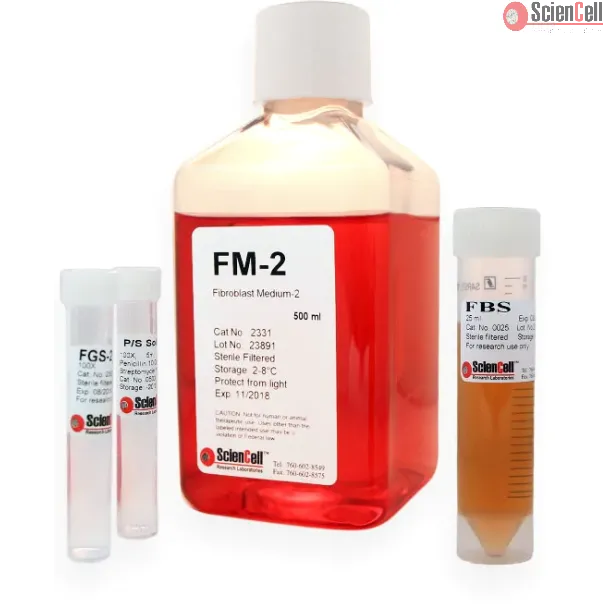
 2331-b-prf (Basal & Phenol Red Free Medium)
,-25-ml.webp)