Vitronectin Cell Adhesion Assay
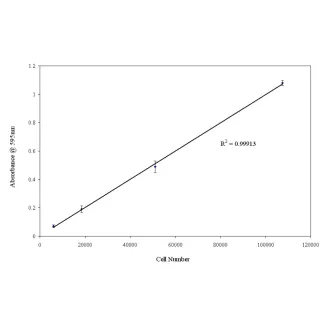
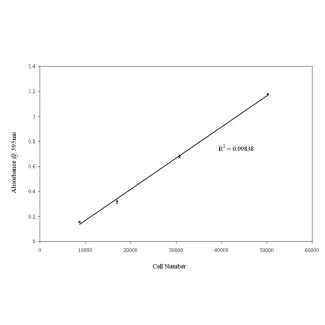
Cell adhesion is essential for cellular communication, regulation, and the structural integrity of tissues. Vitronectin is a multifunctional, high molecular weight extracellular matrix (ECM) glycoprotein found in both plasma and the ECM, where it promotes cell attachment, spreading, migration, and survival. It contains a somatomedin B domain, an RGD (Arg-Gly-Asp) integrin-binding motif, and hemopexin-like repeats, enabling interactions with multiple integrins (αᵥβ₃, αᵥβ₅, αᵥβ₁) as well as molecules such as PAI-1, glycosaminoglycans, and heparin. ScienCell’s Vitronectin Cell Adhesion Assay (VCAA) is designed to provide a rapid, and quantitative measurement of cell adhesion to vitronectin-coated surfaces. The kit is composed of a 48-well plate pre-coated with vitronectin, as well as BSA as negative controls (see plate format in Figure 1). In this assay, cells are seeded under controlled conditions. Non-adherent cells are removed by gentle washing and the remaining adherent cells are quantified using a colorimetric stain measured at 595 nm. This enables assessment of integrin-mediated adhesion, the impact of modulators (e.g., PAI-1) on adhesion, and differences in adhesion across cell types or treatment.
| Catalog No. | 8848 |
|---|---|
| Country of Manufacture | United States |
| Product Code | VCAA |
| Size/Quantity | 48 well plate |
| Product use | This product is for research use only. It is not approved for human or animal use, or for application in in vitro diagnostic procedures. |
| Storage | Store Cat# 8848a at 4°C, and Cat# 8848b and Cat# 8848c at room temperature. |
| Shipping | Gel ice. |
Product Sheets

Search for a Certificate of Analysis by Lot Number below:
Find answers to common questions about ScienCell products, cell culture, handling, and research applications.
No Publication available at this time.