
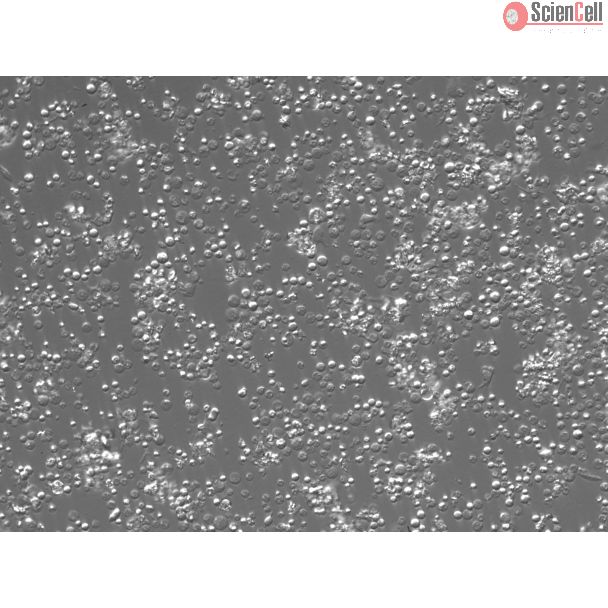
Rat Bone Marrow Mononuclear Cells
Related Promotion:

Get 10% off with code Fall20
*Select products only. Mention the code at checkout; discount applied to invoice.Bone Marrow Mononuclear Cells (BMMC) are located in the bone marrow and have regenerative capabilities. Primary BMMC are a heterogeneous population of single nucleus cells which include hematopoietic stem cells, hematopoietic progenitor cells, immature monocytes, and immature lymphocytes. Recent studies suggest that BMMC are suitable as a cell therapy to treat a variety of diseases such as cardiovascular disease, type 1 diabetes, and ischemic stroke. BMMC may also be used for bone tissue engineering. Primary rat BMMC (RBMMC) can be utilized to further study BMMC as a potential cell therapy.
RBMMC from ScienCell Research Laboratories are isolated from healthy adult rat bone marrow. RBMMC are depleted of erythrocytes and bone marrow macrophages, cryopreserved immediately after isolation, and delivered frozen. RBMMC are a mixed population of cells that include hematopoietic stem cells and progenitor cells, monocytes, and lymphocytes. Each vial contains at least 10 million cells in 1 ml volume. RBMMC are quality control tested for viability. RBMMC are negative for mycoplasma, bacteria, yeast, and fungi. RBMMC can be maintained for a short period of time in culture using the conditions provided by ScienCell Research Laboratories and are not intended for long-term culture.
Recommended Medium
It is recommended to use HematoGro Medium (HeGM, Cat. #5501) for short-term maintenance of RBMMC in vitro.
| Catalog No. | R1930 |
|---|---|
| Country of Manufacture | United States |
| Product Code | RBMMC |
| Size/Quantity | 10 million cells in 1 ml volume |
| Product use | This product is for research use only. It is not approved for human or animal use, or for application in in vitro diagnostic procedures. |
| Storage | Upon receiving, directly and immediately transfer the cells from dry ice to liquid nitrogen and keep the cells in liquid nitrogen until they are needed for experiments. |
| Shipping | Dry ice. |
Product Sheets

Search for a Certificate of Analysis by Lot Number below:
Find answers to common questions about ScienCell products, cell culture, handling, and research applications.
No Publication available at this time.