Porcine Retinal Pigment Epithelial Cells
Isolated from porcine retina. PRPEpiC are cryopreserved at passage one and delivered frozen. Each vial contains >5 x 10⁵ cells in 1 ml volume.
The retina is a multi-layered structure lining the posterior segment of the eye. It consists of photoreceptors and retinal pigment epithelial cells (RPEpiC). RPEpiC are situated between the neurosensory retina and the choroid, forming the outer blood-retina barrier that controls the chemical composition of the subretinal space. RPEpiC have specific polarized protein distributions within the cell. In contrast to other epithelia which normally faces an apical lumen devoid of matrix, the RPEpiC apical plasma membrane is in direct contact with the extracellular matrix. RPEpiC play a critical role in regulating the adjacent photoreceptor membrane turnover, retinoid metabolism, and protecting the retina from light-induced damages by the intracellular melanin, which suggests that RPEpiC may contribute to the pathogenesis of various ocular diseases such as proliferative retinopathy and age-related macular degeneration.
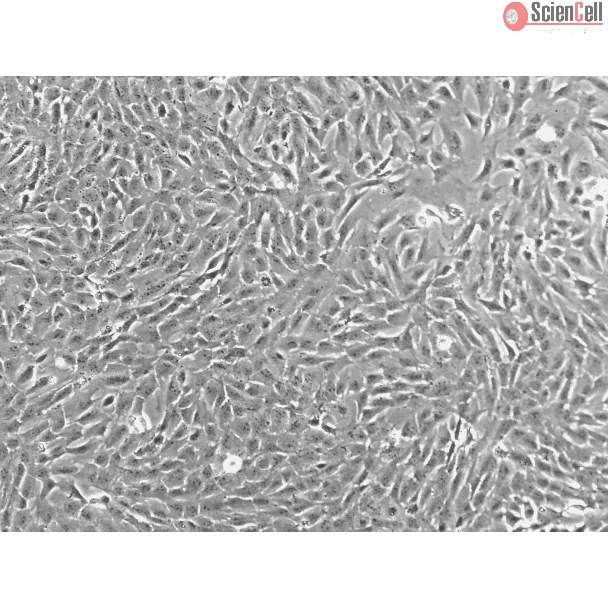
PRPEpiC from ScienCell Research Laboratories are isolated from porcine retina. PRPEpiC are cryopreserved at passage one and delivered frozen. Each vial contains >5 x 10⁵ cells in 1 ml volume. PRPEpiC are characterized by immunofluorescence with antibodies specific to cytokeratin-18. PRPEpiC are negative for mycoplasma, bacteria, yeast, and fungi. PRPEpiC are guaranteed to further expand for 5 population doublings under the conditions provided by ScienCell Research Laboratories.
Recommended Medium
It is recommended to use Epithelial Cell Medium (EpiCM, Cat. #4101) for culturing PRPEpiC in vitro.
| Catalog No. | P6540 |
|---|---|
| Country of Manufacture | United States |
| Product Code | PRPEpiC |
| Size/Quantity | 5 x 10^5 cells/vial |
| Product use | This product is for research use only. It is not approved for use in humans, animals, or in vitro diagnostic procedures. |
| Storage | Directly and immediately transfer cells from dry ice to liquid nitrogen upon receiving and keep the cells in liquid nitrogen until cell culture needed for experiments. |
| Shipping | Dry ice. |
Product Sheets

Search for a Certificate of Analysis by Lot Number below:
Find answers to common questions about ScienCell products, cell culture, handling, and research applications.
No Publication available at this time.
,-1-mg-ml--2.jpg)