MicroRNAs (miRNAs) are implicated in the pathogenesis of oral squamous-cell carcinoma (OSCC). miR-101 is involved in the development and progression of OSCC, but the biol... More
MicroRNAs (miRNAs) are implicated in the pathogenesis of oral squamous-cell carcinoma (OSCC). miR-101 is involved in the development and progression of OSCC, but the biological functions and underlying molecular mechanisms of this miRNA remain largely unknown. In this study, we showed that miR-101 was underexpressed in OSCC tissues and cell lines. miR-101 downregulation was inversely correlated with zinc finger E-box binding homeobox 1 (ZEB1) expression, lymph-node metastasis, and poor prognosis in OSCC patients. Enhanced expression of miR-101 significantly inhibited OSCC cell proliferation, apoptosis resistance, migration and invasion in vitro, and suppressed tumor growth and lung metastasis in vivo. Bioinformatics analyses showed that miR-101 directly targeted ZEB1, as confirmed by a dual-luciferase reporter assay. The inhibitory effects of miR-101 on OSCC growth and metastasis were attenuated and phenocopied by ZEB1 overexpression and knockdown, respectively. Overall, our findings indicated that miRNA-101 reduced OSCC growth and metastasis by targeting ZEB1 and provided new evidence of miR-101 as a potential therapeutic target for OSCC patients. Less
Purpose Storage of cultured human oral keratinocytes (HOK) allows for transportation of cultured transplants to eye clinics worldwide. In a previous study, one-week stora... More
Purpose Storage of cultured human oral keratinocytes (HOK) allows for transportation of cultured transplants to eye clinics worldwide. In a previous study, one-week storage of cultured HOK was found to be superior with regard to viability and morphology at 12°C compared to 4°C and 37°C. To understand more of how storage temperature affects cell phenotype, gene expression of HOK before and after storage at 4°C, 12°C, and 37°C was assessed. Materials and Methods Cultured HOK were stored in HEPES- and sodium bicarbonate-buffered Minimum Essential Medium at 4°C, 12°C, and 37°C for one week. Total RNA was isolated and the gene expression profile was determined using DNA microarrays and analyzed with Partek Genomics Suite software and Ingenuity Pathway Analysis. Differentially expressed genes (fold change > 1.5 and P < 0.05) were identified by one-way ANOVA. Key genes were validated using qPCR. Results Gene expression of cultures stored at 4°C and 12°C clustered close to the unstored control cultures. Cultures stored at 37°C displayed substantial change in gene expression compared to the other groups. In comparison with 12°C, 2,981 genes were differentially expressed at 37°C. In contrast, only 67 genes were differentially expressed between the unstored control and the cells stored at 12°C. The 12°C and 37°C culture groups differed most significantly with regard to the expression of differentiation markers. The Hedgehog signaling pathway was significantly downregulated at 37°C compared to 12°C. Conclusion HOK cultures stored at 37°C showed considerably larger changes in gene expression compared to unstored cells than cultured HOK stored at 4°C and 12°C. The changes observed at 37°C consisted of differentiation of the cells towards a squamous epithelium-specific phenotype. Storing cultured ocular surface transplants at 37°C is therefore not recommended. This is particularly interesting as 37°C is the standard incubation temperature used for cell culture. Less
The endothelial-specific receptor, tyrosine kinase with immunoglobulin-like loops and epidermal growth factor homology domains-2 (Tie2) is a member of the tyrosine kinase... More
The endothelial-specific receptor, tyrosine kinase with immunoglobulin-like loops and epidermal growth factor homology domains-2 (Tie2) is a member of the tyrosine kinase family and is ubiquitous in normal tissues; however, little is known about the mechanisms and roles of Tie2 in oral squamous cell carcinomas (OSCCs). In the current study, we investigated the expression status of Tie2 in OSCCs by quantitative reverse transcriptase-polymerase chain reaction, immunoblotting, and immunohistochemistry and the functional mechanisms of Tie2 using its overexpressed OSCC (oeTie2) cells and Tie2 blocking by its antibody. We found that Tie2 expression was down-regulated significantly (p < 0.05) in OSCCs compared with normal counterparts in vitro and in vivo. Interestingly, oeTie2 cells showed higher cellular adhesion (p < 0.05) and lower cellular invasion (p < 0.05) compared with control cells; whereas there was similar cellular proliferation in both transfectants. Furthermore, cellular adhesion was inhibited and invasion was activated by Tie2 function-blocking antibody (p < 0.05), indicating that Tie2 directly regulates cellular adhesion and invasion. As expected, among the clinical variables analyzed, Tie2-positivity in patients with OSCC was correlated closely with negative lymph node metastasis. These results suggested for the first time that Tie2 plays an important role in tumor metastasis and may be a potential biomarker for OSCC metastasis. Less
Previously, we identified global epigenetic aberrations in smoking-associated oral squamous cell carcinoma (OSCC). We hypothesized that cigarette exposure triggers OSCC t... More
Previously, we identified global epigenetic aberrations in smoking-associated oral squamous cell carcinoma (OSCC). We hypothesized that cigarette exposure triggers OSCC through alteration of the methylome of oral cells. Here we report that cigarette smoke condensate (CSC) significantly changes the genomic 5-methyldeoxycytidine content and nuclear accumulation of DNA methyltransferase 1 (DNMT1) and DNMT3A in human untransformed oral cells. By using integrated analysis of cDNA and methylation arrays of the smoking-associated dysplastic oral cell line and OSCC tumors, respectively, we identified four epigenetic targets--UCHL1, GPX3, LXN, and LDOC1--which may be silenced by cigarette. Results of quantitative methylation-specific PCR showed that among these four genes, LDOC1 promoter was the most sensitive to CSC. LDOC1 promoter hypermethylation and gene silencing followed 3 weeks of CSC treatment. LDOC1 knockdown led to a proliferative response and acquired clonogenicity of untransformed oral cells. Immunohistochemistry showed that LDOC1 was downregulated in 53.3% (8/15) and 57.1% (20/35) of premalignant oral tissues and early stage OSCCs, respectively, whereas 76.5% (13/17) of normal oral tissues showed high LDOC1 expression. Furthermore, the microarray data showed that LDOC1 expression had decreased in the lung tissues of current smokers compared with that in those of never smokers and had significantly decreased in the lung tumors of smokers compared with that in normal lung tissues. Our data suggest that CSC-induced promoter methylation may contribute to LDOC1 downregulation, thereby conferring oncogenic features to oral cells. These findings also imply a tumor suppressor role of LDOC1 in smoking-related malignancies such as OSCC and lung cancer. Less
Background: Semaphorins (SEMAs) consist of a large family of secreted and membrane-anchored proteins that are important in neuronal pathfinding and axon guidance in selec... More
Background: Semaphorins (SEMAs) consist of a large family of secreted and membrane-anchored proteins that are important in neuronal pathfinding and axon guidance in selected areas of the developing nervous system. Of them, SEMA7A has been reported to have a chemotactic activity in neurogenesis and to be an immunomodulator; however, little is known about the relevance of SEMA7A in the behaviors of oral squamous cell carcinoma (OSCC). Methods: We evaluated SEMA7A expression in OSCC-derived cell lines and primary OSCC samples using quantitative reverse transcriptase-polymerase chain reaction, immunoblotting, and semiquantitative immunohistochemistry (sq-IHC). In addition, SEMA7A knockdown cells (shSEMA7A cells) were used for functional experiments, including cellular proliferation, invasiveness, and migration assays. We also analyzed the clinical correlation between SEMA7A status and clinical behaviors in patients with OSCC. Results: SEMA7A mRNA and protein were up-regulated significantly (P<0.05) in OSCC-derived cell lines compared with human normal oral keratinocytes. The shSEMA7A cells showed decreased cellular growth by cell-cycle arrest at the G1 phase, resulting from up-regulation of cyclin-dependent kinase inhibitors (p21Cip1 and p27Kip1) and down-regulation of cyclins (cyclin D1, cyclin E) and cyclin-dependent kinases (CDK2, CDK4, and CDK6); and decreased invasiveness and migration activities by reduced secretion of matrix metalloproteases (MMPs) (MMP-2, proMMP-2, pro-MMP-9), and expression of membrane type 1- MMP (MT1-MMP). We also found inactivation of the extracellular regulated kinase 1/2 and AKT pathways, an upstream molecule of cell-cycle arrest at the G1 phase, and reduced secretion of MMPs in shSEMA7A cells. sq-IHC showed that SEMA7A expression in the primary OSCCs was significantly (P = 0.001) greater than that in normal counterparts and was correlated with primary tumoral size (P = 0.0254) and regional lymph node metastasis (P = 0.0002). Conclusion: Our data provide evidence for an essential role of SEMA7A in tumoral growth and metastasis in OSCC and indicated that SEMA7A may play a potential diagnostic/therapeutic target for use in patients with OSCC. Less
Background: Nucleolar and spindle-associated protein 1 (NUSAP1) is an important mitotic regulator. In addition to its crucial function in mitosis, NUSAP1 has recently rec... More
Background: Nucleolar and spindle-associated protein 1 (NUSAP1) is an important mitotic regulator. In addition to its crucial function in mitosis, NUSAP1 has recently received attention due to the interesting roles in carcinogenesis. The aim of this study was to reveal functional mechanisms of NUSAP1 in oral squamous cell carcinoma (OSCC). Methods: mRNA and protein expression levels of NUSAP1 in 9 OSCC-derived cells were analyzed by quantitative reverse transcriptase-polymerase chain reaction (qRT-PCR) and immunoblotting analyses. The correlation between the NUSAP1 expression profile and the clinicopathological factors was evaluated by immunohistochemistry (IHC) in clinical OSCC samples (n = 70). The NUSAP1 knockdown cells were established with short hairpin RNA (shRNA) in OSCC cells, and functional assays were performed using these cells. In addition to the evaluation of cellular proliferation and cell cycle, we also investigated the potential role of NUSAP1 in paclitaxel (PTX)-induced cellular responses. Results: mRNA and protein expression of NUSAP1 were significantly up-regulated in OSCC-derived cells compared with human normal oral keratinocytes (P < 0.05). IHC revealed that NUSAP-1 expression is closely associated with primary advanced T stage (P<0.05). Suppression of NUSAP1 expression levels led to significant (P < 0.05) inhibition of cellular proliferation. Furthermore, apoptosis induced by PTX was enhanced in NUSAP1 knockdown OSCC cells. Conclusions: NUSAP1 may be a crucial biomarker for OSCC. Moreover, down-regulated NUSAP1 expression suppresses tumor proliferation and also enhances anti-tumor effect of PTX by activating apoptotic pathways. Thus, the present study strongly suggests that regulating NUSAP1 expression should contribute to the therapy for OSCC. Less
Streptococcus mutans is the etiological agent of dental caries and one of the many bacterial species implicated in infective endocarditis. The expression of the collagen-... More
Streptococcus mutans is the etiological agent of dental caries and one of the many bacterial species implicated in infective endocarditis. The expression of the collagen-binding protein Cnm by S. mutans has been associated with extraoral infections, but its relevance for dental caries has only been theorized to date. Due to the collagenous composition of dentinal and root tissues, we hypothesized that Cnm may facilitate the colonization of these surfaces, thereby enhancing the pathogenic potential of S. mutans in advancing carious lesions. As shown for extraoral endothelial cell lines, Cnm mediates the invasion of oral keratinocytes and fibroblasts by S. mutans. In this study, we show that in the Cnm+ native strain, OMZ175, Cnm mediates stringent adhesion to dentinal and root tissues as well as collagen-coated surfaces and promotes both cariogenicity and carriage in vivo. In vitro, ex vivo, and in vivo experiments revealed that while Cnm is not universally required for S. mutans cariogenicity, it contributes to (i) the invasion of the oral epithelium, (ii) enhanced binding on collagenous surfaces, (iii) implantation of oral biofilms, and (IV) the severity of caries due to a native Cnm+ isolate. Taken together, our findings reveal that Cnm is a colonization factor that contributes to the pathogenicity of certain S. mutans strains in their native habitat, the oral cavity. Less
Radioresistance is still an emerging problem for radiotherapy of oral cancer. Aberrant epigenetic alterations play an important role in cancer development, yet the role o... More
Radioresistance is still an emerging problem for radiotherapy of oral cancer. Aberrant epigenetic alterations play an important role in cancer development, yet the role of such alterations in radioresistance of oral cancer is not fully explored. Using a methylation microarray, we identified promoter hypermethylation of FHIT (fragile histidine triad) in radioresistant OML1-R cells, established from hypo-fractionated irradiation of parental OML1 radiosensitive oral cancer cells. Further analysis confirmed that transcriptional repression of FHIT was due to promoter hypermethylation, H3K27me3 and overexpression of methyltransferase EZH2 in OML1-R cells. Epigenetic interventions or depletion of EZH2 restored FHIT expression. Ectopic expression of FHIT inhibited tumor growth in both in vitro and in vivo models, while also resensitizing radioresistant cancer cells to irradiation, by restoring Chk2 phosphorylation and G2/M arrest. Clinically, promoter hypermethylation of FHIT inversely correlated with its expression and independently predicted both locoregional control and overall survival in 40 match-paired oral cancer patient samples. Further in vivo therapeutic experiments confirmed that inhibition of DNA methylation significantly resensitized radioresistant oral cancer cell xenograft tumors. These results show that epigenetic silencing of FHIT contributes partially to radioresistance and predicts clinical outcomes in irradiated oral cancer. The radiosensitizing effect of epigenetic interventions warrants further clinical investigation. Less
Previous reports revealed that a significant decrease of miR-34a in oral cancer. But the role of miR-34a in oral cancer needs further research. In the present study, we w... More
Previous reports revealed that a significant decrease of miR-34a in oral cancer. But the role of miR-34a in oral cancer needs further research. In the present study, we will investigate the effect of miR-34a on oral cancer cell phenotypes. First, it was verified that miR-34a expression was lower in oral cancer tissues compared with their normal controls, so did the oral cancer cells. Next, it was showed that miR-34a overexpression in oral cancer cells could inhibit cell proliferation, G1 phase arrest, metastasis and epithelial mesenchymal transition. It was predicted that interleukin-6-receptor (IL6R) was a potential target gene of miR-34a by bioinformatics analysis and identified by luciferase assay. It was further showed that miR-34a inhibited oral cancer progression via IL6R. Collectively, our findings suggested that miR-34a may function as a tumor suppressor in oral cancer by targeting IL6R. Less
Autophagy, a type II programmed cell death, is essential for cell survival under stress, e.g. lung injury, and bone marrow-derived mesenchymal stem cells (BM-MSCs) have g... More
Autophagy, a type II programmed cell death, is essential for cell survival under stress, e.g. lung injury, and bone marrow-derived mesenchymal stem cells (BM-MSCs) have great potential for cell therapy. However, the mechanisms underlying the BM-MSC activation of autophagy to provide a therapeutic effect in ischaemia/reperfusion-induced lung injury (IRI) remain unclear. Thus, we investigate the activation of autophagy in IRI following transplantation with BM-MSCs. Seventy mice were pre-treated with BM-MSCs before they underwent lung IRI surgery in vivo. Human pulmonary micro-vascular endothelial cells (HPMVECs) were pre-conditioned with BM-MSCs by oxygen-glucose deprivation/reoxygenation (OGD) in vitro. Expression markers for autophagy and the phosphoinositide 3-kinase/protein kinase B (PI3K/Akt) signalling pathway were analysed. In IRI-treated mice, administration of BM-MSCs significantly attenuated lung injury and inflammation, and increased the level of autophagy. In OGD-treated HPMVECs, co-culture with BM-MSCs attenuated endothelial permeability by decreasing the level of cell death and enhanced autophagic activation. Moreover, administration of BM-MSCs decreased the level of PI3K class I and p-Akt while the expression of PI3K class III was increased. Finally, BM-MSCs-induced autophagic activity was prevented using the inhibitor LY294002. Administration of BM-MSCs attenuated lung injury by improving the autophagy level via the PI3K/Akt signalling pathway. These findings provide further understanding of the mechanisms related to BM-MSCs and will help to develop new cell-based therapeutic strategies in lung injury. Less
Background: MicroRNAs (miRNAs), small noncoding RNA molecules can function as oncogenes or tumor suppressors in tumorigenesis. Oral squamous cell carcinoma (OSCC) is one ... More
Background: MicroRNAs (miRNAs), small noncoding RNA molecules can function as oncogenes or tumor suppressors in tumorigenesis. Oral squamous cell carcinoma (OSCC) is one of the most prevalent cancers worldwide with a 5-year survival rate of approximately 50%. Methods: The expression of microRNA-99a (miR-99a) in OSCC tissues and cell lines was investigated using quantitative reverse transcription-polymerase chain reaction (qRT-PCR) analysis. The functions of miR-99a in migration/invasion and lung colonization were determined by transwell and tail vein injection assays, respectively. Specific targets of miR-99a were determined by software prediction, correlation with target protein expression, and luciferase reporter assay. The signaling pathways involved in regulation of miR-99a were investigated using the kinase inhibitors. Results: We observed reduced levels of miR-99a, identified as one of the most downregulated miRNA in OSCC and all tested OSCC cell lines compared to normal oral keratinocytes. Ectopic miR-99a expression in OSCC cells markedly reduced migration and invasion in vitro as well as lung colonization in vivo. When evaluating the specific targets of miR-99a, we found that ectopic miR-99a expression downregulates insulin-like growth factor 1 receptor (IGF1R) protein and that the expression of miR-99a correlates negatively with IGF1R protein in OSCC cells. Insertion of the 3′UTR of IGF1R mRNA into the 3′UTR of a reporter gene markedly reduced luciferase activity in OSCC cells expressing miR-99a, suggesting that miR-99a reduces luciferase activity by targeting the 3′UTR of IGF1R mRNA. When evaluating the mechanisms of miR-99a downregulation, we observed the upregulation of miR-99a expression in serum-starved conditions and its suppression in response to insulin-like growth factor (IGF1) stimulation. Inhibitors of phosphatidylinositol 3-kinase (PI3K) and mitogen-activated protein kinase (MAPK) kinase inhibited IGF1-induced suppression of miR-99a, suggesting the negative regulation of miR-99a expression by IGF1R signaling. Conclusion: Overall, results indicate that miR-99a functions as a tumor metastasis suppressor in OSCC cells and mutually regulates IGF1R expression in a reciprocal regulation. Less
Background: MicroRNAs (miRNAs), small noncoding RNA molecules can function as oncogenes or tumor suppressors in tumorigenesis. Oral squamous cell carcinoma (OSCC) is one ... More
Background: MicroRNAs (miRNAs), small noncoding RNA molecules can function as oncogenes or tumor suppressors in tumorigenesis. Oral squamous cell carcinoma (OSCC) is one of the most prevalent cancers worldwide with a 5-year survival rate of approximately 50%. Methods: The expression of microRNA-99a (miR-99a) in OSCC tissues and cell lines was investigated using quantitative reverse transcription-polymerase chain reaction (qRT-PCR) analysis. The functions of miR-99a in migration/invasion and lung colonization were determined by transwell and tail vein injection assays, respectively. Specific targets of miR-99a were determined by software prediction, correlation with target protein expression, and luciferase reporter assay. The signaling pathways involved in regulation of miR-99a were investigated using the kinase inhibitors. Results: We observed reduced levels of miR-99a, identified as one of the most downregulated miRNA in OSCC and all tested OSCC cell lines compared to normal oral keratinocytes. Ectopic miR-99a expression in OSCC cells markedly reduced migration and invasion in vitro as well as lung colonization in vivo. When evaluating the specific targets of miR-99a, we found that ectopic miR-99a expression downregulates insulin-like growth factor 1 receptor (IGF1R) protein and that the expression of miR-99a correlates negatively with IGF1R protein in OSCC cells. Insertion of the 3′UTR of IGF1R mRNA into the 3′UTR of a reporter gene markedly reduced luciferase activity in OSCC cells expressing miR-99a, suggesting that miR-99a reduces luciferase activity by targeting the 3′UTR of IGF1R mRNA. When evaluating the mechanisms of miR-99a downregulation, we observed the upregulation of miR-99a expression in serum-starved conditions and its suppression in response to insulin-like growth factor (IGF1) stimulation. Inhibitors of phosphatidylinositol 3-kinase (PI3K) and mitogen-activated protein kinase (MAPK) kinase inhibited IGF1-induced suppression of miR-99a, suggesting the negative regulation of miR-99a expression by IGF1R signaling. Conclusion: Overall, results indicate that miR-99a functions as a tumor metastasis suppressor in OSCC cells and mutually regulates IGF1R expression in a reciprocal regulation. Less
Areca nut has been proven to be correlated with various pathologic alterations in oral cavity. However, the mechanisms for such cytopathic effects are still elusive due m... More
Areca nut has been proven to be correlated with various pathologic alterations in oral cavity. However, the mechanisms for such cytopathic effects are still elusive due mostly to the limitations of cell culture systems. Here we discovered that areca nut extract (ANE) induced production of autophagosome vacuoles in cells cultured with rich medium but induced pyknosis and ballooning, two morphological alterations frequently observed in betel quid chewers, in cells under a serum-free culture condition. Permeability of the serum-starved cells to propidium iodide (PI) confirmed ANE induced novel necrosis with pyknosis (pyknotic necrosis), providing a possible explanation for inflammatory infiltration in chewers’ mucosa. In these serum-starved cells, ANE strongly induced reactive oxygen species (ROS), which acted as a key switch for the initiation of pyknotic necrosis. Calcium flux was also involved in the morphological alterations. Besides, inhibition of GSK3β by SB216763 significantly exacerbated the pyknotic necrosis either induced by ANE or H2O2 in serum-starved cells, suggesting that GSK3β is a critical regulator for ANE/ROS-mediated pyknotic necrosis. Interestingly, LC3-II transition and PARP cleavage were still detected in the serum-starved cells after ANE treatment, suggesting concurrent activation of apoptotic and autophagic pathways. Finally, insulin could counteract the effect of ANE-induced pyknotic necrosis. Taken together, these data provide a platform for studying ANE-induced cytopathogenesis and the first clinical implication for several pathological alterations, such as ballooning and inflammatory infiltration, in betel quid chewers. Less
Background: Kinesin family member 4A (KIF4A), a microtubule-based motor protein, was implicated in regulation of chromosomal structure and kinetochore microtubule dynamic... More
Background: Kinesin family member 4A (KIF4A), a microtubule-based motor protein, was implicated in regulation of chromosomal structure and kinetochore microtubule dynamics. Considering the functions of KIF4A, we assumed that KIF4A is involved in progression of oral squamous cell carcinomas (OSCCs) via activation of the spindle assembly checkpoint (SAC). However, little is known about the relevance of KIF4A in the behavior of OSCC. We investigated the KIF4A expression status and its functional mechanisms in OSCC. Less
Background: Kinesin family member 4A (KIF4A), a microtubule-based motor protein, was implicated in regulation of chromosomal structure and kinetochore microtubule dynamic... More
Background: Kinesin family member 4A (KIF4A), a microtubule-based motor protein, was implicated in regulation of chromosomal structure and kinetochore microtubule dynamics. Considering the functions of KIF4A, we assumed that KIF4A is involved in progression of oral squamous cell carcinomas (OSCCs) via activation of the spindle assembly checkpoint (SAC). However, little is known about the relevance of KIF4A in the behavior of OSCC. We investigated the KIF4A expression status and its functional mechanisms in OSCC. Less
Background: Snail is an important transcription factor implicated in several tumor progression and can be induced by reactive oxygen species (ROS). Areca quid chewing is ... More
Background: Snail is an important transcription factor implicated in several tumor progression and can be induced by reactive oxygen species (ROS). Areca quid chewing is a major risk factor of oral squamous cell carcinoma (OSCC). Therefore, we hypothesize that the major areca nut alkaloid arecoline may induce Snail via ROS and involve in the pathogenesis of areca quid chewing-associated OSCC. Less
Background. Sirtuins (SIRT1-7) are a family of NAD-dependent deacetylases, which play an important role in regulating cancer tumorigenesis; however, their role in oral ca... More
Background. Sirtuins (SIRT1-7) are a family of NAD-dependent deacetylases, which play an important role in regulating cancer tumorigenesis; however, their role in oral cancer has been controversial. SIRT3 is localized in the mitochondria, where it deacetylates and activates several enzymes involved in cellular redox balance and defense against oxidative damage. Less
Periodontal diseases are a class of pathologies wherein oral microbes induce harmful immune responses in a susceptible host. Therefore, an agent which can both reduce mic... More
Periodontal diseases are a class of pathologies wherein oral microbes induce harmful immune responses in a susceptible host. Therefore, an agent which can both reduce microbial burden and lessen pathogenesis of localized inflammation would have beneficial effects in periodontal disease. 2,4,4-trichloro-2-hydroxydiphenyl-ether [triclosan] is currently used in oral care products due to broad spectrum anti-microbial and anti-inflammatory properties.Objective: To determine effects of triclosan on the response of oral epithelial cells to stimulation with the inflammatory microbial product lipopolysaccharide [LPS], a ligand for toll-like receptor 4 [TLR4]. Less

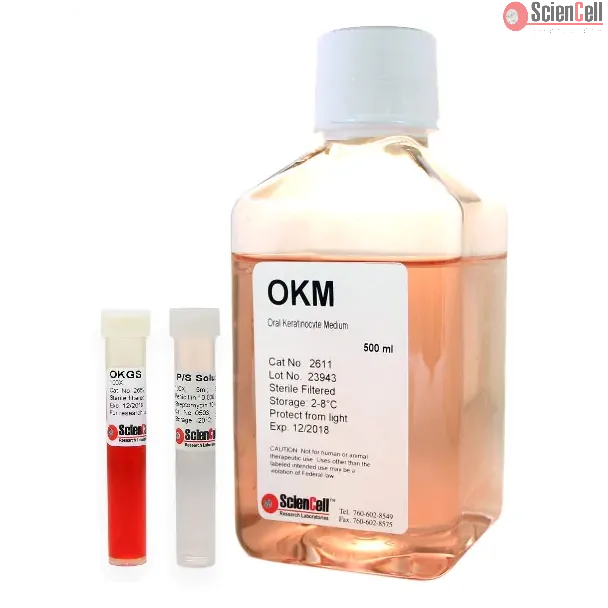
 2611-b-prf (Basal & Phenol Red Free Medium)