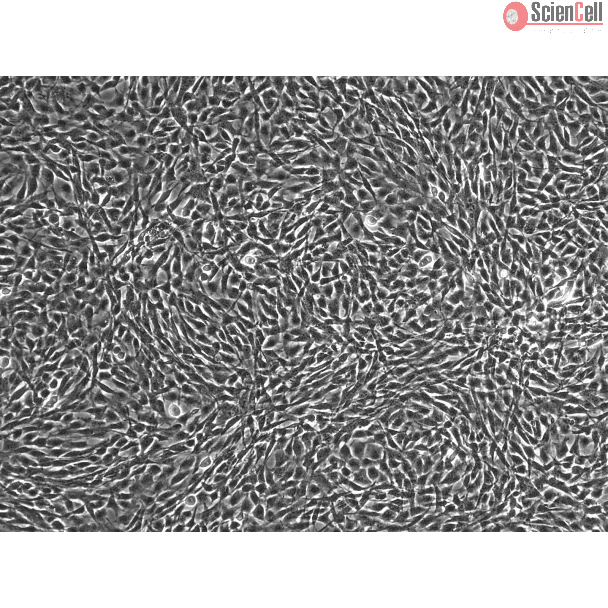
Human Skeletal Muscle Myoblasts
Isolated from human muscle of the pectoral girdle. Human Skeletal Muscle Myoblasts (HSkMM) are cryopreserved at passage one and delivered frozen. Each vial contains >5 x 10⁵ cells in 1 ml volume.
Skeletal muscle regenerates by the proliferation of mononuclear myogenic precursor cells called myoblasts that ultimately fuse and become incorporated into multinucleated myotubes. The myotubes then later mature into myofibers. This process occurs during the embryonic histogenesis of muscle, in postnatal muscle regeneration in response to injury, or in diseases such as Duchenne muscular dystrophy. The fusion of myoblasts is specific to skeletal muscle and myoblasts that do not form muscle fibers differentiate into satellite cells. Skeletal muscle myoblasts express the FGF receptor and IGF expression is increased during myoblast differentiation in culture. The human skeletal muscle myoblast culture is a convenient in vitro model for the study of cellular development and differentiation, insulin metabolism and tissue repair.
HSkMM from ScienCell Research Laboratories are isolated from human muscle of the pectoral girdle. HSkMM are cryopreserved at passage one and delivered frozen. Each vial contains >5 x 10⁵ cells in 1 ml volume. HSkMM are characterized by immunofluorescence with antibodies specific to myosin and/or actinin. HSkMM are negative for HIV-1, HBV, HCV, mycoplasma, bacteria, yeast and fungi. HSkMM are guaranteed to further expand for 15 population doublings under the conditions provided by ScienCell Research laboratories.
Recommended Medium
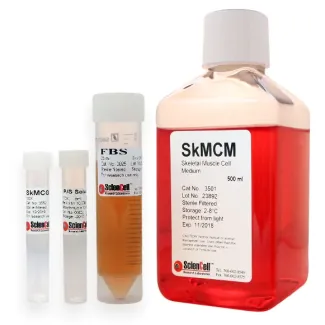
It is recommended to use Skeletal Muscle Cell Medium (SkMCM, Cat. #3501) for the culturing of HSkMM in vitro.
| Catalog No. | 3520 |
|---|---|
| Country of Manufacture | United States |
| Product Code | HSkMM |
| Size/Quantity | 5 x 10^5 cells/vial |
| Product use | This product is for research use only. It is not approved for use in humans, animals, or in vitro diagnostic procedures. |
| Storage | Directly and immediately transfer cells from dry ice to liquid nitrogen upon receiving and keep the cells in liquid nitrogen until cell culture needed for experiments. |
| Shipping | Dry ice. |
No Publication available at this time.
,-1-mg-ml--2.jpg)