Fibroblasts are mesenchymal cells derived from the embryonic mesoderm. They have been extensively used for a wide range of cellular and molecular studies as they are one of easiest types of cells to grow in culture. Their durability also makes them amenable to a variety of manipulations ranging from studies employing gene transfection to microinjection. There is evidence showing that fibroblasts in various organs are intrinsically different. Fibroblasts within tissues are exposed to a dynamic mechnical environment, which influences the structural integrity of both healthy and healing soft tissue. Fibroblasts secrete a non-rigid extracellular matrix which is rich in type I and/or type III collagen. Cultured prostate fibroblasts synthesize FGF-like growth factors to stimulate their growth which may be a factor in the development of benign prostatic hyperplasia.
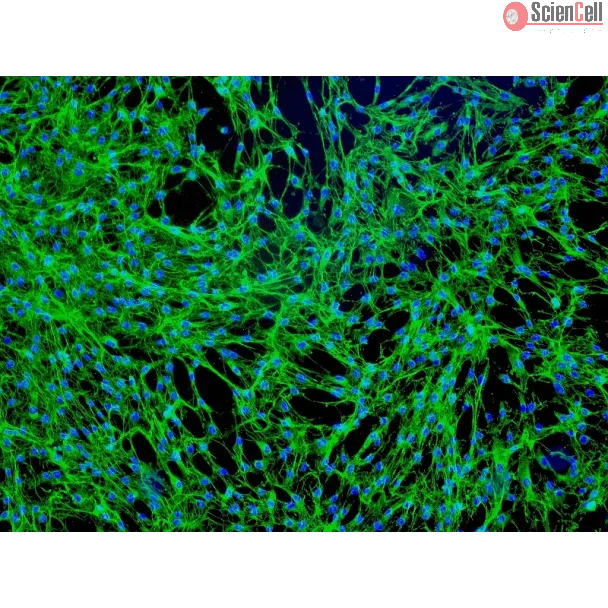
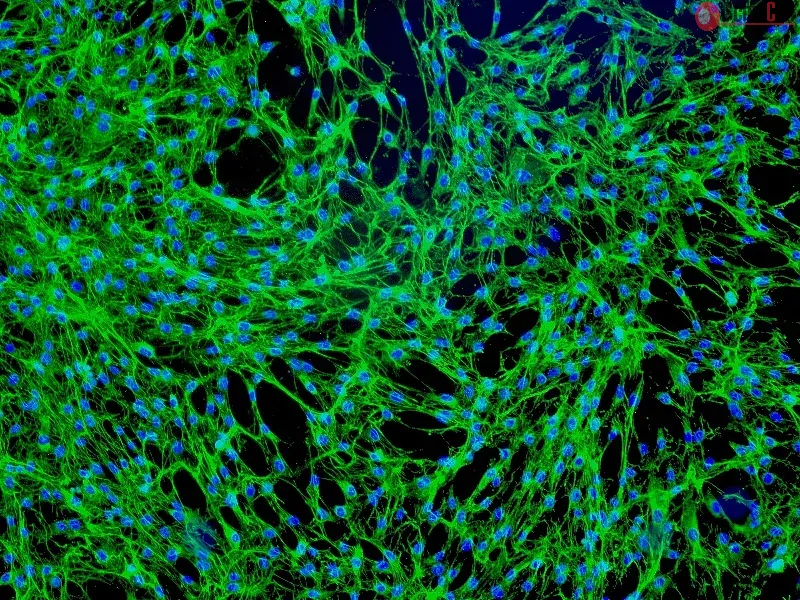
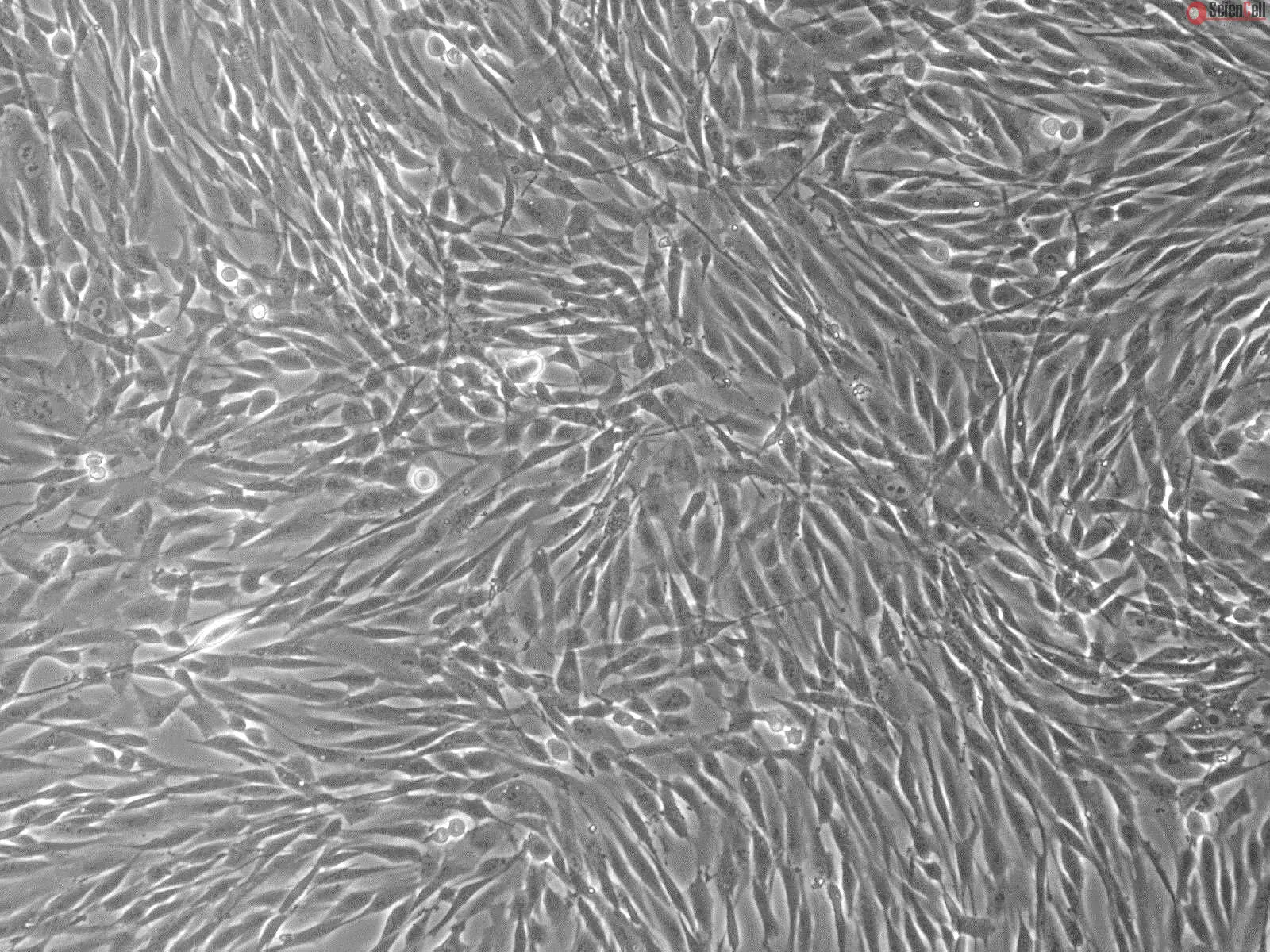
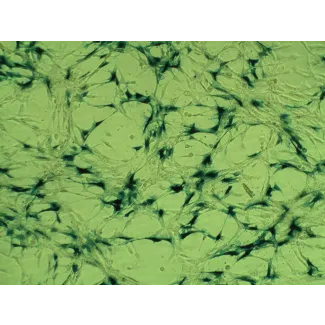
HPrF from ScienCell Research Laboratories are isolated from human prostate tissue. HPrF are cryopreserved at passage one and delivered frozen. Each vial contains >5 x 10⁵ cells in 1 ml volume. HPrF are characterized by their spindle morphology and immunofluorescence with antibody specific to fibronectin. HPrF are negative for HIV-1, HBV, HCV, mycoplasma, bacteria, yeast and fungi. HPrF are guaranteed to further expand for 15 population doublings under the conditions provided by ScienCell Research Laboratories.
Recommended Medium
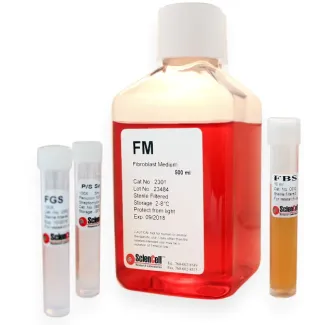
It is recommended to use Fibroblast Medium (FM, Cat. #2301) for the culturing of HPrF in vitro.
Product Sheets
 4430
4430
Search for a Certificate of Analysis by Lot Number below:
The PIM1 oncogene is over-expressed in human prostate cancer epithelial cells. Importantly, we observe that in human hyperplastic and cancerous prostate glands PIM1 is al... More
The PIM1 oncogene is over-expressed in human prostate cancer epithelial cells. Importantly, we observe that in human hyperplastic and cancerous prostate glands PIM1 is also markedly elevated in prostate fibroblasts, suggesting an important role for this kinase in epithelial/stromal crosstalk. The ability of PIM1 to regulate the biologic activity of stromal cells is demonstrated by the observation that expression of PIM1 kinase in human prostate fibroblasts increases the level and secretion of the extracellular matrix molecule, collagen 1A1 (COL1A1), the pro-inflammatory chemokine CCL5, and the platelet-derived growth factor receptors (PDGFR). PIM1 is found to regulate the transcription of CCL5. In co-cultivation assays where PIM1 overexpressing fibroblasts are grown with BPH1 prostate epithelial cells, PIM1 activity markedly enhances the ability of these fibroblasts to differentiate into myofibroblasts and express known markers of cancer-associated fibroblasts (CAFs). This differentiation can be reversed by the addition of small molecule PIM kinase inhibitors. Western blots demonstrate that PIM1 expression in prostate fibroblasts stimulates the phosphorylation of molecules that regulate 5’Cap driven protein translation, including 4EBP1 and eIF4B. Consistent with the hypothesis that the kinase controls translation of specific mRNAs in prostate fibroblasts, we demonstrate that PIM1 expression markedly increases the level of COL1A1 and PDGFRβ mRNA bound to polysomes. Together these results point on PIM1 as a novel factor in regulation of the phenotype and differentiation of fibroblasts in prostate cancer by controlling both the transcription and translation of specific mRNAs. Less
Treatment options for late stage prostate and colon cancer are limited and there is an urgent need to develop more effective and targeted novel therapies, which starts wi... More
Treatment options for late stage prostate and colon cancer are limited and there is an urgent need to develop more effective and targeted novel therapies, which starts with identification and validation of novel therapeutic targets. Recent clinical studies have demonstrated that tissue inhibitor matrix metalloproteinase-1 (TIMP-1) levels are elevated in cancer patient plasma and elevated TIMP-1 levels are associated with worse clinical outcomes. However, it is unknown whether TIMP-1 serves merely as a biomarker of cancer progression or has a functional role in promoting cancer progression and can serve as a cancer therapeutic target, which is the main objective of this study. Here, we show that stroma of human prostate and colon cancer express higher levels of TIMP-1 compared to their normal counterparts and increased expression of TIMP-1 promotes in vivo growth of both cancer types. We demonstrate for the first time that increased TIMP-1 expression stimulates accumulation of cancer associated fibroblasts (CAFs) within prostate and colon cancer tissues and that TIMP-1 enhances prostate CAF proliferation and migration in vitro and promotes ERK1/2 kinase activation in these CAF cells. Our results establish the novel promotive effects of TIMP-1 on cancer progression and on accumulation of CAFs that in turn provides a pro-tumor microenvironment. Together, these results establish the potential of TIMP-1 as a novel target for cancer therapy and the mechanism underlying the pro-tumor activity of TIMP-1. Less
ScienCell Research Laboratories (SRL) takes pride in being a resource for researchers all over the world. The publications listed here are not meant as an endorsement or confirmation of the reliability of the products.




,-1-mg-ml--2.jpg)