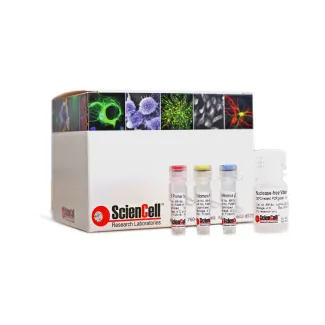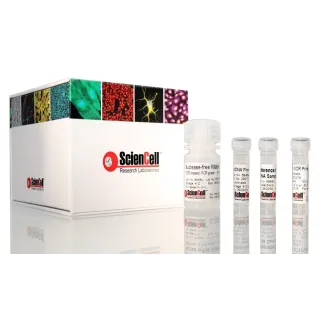
Human Nuclear DNA Damage Quantification qPCR Assay Kit
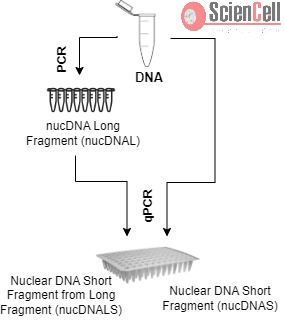
Damage to nuclear DNA (nucDNA) is widely considered a key factor in the development of cancer, neurodegenerative disorders, mitochondrial dysfunction, and various age-related conditions. nucDNA damage serves as a meaningful biomarker for assessing the genotoxicity of drugs and environmental toxins. ScienCell's Human Nuclear DNA Damage Quantification qPCR Assay Kit (HNDQ) operates on the principle that various DNA lesions can impede DNA polymerase progression. Consequently, DNA with fewer lesions amplifies more readily than damaged DNA under identical conditions. Damage levels can be quantified in terms of the lesions per kilobase pair using a Poisson distribution of lesions or the percentage of intact nucDNA of the target sample to the control sample. Additionally, our assay allows for tracking DNA repair kinetics by measuring the restoration of target DNA amplification over time following the removal of the DNA-damaging agent. This assay monitors the integrity of nucDNA.
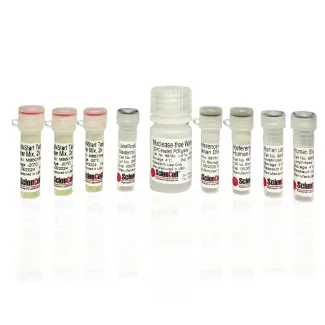
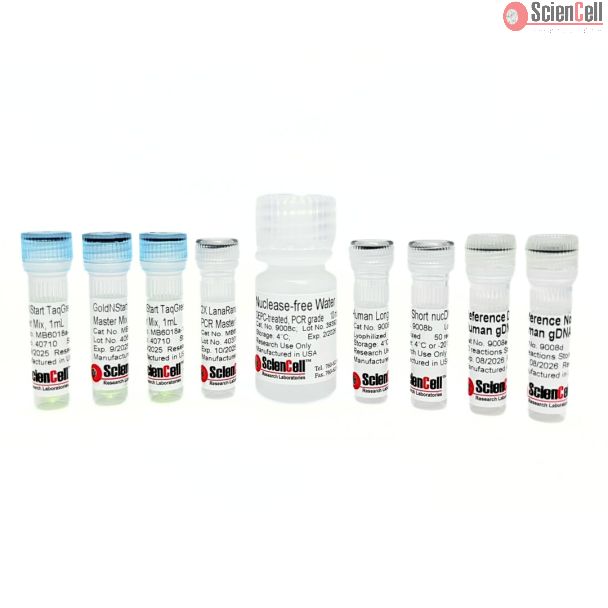
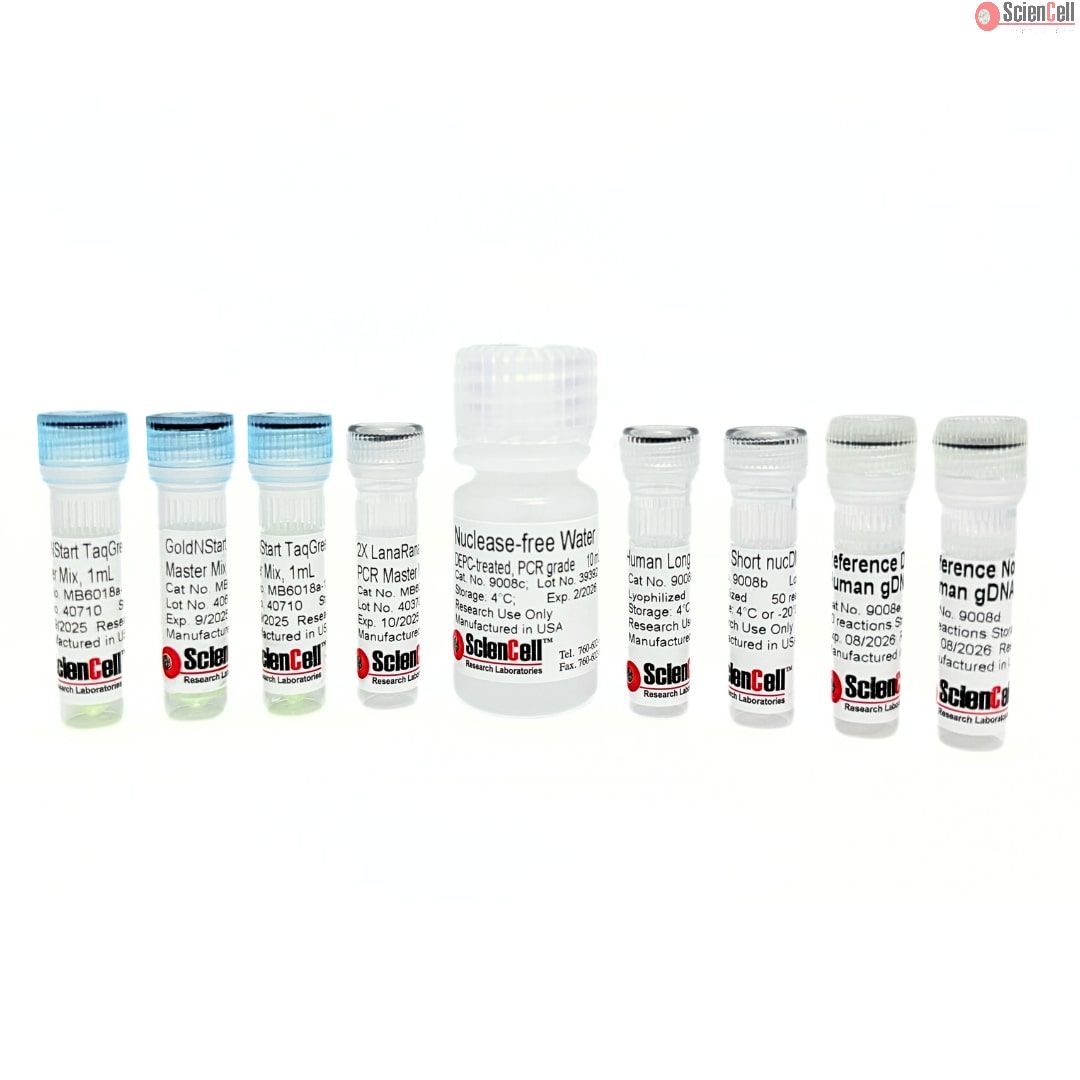
The primer sets (Cat. #9008a and Cat. #9008b) recognizes and amplifies sequences in the most conserved regions on human nucDNA. We utilize 2X LanaRana Long Range PCR Master Mix (cat #MB6098) and Human Long nucDNA Primer Set (Cat. #9008a) to amplify a long 8.1 kb DNA fragment. For amplifying a short 151 bp nucDNA fragment, we use the 2X GoldNStart TaqGreen qPCR Master Mix (Cat. #MB6018a-1) and Human Short nucDNA Primer Set (Cat. # 9008b). Human DNA from Non-Damaged (untreated) and Damaged (UV treated) cells serves as positive and negative controls for the reaction.
| Catalog No. | 9008 |
|---|---|
| Country of Manufacture | United States |
| Product Code | HNDQ |
| Size/Quantity | 50 reactions |
| Product use | HNDQ is for research use only. It is not approved for human or animal use, or for application in clinical or in vitro diagnostic procedures. HNDQ can be conducted using genomic DNA from human cultured cells or human tissues. |
| Storage | Refer to Product Sheet |
| Shipping | Dry Ice |
Product Sheets

Search for a Certificate of Analysis by Lot Number below:
Find answers to common questions about ScienCell products, cell culture, handling, and research applications.
No Publication available at this time.