The ciliary epithelium rests upon the leaf-like projections of the ciliary processes in the posterior chamber, overlaying the core of stroma and blood vessels. It consists of two layers of columnar cells, which appear structurally and functionally distinct. The outer layer of epithelium is pigmented, but the inner layer, which resides next to the aqueous, is not. In mammalian eyes, the non-pigmented ciliary epithelial cells (NPCEpiC) are largely responsible for the aqueous humor inflow. NPCEpiC generate an osmotic gradient through solute transfer, which then results in water movement from the stroma into the posterior chamber. Other studies have implicated NPCEpiC in the synthesis of macro-molecules required for photo-transduction and the development of rare adenomas in the ciliary body.
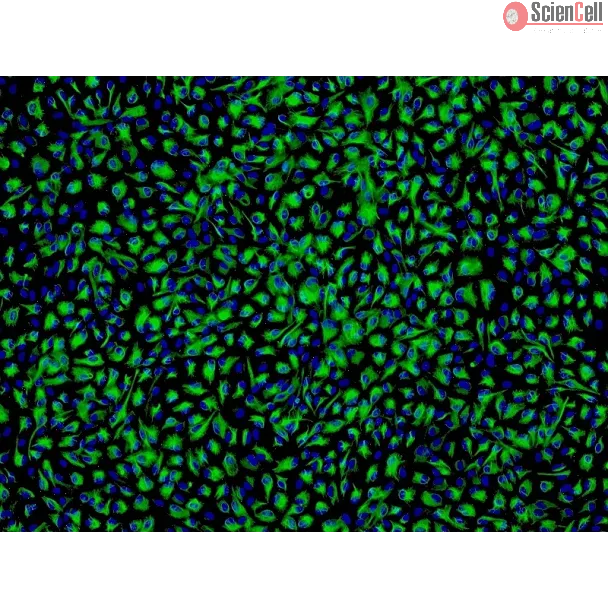
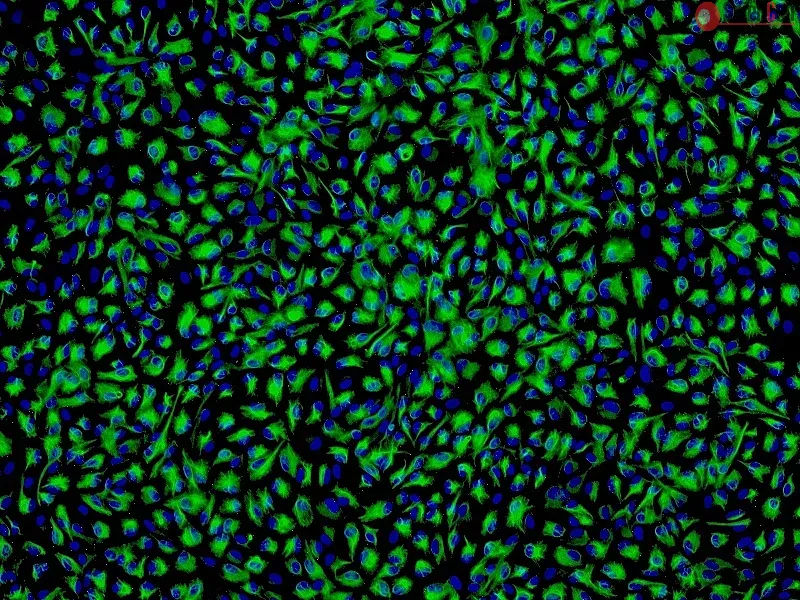
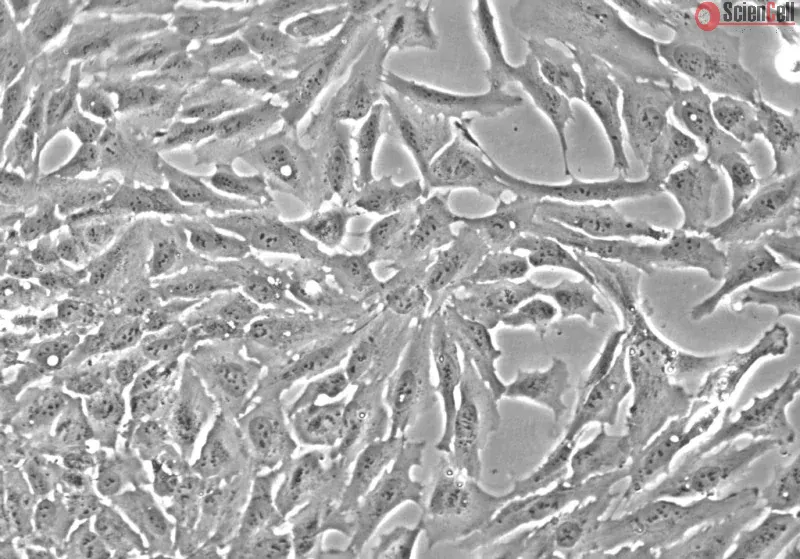
HNPCEpiC from ScienCell Research Laboratories are isolated from human ciliary body. HNPCEpiC are cryopreserved at P0 and delivered frozen. Each vial contains >5 x 10⁵ cells in 1 ml volume. HNPCEpiC are characterized by immunofluorescence with antibodies specific to cytokeratin-18 and/or cytokeratin-19. HNPCEpiC are negative for HIV-1, HBV, HCV, mycoplasma, bacteria, yeast, and fungi. HNPCEpiC are guaranteed to further expand for 10 population doublings under the conditions provided by ScienCell Research Laboratories.
Recommended Medium
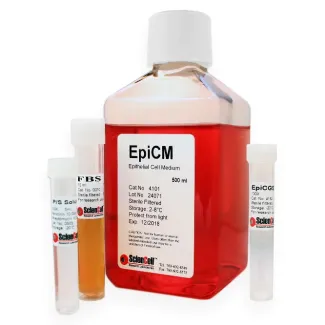
It is recommended to use Epithelial Cell Medium (EpiCM, Cat. #4101) for culturing HNPCEpiC in vitro.
Product Sheets
 6580
6580
Search for a Certificate of Analysis by Lot Number below:
Matching transformation system (MA-T), an on-demand aqueous chlorine dioxide production solution is utilized in various applications, including antibacterial and cancer t... More
Matching transformation system (MA-T), an on-demand aqueous chlorine dioxide production solution is utilized in various applications, including antibacterial and cancer therapies. Herein, we focused on the ability of MA-T in oxidizing human transient receptor potential cation channel subfamily V member 4 (hTRPV4), which functions as a redox sensor, using Ca2+ imaging and patch-clamp experiments. We found that 10 ppm MA-T activated hTRPV4 in HEK293T cells. Moreover, MA-T induced increase in cytosolic calcium concentration through hTRPV4 activation in human non-pigmented ciliary epithelial cells. Our study findings suggest MA-T as a potential agent for TRPV4-related diseases. Less
The ciliary zonule, also known as Zinn's zonule, is composed of oxytalan fibers. However, the mechanism by which epithelial cells in the ciliary body form these fibers in... More
The ciliary zonule, also known as Zinn's zonule, is composed of oxytalan fibers. However, the mechanism by which epithelial cells in the ciliary body form these fibers in not fully understood. We examined human nonpigmented ciliary epithelial cells to determine the appearance and amount of oxytalan fibers in terms of positivity for their major components, fibrillin-1 and fibrillin-2. Examination of fibrillin-1 and fibrillin-2 expression by immunofluorescence revealed that thin fibers positive for fibrillin-1 on Day 2 changed to thick fibers by Day 8. The fibers positive for fibrillin-2 appeared on the thick fibrillin-1-positive fibers after Day 4. Northern blot analysis revealed that the level of fibrillin-1 did not change markedly, while induction of fibrillin-2 gene was evident on Day 5. Western blot analysis showed that fibrillin-1 deposition increased gradually, while that of fibrillin-2 increased markedly from Day 5 to Day 8. Fibrillin-1 suppression did not lead to the formation of fibrillin-2-positive thick fibers, whereas fibrillin-2 suppression led to the formation of fibrillin-1-positive thin fibers, but not thick fibers. These results suggest that both fibrillin-1 and fibrillin-2 are essential for the formation of thick oxytalan fibers in the ciliary zonule and are informative for clarifying the mechanism of homeostasis of the ocular matrix. Less
Purpose.: To investigate the anti-inflammatory effects of guggulsterone, an antioxidant and antitumor agent, in endotoxin-induced uveitis (EIU) in rats and to elucidate t... More
Purpose.: To investigate the anti-inflammatory effects of guggulsterone, an antioxidant and antitumor agent, in endotoxin-induced uveitis (EIU) in rats and to elucidate the underlying molecular mechanism or mechanisms related to ocular inflammation. Methods.: EIU was induced by subcutaneous injection of lipopolysaccharide (LPS; 150 μg) into Lewis rats treated with guggulsterone (30 mg/kg body weight, intraperitoneally) or its carrier. After 24 hours the rats were killed, eyes were enucleated, and aqueous humor (AqH) was collected. Numbers of infiltrating cells and levels of matrix metalloproteinase-2 (MMP-2), nitric oxide (NO), and prostaglandin E2 (PGE2) were determined in AqH by specific ELISAs. An antibody array was used to measure the expression of various inflammatory cytokines in AqH. The expression of MMP-2, iNOS, Cox-2, phospho-IκB, and phospho-NF-κB was determined immunohistochemically. Human primary nonpigment ciliary epithelial cells (HNPECs) were used to determine the in vitro efficacy of guggulsterone on the LPS-induced inflammatory response. Results.: Compared with control, the EIU rat eye AqH had a significantly higher number of infiltrating cells, total protein, and inflammatory markers, such as MMP-2, NO, and PGE2, and the treatment of guggulsterone prevented EIU-induced increases. Guggulsterone also prevented the expression of MMP-2, iNOS, and Cox-2 proteins and of IκB and NF-κB in various eye tissues. Moreover, in cultured HNPECs, guggulsterone inhibited LPS-induced expression of inflammatory proteins. Conclusions.: These results for the first time demonstrate that the plant sterol guggulsterone suppresses ocular inflammation in EIU, suggesting that the supplementation of guggulsterone could be a novel approach for the treatment of ocular inflammation. Less
ScienCell Research Laboratories (SRL) takes pride in being a resource for researchers all over the world. The publications listed here are not meant as an endorsement or confirmation of the reliability of the products.


,-1-mg-ml--2.jpg)