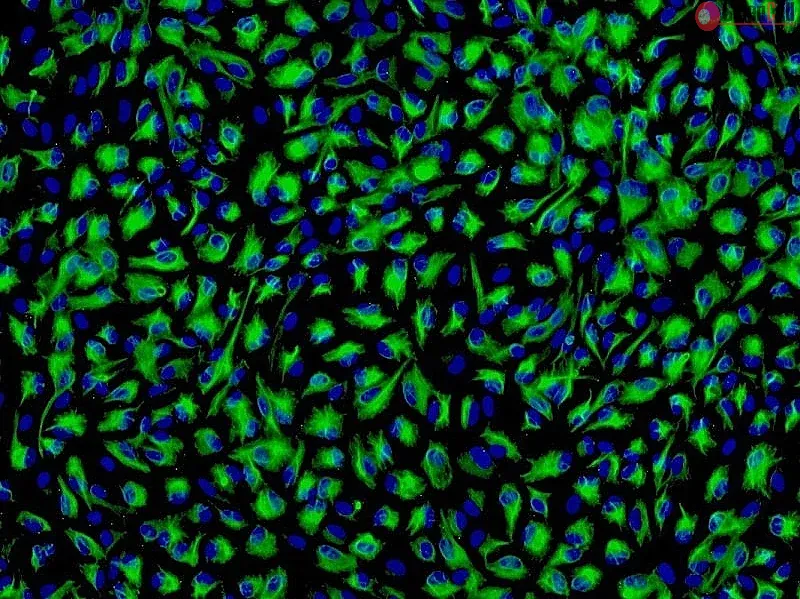
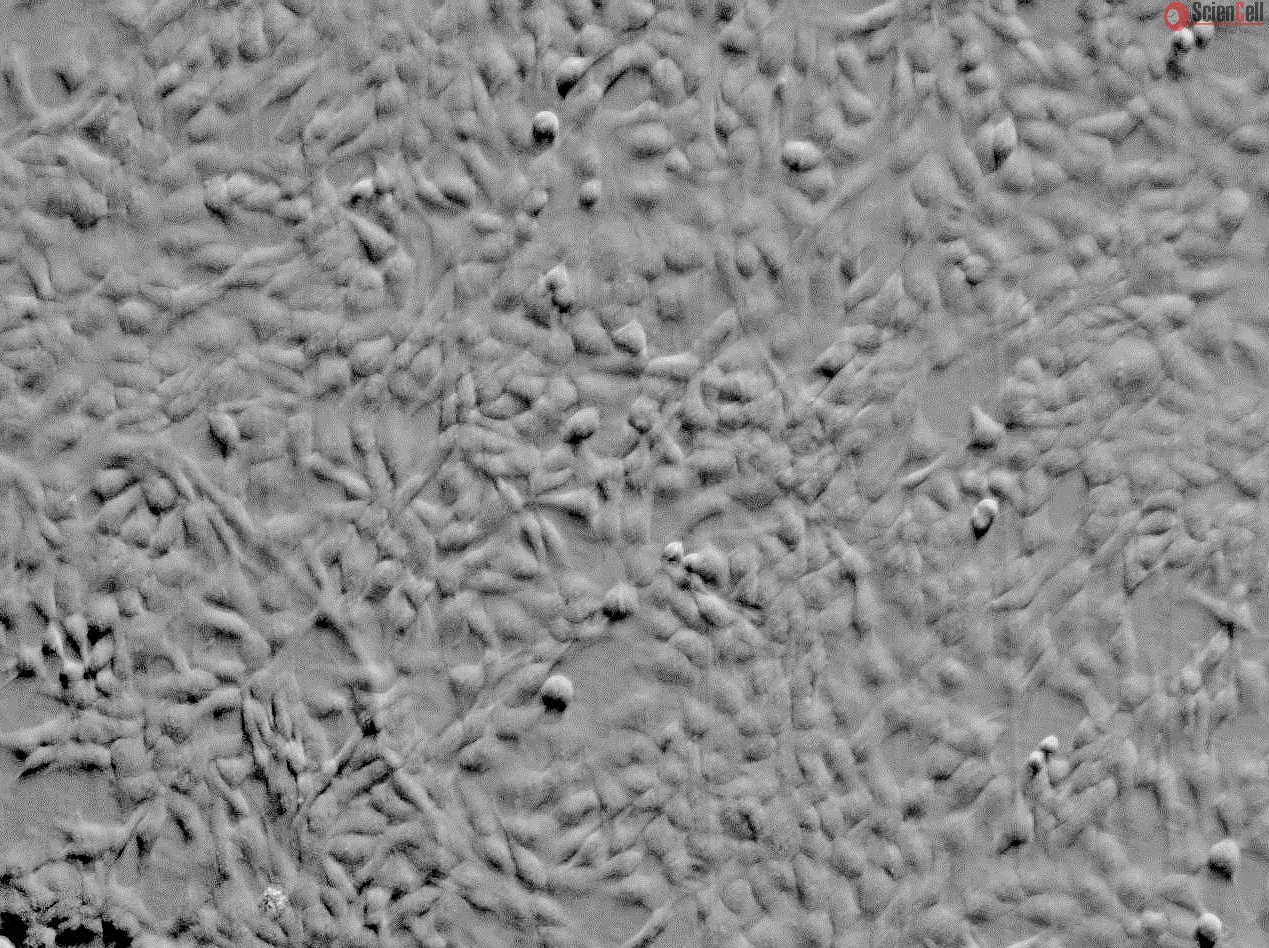
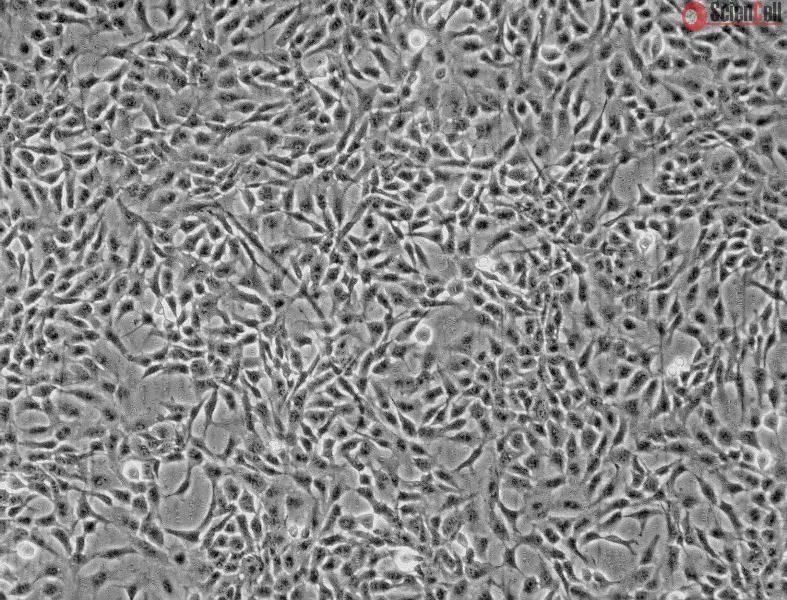
Human Iris Pigment Epithelial Cells
Isolated from human iris. HIPEpiC are cryopreserved at passage one and delivered frozen. Each vial contains >5 x 10⁵ cells in 1 ml volume.
The iris is a pigmented disk with a variable aperture which controls the size of the pupil and the amount of light reaching the retina. It consists of the anterior limiting layer, the stroma, the dilator muscle layer, and the posterior pigmented epithelium. The iris pigment epithelial cells (IPEpiC) share the same embryonic origin as retinal pigment epithelial cells (RPE) and thus exhibit similar functional properties as RPE, including turnover of photoreceptors and synthesis of trophic factors. Previous studies showed that IPEpiC transplanted into the subretinal space inhibited abnormal neovascularization and photoreceptor degeneration, which suggests that IPEpiC transplantation may
be used in the future to treat retinal disorders.
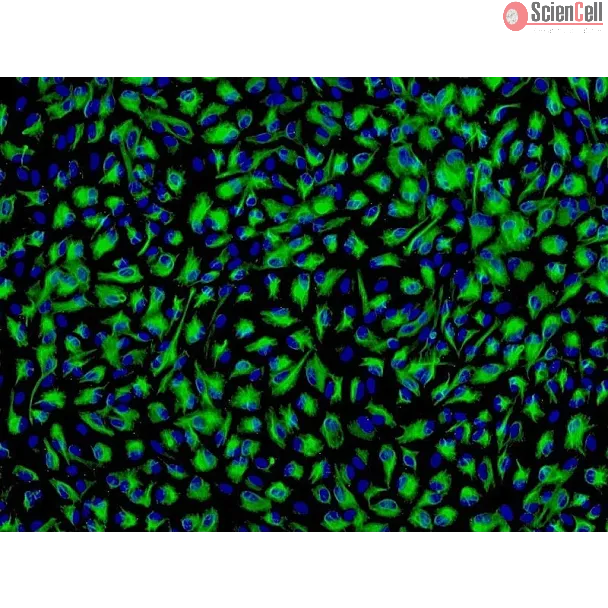
HIPEpiC from ScienCell Research Laboratories are isolated from human iris. HIPEpiC are cryopreserved at passage one and delivered frozen. Each vial contains >5 x 10⁵ cells in 1 ml volume. HIPEpiC are characterized by immunofluorescence with antibodies specific to cytokeratin18 and/or cytokeratin-19. HIPEpiC are negative for HIV-1, HBV, HCV, mycoplasma, bacteria, yeast, and fungi. HIPEpiC are guaranteed to further expand for 10 population doublings under the condition provided by ScienCell Research Laboratories.
Recommended Medium
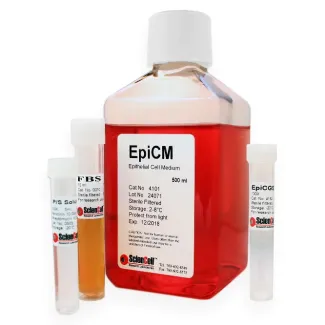
It is recommended to use Epithelial Cell Medium (EpiCM, Cat. #4101) for culturing HIPEpiC in vitro.
| Catalog No. | 6560 |
|---|---|
| Country of Manufacture | United States |
| Product Code | HIPEpiC |
| Size/Quantity | 5 x 10^5 cells/vial |
| Product use | This product is for research use only. It is not approved for use in humans, animals, or in vitro diagnostic procedures. |
| Storage | Directly and immediately transfer cells from dry ice to liquid nitrogen upon receiving and keep the cells in liquid nitrogen until cell culture needed for experiments. |
| Shipping | Dry ice. |
Product Sheets

Search for a Certificate of Analysis by Lot Number below:
Find answers to common questions about ScienCell products, cell culture, handling, and research applications.
ScienCell Research Laboratories (SRL) takes pride in being a resource for researchers all over the world. The publications listed here are not meant as an endorsement or confirmation of the reliability of the products.
,-1-mg-ml--2.jpg)