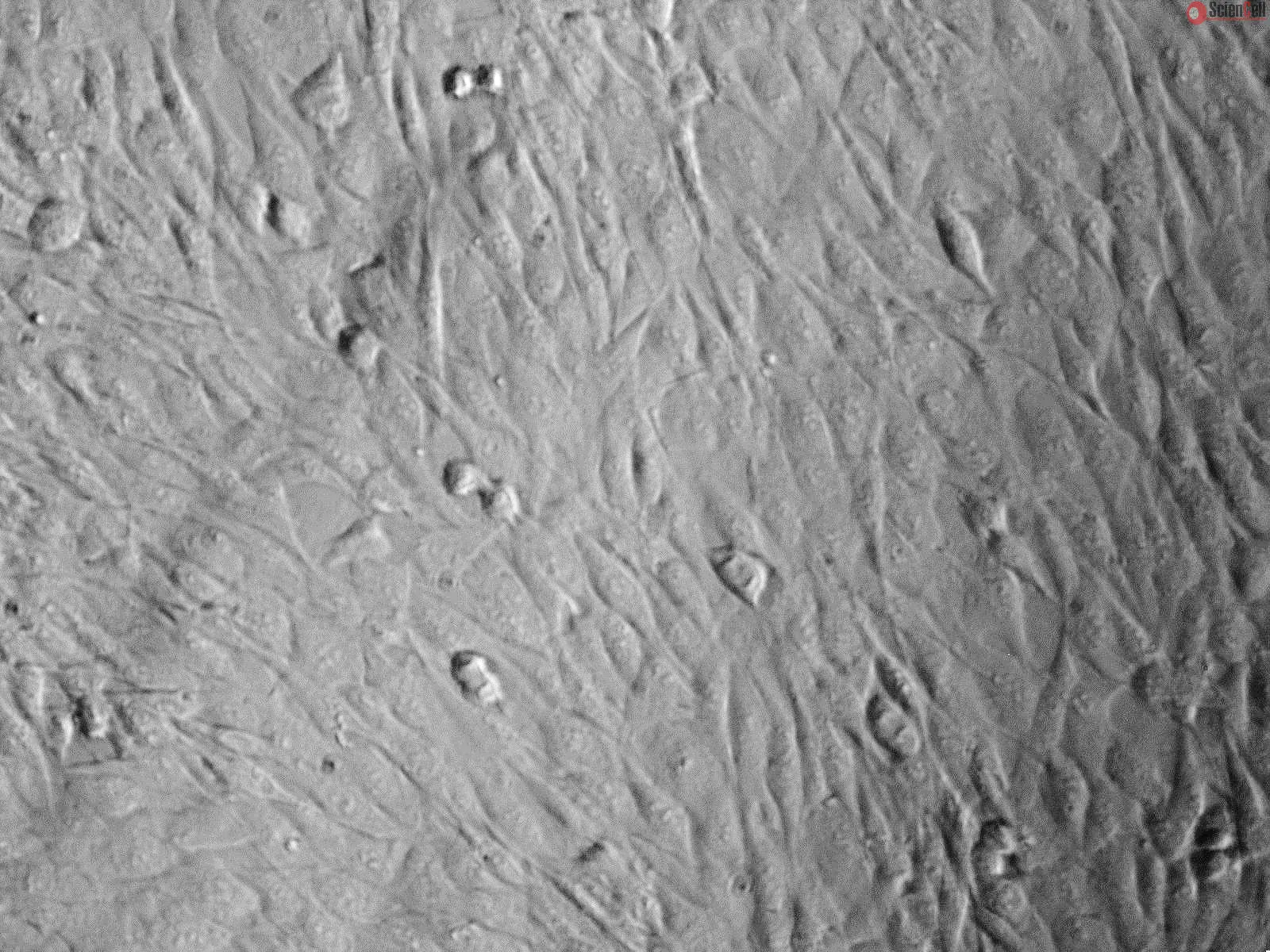
Human Dermal Fibroblasts-Fetal-Mitomycin C treated
Isolated from fetal human skin. HDF-f-mt are cryopreserved at passage one and delivered frozen. Each vial contains > 5 x 10⁵ cells in 1 ml volume.
Fibroblasts are mesenchymal cells derived from the embryonic mesoderm. They have been extensively used for a wide range of cellular and molecular studies as they are one of easiest types of cells to grow in culture. Their durability also makes them amenable to a variety of manipulations ranging from studies employing gene transfection to microinjection. In general, fibroblasts secrete a non-rigid extracellular matrix which is rich in type I and/or type III collagen. There is evidence showing that fibroblasts in various organs are intrinsically different. Dermal fibroblasts switch from a proliferative, migratory phase to a contractile, matrixremodeling phase during wound healing. In addition, they secrete large quantities of hyaluronan in response to inflammatory stimuli.
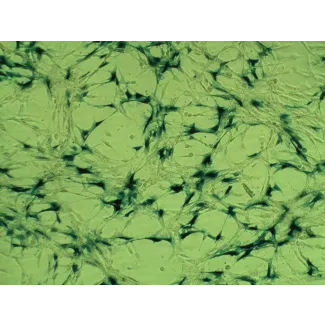
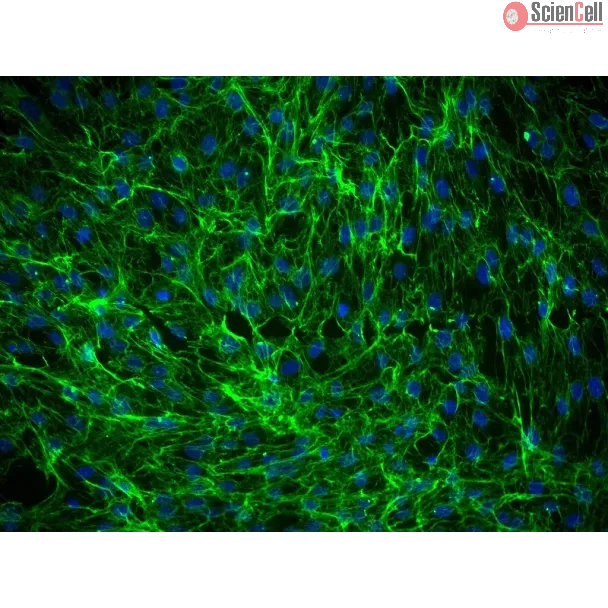
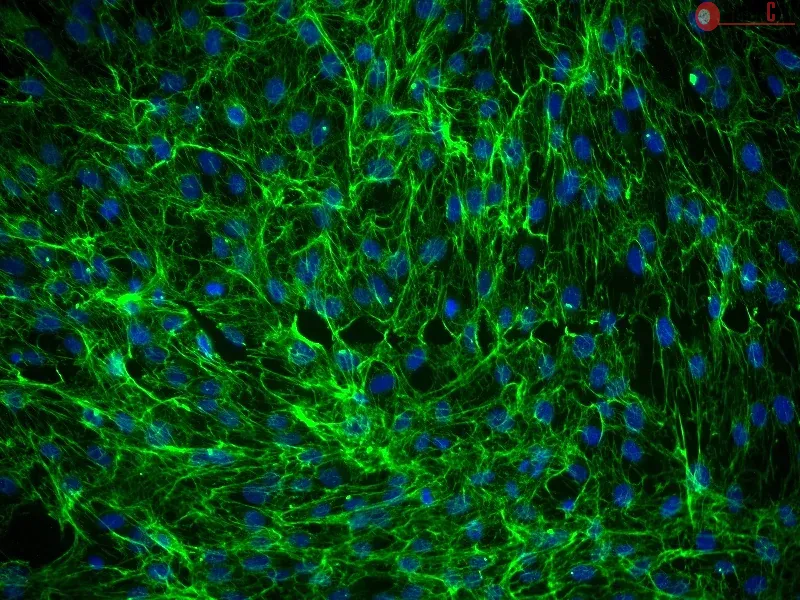
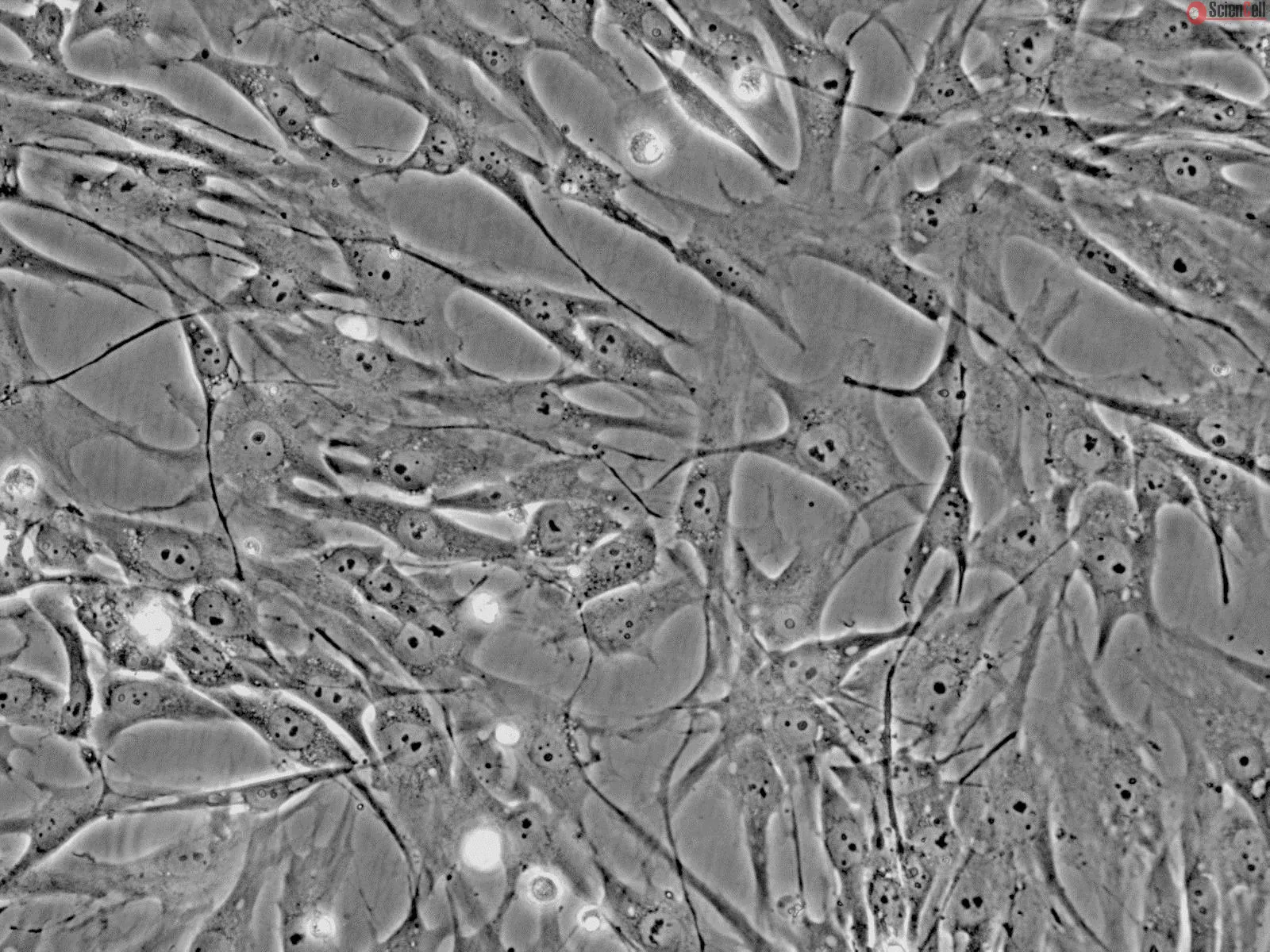
HDF-f-mt from ScienCell Research Laboratories are isolated from fetal human skin. HDF-f-mt are cryopreserved at passage one and delivered frozen. Each vial contains > 5 x 10⁵ cells in 1 ml volume. HDF-f-mt are characterized by their spindle morphology and immunofluorescence with antibody specific to fibronectin. HDF-f-mt are negative for HIV-1, HBV, HCV, mycoplasma, bacteria, yeast, and fungi. HDF-f-mt are guaranteed to further culture under the conditions provided by ScienCell Research Laboratories; however, HDF-f-mt are not recommended for expanding as mitomycin C treatment prevents further cell proliferation.
Recommended Medium
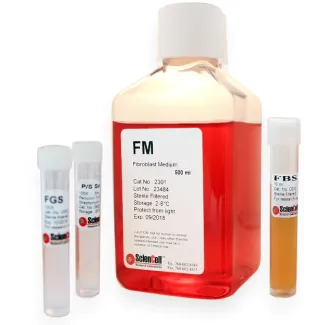
It is recommended to use Fibroblast Medium (FM, Cat. #2301) for culturing HDF-f-mt in vitro.
| Catalog No. | 2350 |
|---|---|
| Country of Manufacture | United States |
| Product Code | HDF-f-mt |
| Size/Quantity | 1 x 10^5 cells/vial |
| Product use | This product is for research use only. It is not approved for use in humans, animals, or in vitro diagnostic procedures. |
| Storage | Directly and immediately transfer cells from dry ice to liquid nitrogen upon receiving and keep the cells in liquid nitrogen until cell culture needed for experiments. |
| Shipping | Dry ice. |
Product Sheets

Search for a Certificate of Analysis by Lot Number below:
Find answers to common questions about ScienCell products, cell culture, handling, and research applications.
No Publication available at this time.