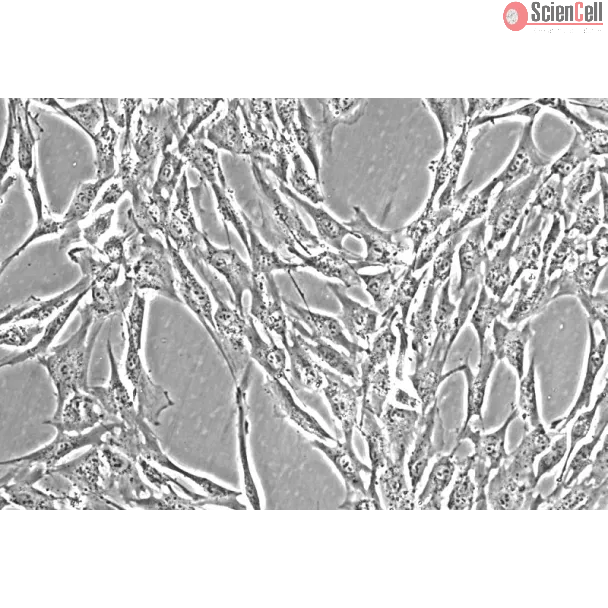
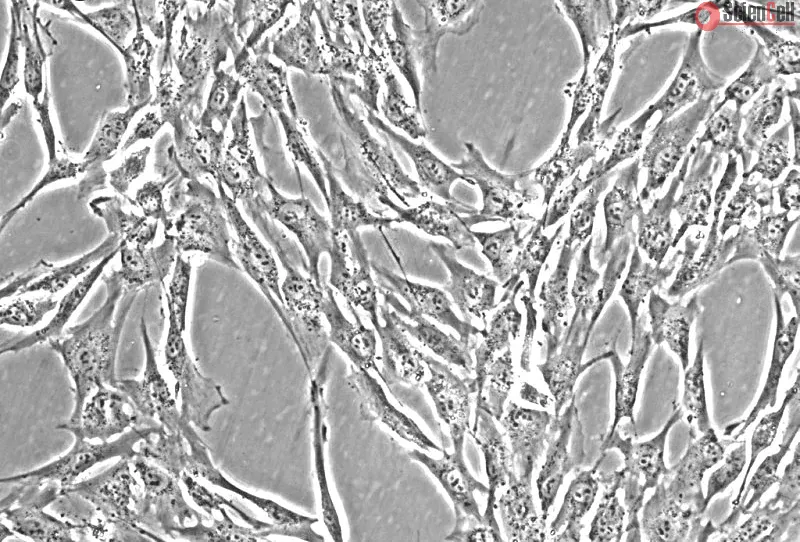
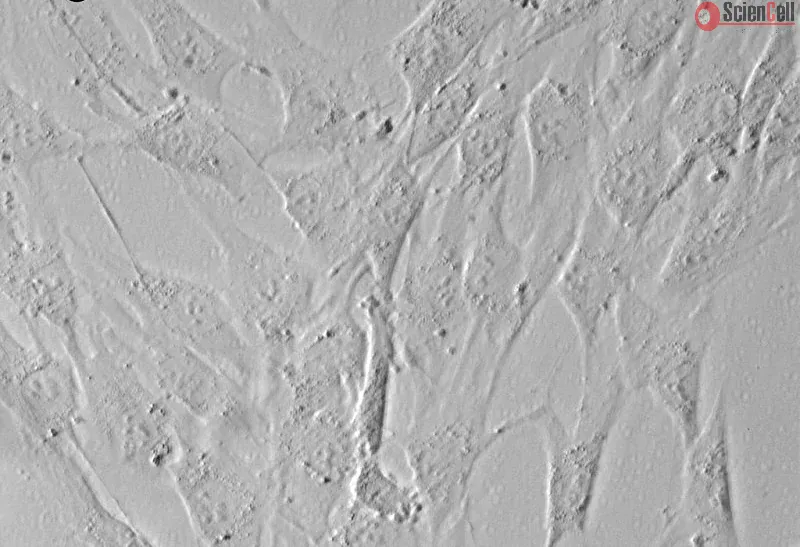
Human Colonic Smooth Muscle Cells
Isolated from the human colon. Human Colonic Smooth Muscle Cells (HCoSMC) are cryopreserved at passage one and delivered frozen. Each vial contains >5 x 10⁵ cells in 1 ml volume.
Smooth muscle contraction is the fundamental event in gastrointestinal motion. Inflammation of the human intestine causes increased levels of smooth muscle-specific actin, which in turn promotes the thickening of the smooth muscle layers. The increased smooth muscle actin may affect force production and further demonstrates the plasticity of smooth muscle cells in the inflamed intestine. Studies also show that human intestinal smooth muscle cells respond to IL-1beta and TNFalpha stimulation by releasing IL-6, which may significantly contribute to the overall systemic inflammatory response. The colonic smooth muscle cells (CoSMC) possess a different subtype of somatostatin receptor from gastric smooth muscle cells. The availability of human CoSMC makes it more feasible to study the contractile and proliferative responses of human colonic smooth muscle.
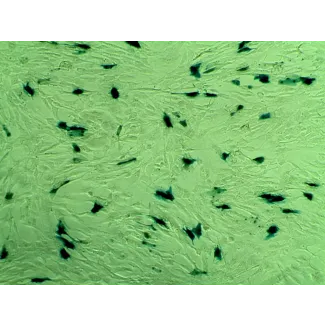
HCoSMC from ScienCell Research Laboratories are isolated from the human colon. HCoSMC are cryopreserved at passage one and delivered frozen. Each vial contains >5 x 10⁵ cells in 1 ml volume. HCoSMC are characterized by immunofluorescence with antibodies specific to α-smooth muscle actin. HCoSMC are negative for HIV-1, HBV, HCV, mycoplasma, bacteria, yeast and fungi. HCoSMC are guaranteed to further expand for 15 population doublings under the conditions provided by ScienCell Research Laboratories.
Recommended Medium
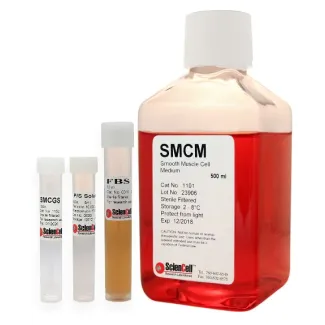
It is recommended to use Smooth Muscle Cell Medium (SMCM, Cat. #1101) for culturing HCoSMC in vitro.
| Catalog No. | 2940 |
|---|---|
| Country of Manufacture | United States |
| Product Code | HCoSMC |
| Size/Quantity | 5 x 10^5 cells/vial. |
| Product use | HCoSMC are for research use only. They are not approved for human or animal use, or for application in in vitro diagnostic procedures. |
| Storage | Upon receiving, directly and immediately transfer the cells from dry ice to liquid nitrogen and keep the cells in liquid nitrogen until they are needed for experiments. |
| Shipping | Dry ice. |
Product Sheets

Search for a Certificate of Analysis by Lot Number below:
Find answers to common questions about ScienCell products, cell culture, handling, and research applications.
ScienCell Research Laboratories (SRL) takes pride in being a resource for researchers all over the world. The publications listed here are not meant as an endorsement or confirmation of the reliability of the products.
,-1-mg-ml--2.jpg)
.webp)