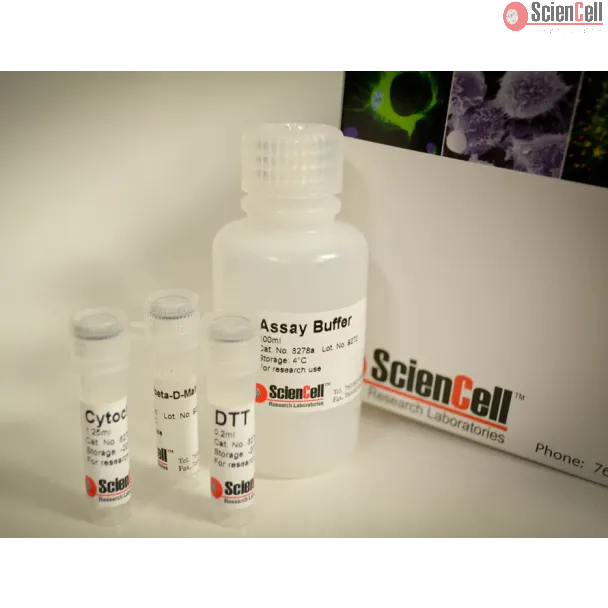
Cytochrome c oxidase is the last enzyme in the respiratory electron transport chain of mitochondria. Its main function is to convert molecular oxygen to water and aid in establishing mitochondrial membrane potential. Cytochrome c oxidase locates to the inner membrane which separates the mitochondrial matrix from the intermembrane space. This colorimetric assay is based on observation of the decrease in absorbance at 550 nm of ferrocytochrome c caused by its oxidation to ferricytochrome c by cytochrome c oxidase.
Product Sheets
 8278
8278
Search for a Certificate of Analysis by Lot Number below:
Ischemic stroke results in severe brain damage and remains one of the leading causes of death and disability worldwide. Effective neuroprotective therapies are needed to ... More
Ischemic stroke results in severe brain damage and remains one of the leading causes of death and disability worldwide. Effective neuroprotective therapies are needed to reduce brain damage resulting from ischemic stroke. Mitochondria are crucial for cellular energy production and homeostasis. Modulation of mitochondrial function mediates neuroprotection against ischemic brain damage. Dynamin-related protein 1 (Drp1) and parkin play a key role in regulating mitochondrial dynamics. They are potential therapeutic targets for neuroprotection in ischemic stroke. Protective effects of parkin-Drp1 pathway on mitochondria were assessed in a cellular ischemia-reperfusion injury model. Mouse neuroblastoma Neuro2a (N2a) cells were subjected to oxygen-glucose deprivation/reperfusion (OGDR) insult. OGDR induces mitochondrial fragmentation. The expression of Drp1 protein is increased after OGDR insult, while the parkin protein level is decreased. The altered protein level of Drp1 after OGDR injury is mediated by parkin through ubiquitin proteasome system (UPS). Drp1 depletion protects against OGDR induced mitochondrial damage and apoptosis. Meanwhile, parkin overexpression protects against OGDR induced apoptosis and mitochondrial dysfunction, which is attenuated by increased expression of Drp1. Our data demonstrate that parkin protects against OGDR insult through promoting degradation of Drp1. This neuroprotective potential of parkin-Drp1 pathway against OGDR insult will pave the way for developing novel neuroprotective agents for cerebral ischemia-reperfusion related disorders. Less
Due to their strict maternal inheritance in most animals and plants, mitochondrial genomes are predicted to accumulate mutations that are beneficial or neutral in females... More
Due to their strict maternal inheritance in most animals and plants, mitochondrial genomes are predicted to accumulate mutations that are beneficial or neutral in females but harmful in males. Although a few male-harming mtDNA mutations have been identified, consistent with this ‘Mother’s Curse’, their effect on females has been largely unexplored. Here, we identify COIIG177S, a mtDNA hypomorph of cytochrome oxidase II, which specifically impairs male fertility due to defects in sperm development and function without impairing other male or female functions. COIIG177S represents one of the clearest examples of a ‘male-harming’ mtDNA mutation in animals and suggest that the hypomorphic mtDNA mutations like COIIG177S might specifically impair male gametogenesis. Intriguingly, some D. melanogaster nuclear genetic backgrounds can fully rescue COIIG177S -associated sterility, consistent with previously proposed models that nuclear genomes can regulate the phenotypic manifestation of mtDNA mutations. Less
ScienCell Research Laboratories (SRL) takes pride in being a resource for researchers all over the world. The publications listed here are not meant as an endorsement or confirmation of the reliability of the products.