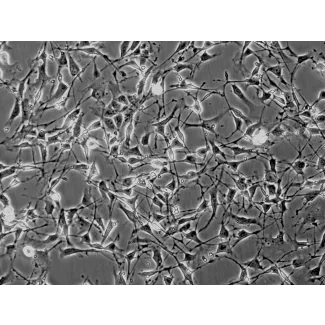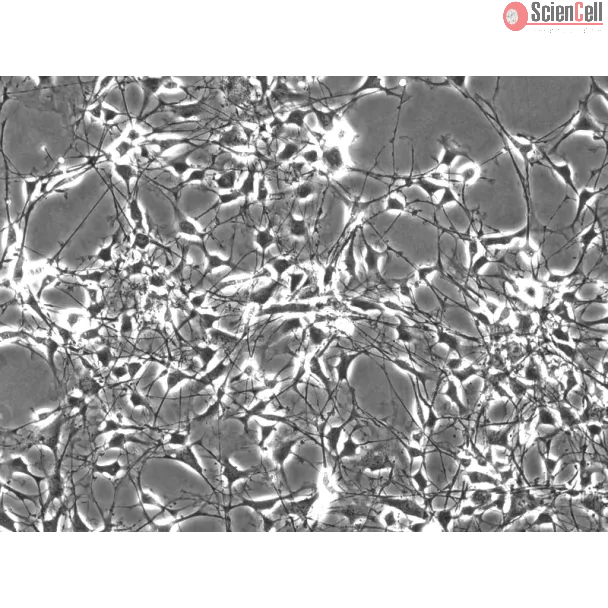
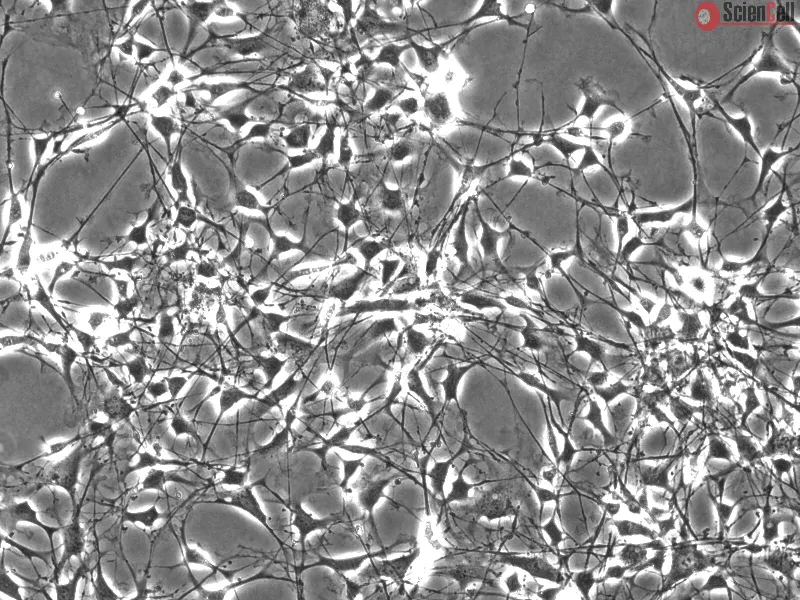
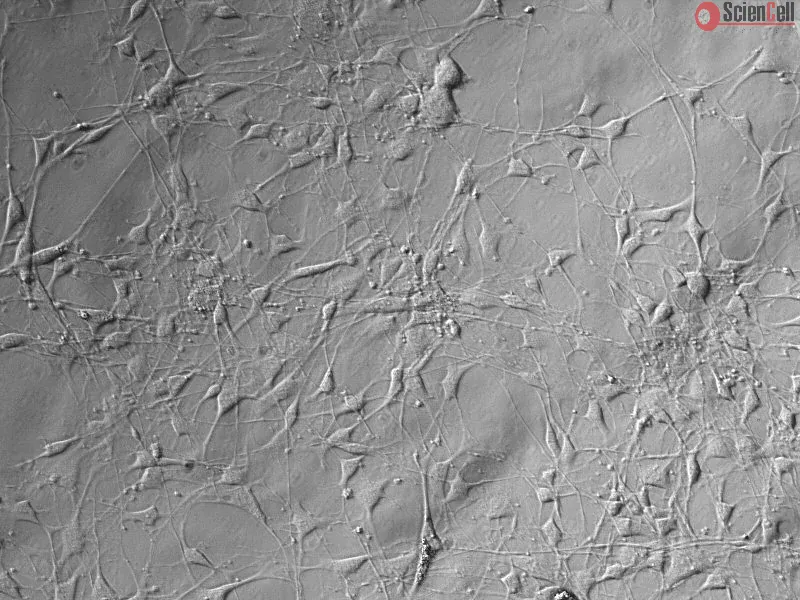
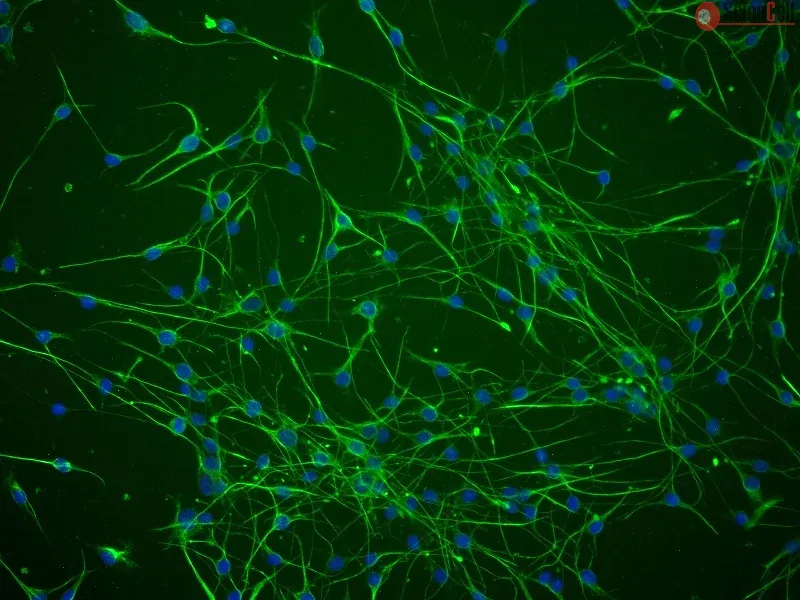
CD1 小鼠来源的施旺细胞
MSC 来源于 ScienCell Research Laboratories,分离自出生后第8天的 CD-1 小鼠神经组织。MSC 在第0代(P0)进行冻存,并以冷冻形式交付。每支冻存管体积为 1 ml,细胞数量不少于 5 × 10⁵ 个。
Schwann cells are neural crest derivatives that ensheathe and myelinate axons of peripheral nerves. Each Schwann cell wraps around the shaft of an individual peripheral axon, forming myelin sheaths along segments of the axon. Schwann cells play important roles in the development, function, and regeneration of peripheral nerves. When an axon is dying, the Schwann cells surrounding it aid in its digestion, leaving an empty channel formed by successive Schwann cells, through which a new axon may then grow from a severed end. The number of Schwann cells in peripheral nerves is tightly regulated. Their proliferation in vitro can be stimulated by various growth factors including PDGF, FGF, neuregulin, and others. Schwann cells provide a relatively simple, well-defined, and accessible mammalian model for the study of a number of developmental questions. It is also of particular clinical importance to understand the biology of Schwann cells, not only in the context of neuropathies and nerve regeneration, but also because the cells or their precursors may be especially well suited for implants to facilitate repair in the CNS.
MSC from ScienCell Research Laboratories are isolated from postnatal day 8 CD-1 mouse nerve. MSC are cryopreserved at P0 and delivered frozen. Each vial contains >5 x 10⁵ cells in 1 ml volume. MSC are characterized by immunofluorescence with antibodies specific to S100β. MSC are negative for mycoplasma, bacteria, yeast, and fungi. MSC are guaranteed to further expand for 5 population doublings under the conditions provided by ScienCell Research Laboratories.
Recommended Medium
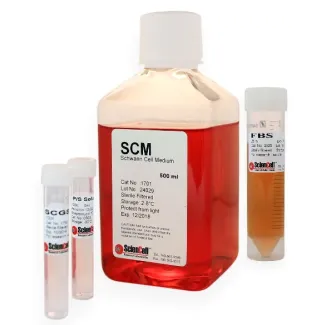
It is recommended to use Schwann Cell Medium (SCM, Cat. #1701) for culturing MSC in vitro.
施旺细胞来源于神经嵴,是包裹并形成外周神经轴突髓鞘的细胞类型。每个施旺细胞会围绕单个外周轴突的轴部进行包裹,在轴突的不同节段形成髓鞘结构。施旺细胞在外周神经的发育、功能维持以及损伤后的再生过程中发挥重要作用。当轴突发生退变时,其周围的施旺细胞参与轴突碎片的清除,并形成由连续施旺细胞构成的空腔通道,从而为断裂轴突的新生再生提供引导路径。外周神经中施旺细胞的数量受到严格调控。在体外培养条件下,多种生长因子(包括 PDGF、FGF、neuregulin 等)可促进其增殖。施旺细胞为研究发育生物学相关问题提供了一个相对简单、定义明确且易于获取的哺乳动物模型。同时,深入理解施旺细胞的生物学特性在临床上具有重要意义,不仅有助于神经病变及神经再生研究,也因为其细胞或前体细胞在中枢神经系统修复移植中的潜在应用价值而备受关注。
ScienCell Research Laboratories 提供的 MSC 分离自出生后第8天的 CD-1 小鼠神经组织。MSC 在第0代(P0)进行冻存,并以冷冻形式交付。每支冻存管体积为 1 ml,细胞数量不少于 5 × 10⁵ 个。MSC 通过针对 S100β 的特异性抗体进行免疫荧光鉴定。经检测,MSC 不含支原体、细菌、酵母及真菌污染。在 ScienCell Research Laboratories 提供的培养条件下,MSC 可保证至少进行 5 次群体倍增。
推荐培养基
建议在体外培养 MSC 时使用施旺细胞培养基(Schwann Cell Medium,SCM,产品编号 #1701)。
| 目录编号 | M1700 |
|---|---|
| 制造国家 | 美国 |
| 产品编码 | MSC |
| 规格/数量 | 5 x 10^5 cells/vial |
| 产品用途 | 本产品仅供研究使用。未经批准,不得用于人体、动物或体外诊断程序。 |
| 储存 | 收到后请立即将细胞从干冰直接转移至液氮中,并在进行细胞培养实验前始终保存在液氮中。 |
| 运输 | 干冰。 |
Product Sheets

Search for a Certificate of Analysis by Lot Number below:
Find answers to common questions about ScienCell products, cell culture, handling, and research applications.
ScienCell Research Laboratories (SRL) takes pride in being a resource for researchers all over the world. The publications listed here are not meant as an endorsement or confirmation of the reliability of the products.