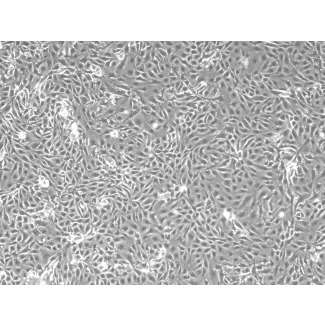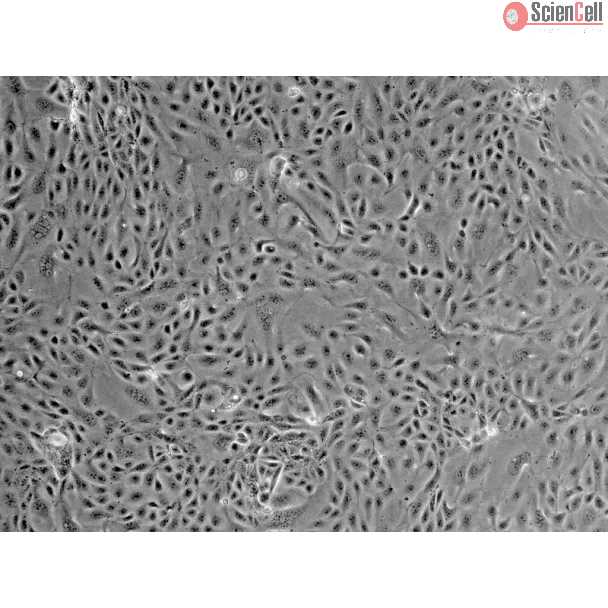
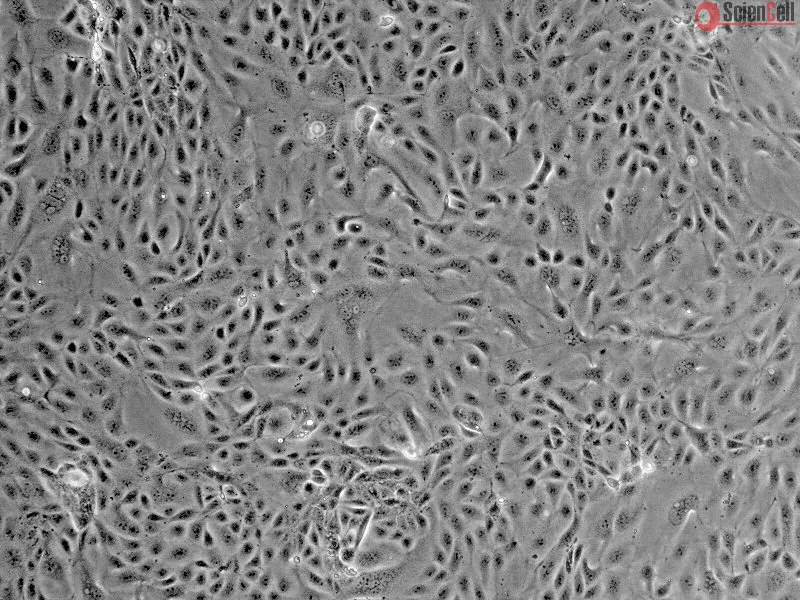
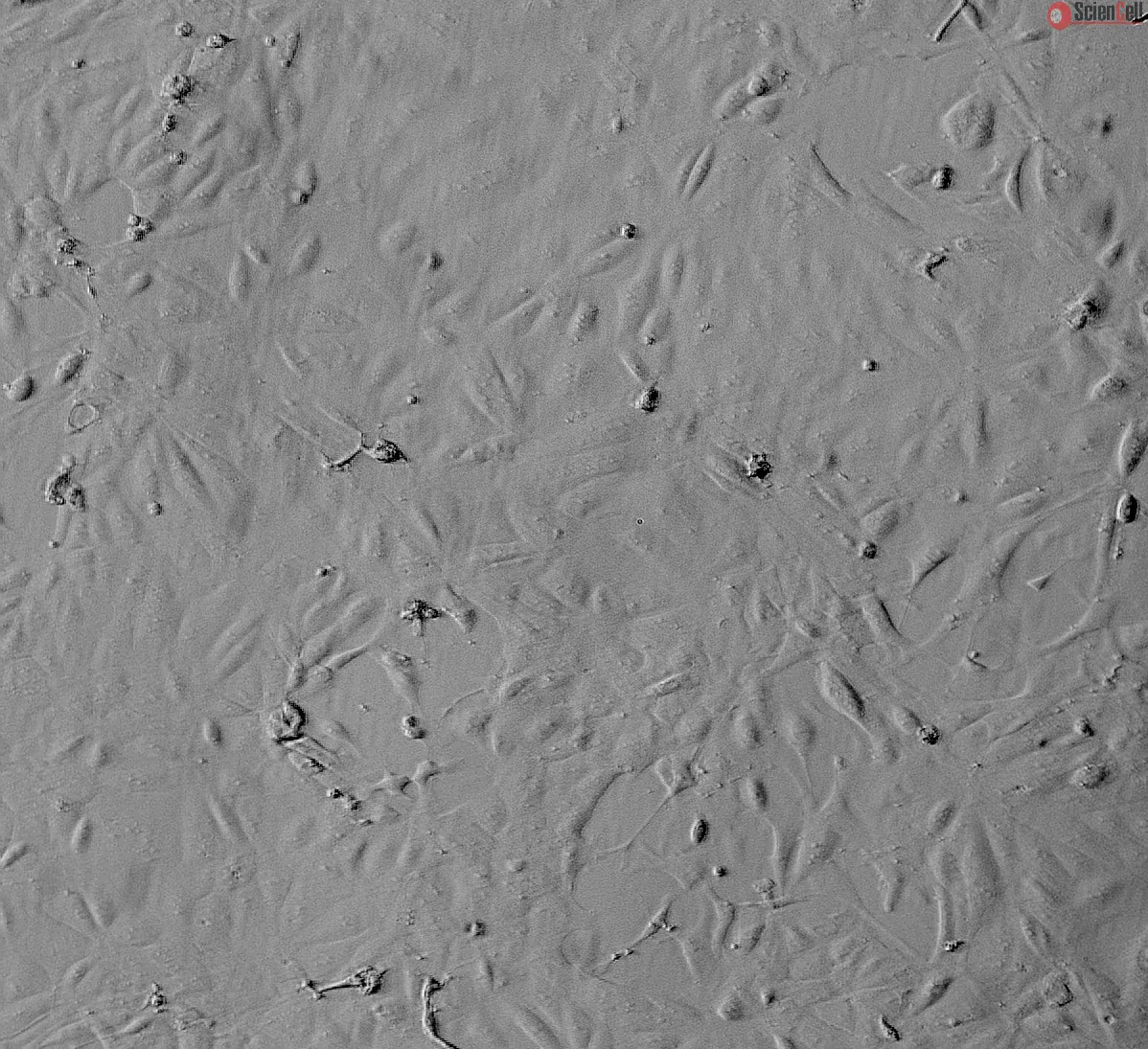
来源于 C57BL/6 小鼠的肾近端小管上皮细胞
分离自 C57BL/6 小鼠肾脏。小鼠肾近端小管上皮细胞(MRPTEpiC) 在第 1 代(P1)进行冻存,并以冷冻状态提供。每瓶含有 >5 × 10⁵ 个细胞,体积为 1 ml。
Renal proximal tubular epithelial cells (RPTEpiC) play a crucial role in renal function. They reabsorb nearly all the glucose and amino acids in the glomerular filtrate, while allowing substances of no nutritional value to be excreted into the urine. They are also a major site of injury in a variety of congenital, metabolic, and inflammatory diseases. RPTEpiC can produce inflammatory mediators, such as cytokines or chemokines, and actively participate in acute inflammatory processes by affecting and directing leukocyte chemotaxis via the production of IL-8. RPTEpiC express IL-2R alpha and MHC class II antigens during inflammation, after renal transplantation, and during crescentic glomerulonephritis, suggesting that these cells have the capacity to participate in the pathogenesis of immune renal injury. To study the relationship between proximal tubular cells and a variety of renal diseases, the RPTEpiC culture is a useful in vitro model.
MRPTEpiC from ScienCell Research Laboratories are isolated from C57BL/6 mouse kidney. MRPTEpiC are cryopreserved at passage one and delivered frozen. Each vial contains >5 x 10⁵ cells in 1 ml volume. MRPTEpiC are characterized by immunofluorescence with antibodies specific to cytokeratin-18. MRPTEpiC are negative for mycoplasma, bacteria, yeast, and fungi. MRPTEpiC are guaranteed to further culture under the conditions provided by ScienCell Research Laboratories; however, MRPTEpiC are not recommended for long-term cultures due to limited expansion capacity and senescence after subculturing.
Recommended Medium
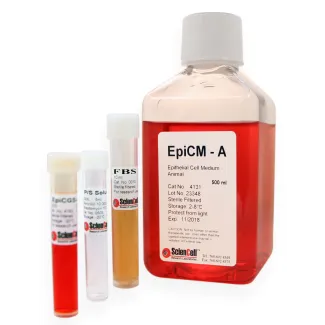
It is recommended to use Epithelial Cell Medium-animal (EpiCM-a, Cat. #4131) for culturing MRPTEpiC in vitro.
肾近端小管上皮细胞(RPTEpiC)在维持肾脏正常功能中发挥重要作用。它们可重吸收肾小球滤液中几乎全部的葡萄糖和氨基酸,同时允许无营养价值的物质随尿液排出。RPTEpiC 也是多种先天性、代谢性和炎症性疾病发生肾损伤的主要部位之一。RPTEpiC 能产生细胞因子、趋化因子等炎症介质,并可通过产生 IL-8 影响和调控白细胞趋化,积极参与急性炎症过程。在炎症反应、肾移植以及新月体性肾小球肾炎过程中,RPTEpiC 可表达 IL-2R α 和 MHC II 类抗原,这表明其可能参与免疫性肾损伤的发生发展。通过体外培养 RPTEpiC,可作为研究近端小管细胞与多种肾脏疾病之间关系的有效 体外 模型。
ScienCell Research Laboratories 提供的 小鼠肾近端小管上皮细胞(MRPTEpiC) 分离自 C57BL/6 小鼠肾脏。MRPTEpiC 在第 1 代(P1)进行冻存,并以冷冻状态提供。每瓶含有 >5 × 10⁵ 个细胞,体积为 1 ml。MRPTEpiC 采用针对细胞角蛋白-18(cytokeratin-18)的特异性抗体进行免疫荧光表征。MRPTEpiC 的支原体、细菌、酵母和真菌检测结果均为阴性。根据 ScienCell Research Laboratories 提供的培养条件,MRPTEpiC 可保证继续进行培养;但由于其扩增能力有限,且传代培养后会出现细胞衰老,因此不建议用于长期培养。
推荐培养基
推荐使用动物源型上皮细胞培养基(Epithelial Cell Medium-animal,EpiCM-a,产品编号:4131)进行 MRPTEpiC 的体外培养。
| 目录编号 | M4100-57 |
|---|---|
| 制造国家 | 美国 |
| 产品编码 | MRPTEpiC |
| 规格/数量 | 5 x 10^5 cells/vial |
| 产品用途 | 本产品仅供研究使用。未经批准,不得用于人体、动物或体外诊断程序。 |
| 储存 | 收到后请立即将细胞从干冰直接转移至液氮中,并在进行细胞培养实验前始终保存在液氮中。 |
| 运输 | 干冰。 |
Product Sheets

Search for a Certificate of Analysis by Lot Number below:
Find answers to common questions about ScienCell products, cell culture, handling, and research applications.
ScienCell Research Laboratories (SRL) takes pride in being a resource for researchers all over the world. The publications listed here are not meant as an endorsement or confirmation of the reliability of the products.