Meningeal Cell Medium
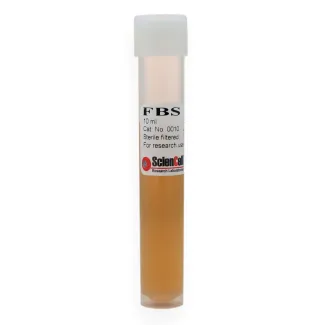
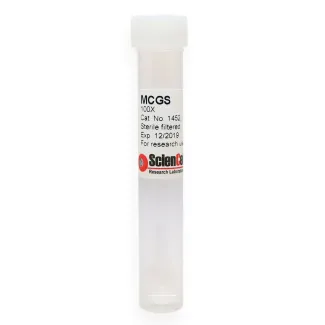
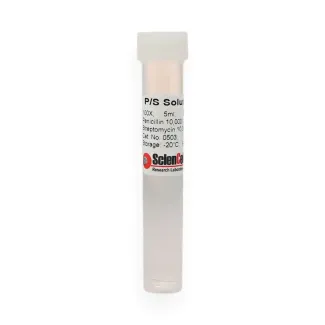
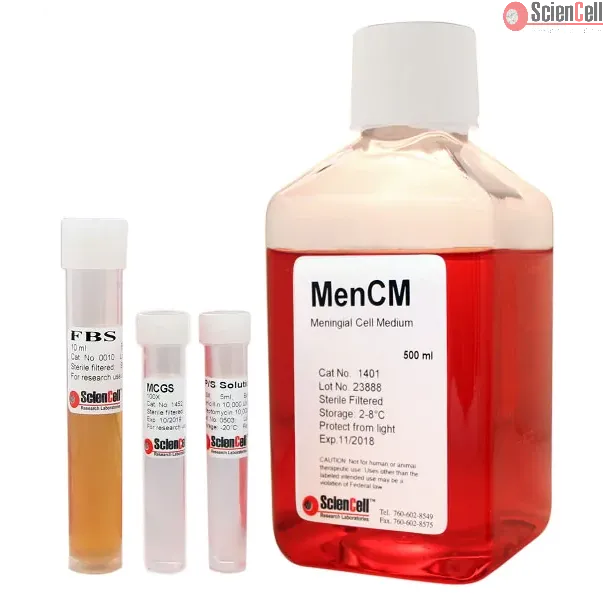
Meningeal Cell Medium (MenCM) consists of 500 ml of basal medium, 10 ml of FBS (Cat. #0010), 5 ml of Meningeal Cell Growth Supplement (MenCGS, Cat. #1452) and 5 ml of penicillin/streptomycin solution (P/S, Cat. #0503).
Meningeal Cell Medium (MenCM), when used with Meningeal Cell Growth Supplement (MenCGS, Cat #1452) and 10 ml of fetal bovine serum (FBS) is a complete medium designed for optimal growth of normal meningeal cells in vitro. It is a sterile, liquid medium which contains essential and non-essential amino acids, vitamins, organic and inorganic compounds, hormones, growth factors, trace minerals and a low concentration of fetal bovine serum (2%). The medium is HEPES and bicarbonate buffered and has a pH of 7.4 when equilibrated in an incubator with an atmosphere of 5% CO2/95% air. The medium is formulated (quantitatively and qualitatively) to provide an optimally balanced nutritional environment that selectively supports the growth of normal meningeal cells in vitro.
| 目录编号 | 1401 |
|---|---|
| 产品编码 | MenCM |
| 规格/数量 | 500 ml |
| 产品用途 | 本产品仅供研究使用。未经批准,不得用于人体、动物或体外诊断程序。 |
| 储存 | 将基础培养基储存在 4°C,MCGS、FBS 和 P/S 溶液储存在 -20°C。避免光照。 |
| 运输 | 基础培养基:室温。补充剂:干冰。 |
Product Sheets
 1401-b-prf (Basal & Phenol Red Free Medium)
1401-prf (Complete Phenol Red Free Medium)
Search for a Certificate of Analysis by Lot Number below:
Find answers to common questions about ScienCell products, cell culture, handling, and research applications.
Human cortical organoids (hCOs), derived from human induced pluripotent stem cells (iPSCs), provide a platform to interrogate mechanisms of human brain development and di... More
Central nervous system (CNS) relapse is a significant cause of treatment failure among patients with acute lymphoblastic leukemia. In prior work we found that the meninge... More
Background. Hepatitis B virus (HBV) induces proliferation of human mesangial cells (HMCs), and extracellular matrix expression through the deposition of immune complexes ... More
ScienCell Research Laboratories (SRL) takes pride in being a resource for researchers all over the world. The publications listed here are not meant as an endorsement or confirmation of the reliability of the products.
超售
检查物品添加到购物车或