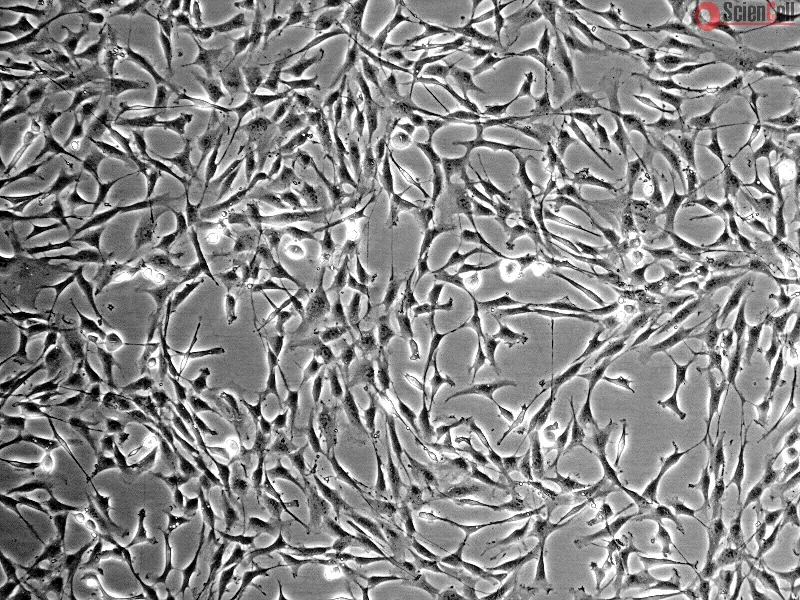
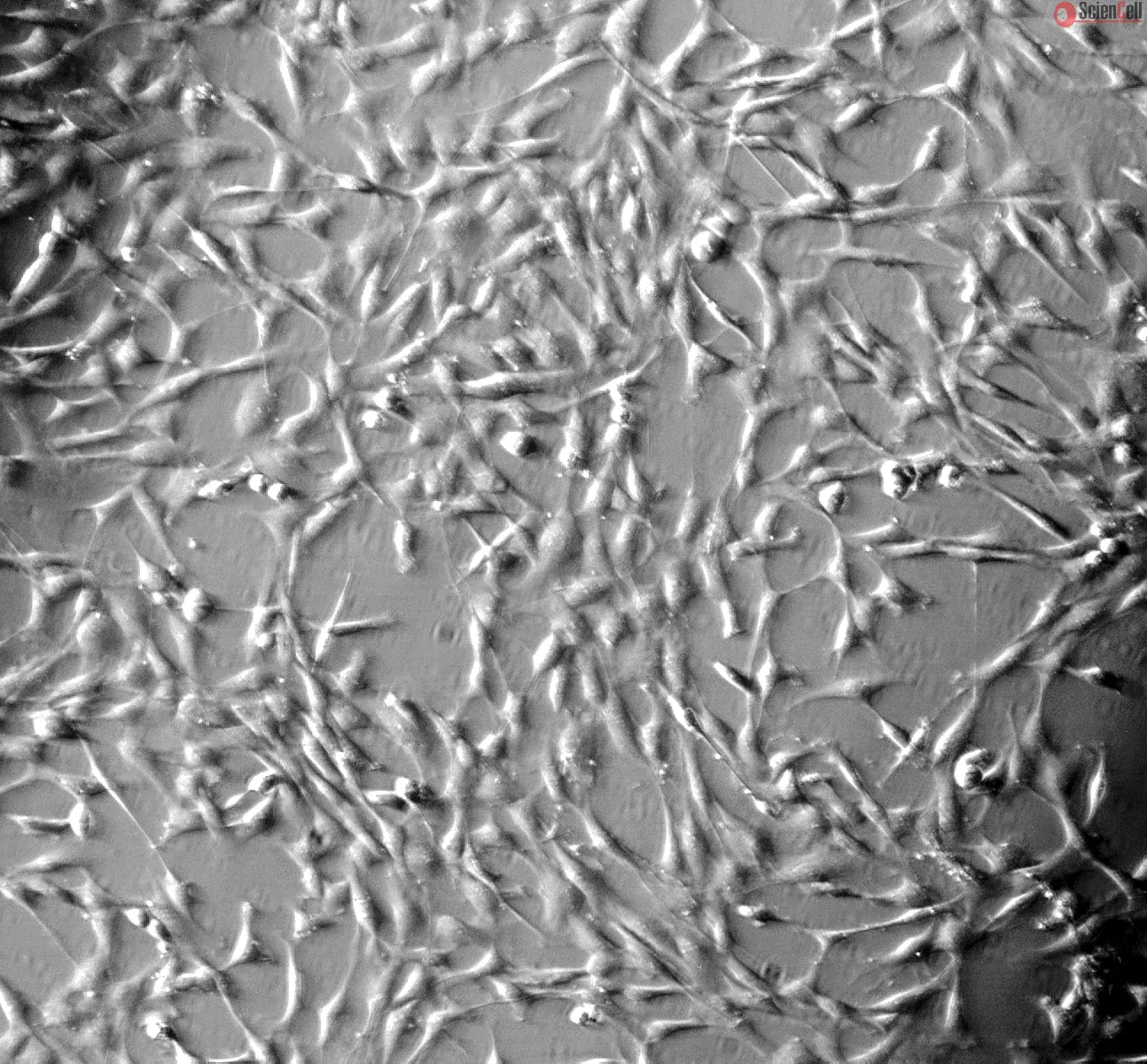
人源甲状腺成纤维细胞
分离自人源甲状腺组织。人源甲状腺成纤维细胞(HThF) 以第 1 代细胞进行冻存,并以冷冻状态运输。每瓶含有超过 5 x 10⁵ 个细胞,体积为 1 ml。
Fibroblasts are mesenchymal cells derived from the embryonic mesoderm. They have been extensively used for a wide range of cellular and molecular studies as they are one of the easiest types of cells to grow in culture. Their durability also makes them amenable to a wide variety of manipulations ranging from studies employing gene transfection to microinjection. There is evidence that fibroblasts in various parts of the body are intrinsically different. Fibroblasts secrete a non-rigid extracellular matrix that is rich in type I and/or type III collagen. They are responsible for much of the synthesis of extracellular matrix in connective tissues and play major roles in wound healing. Many diseases are associated with fibroblasts, either because fibroblasts are implicated in their etiology or because of the fibrosis that accompanies damage to other cell types. The thyroid is easily susceptible to inflammatory autoimmune diseases which can result in tissue damage, suggesting that thyroid fibroblasts may play an important role in regulating thyroid function and response to disease.
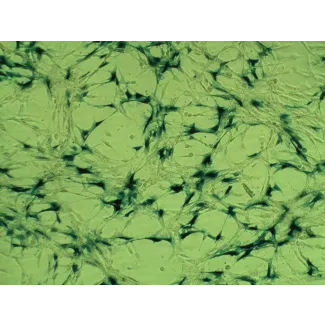
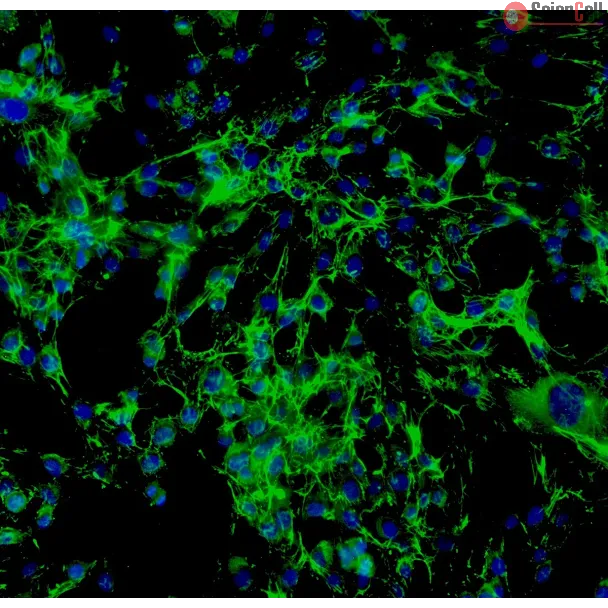
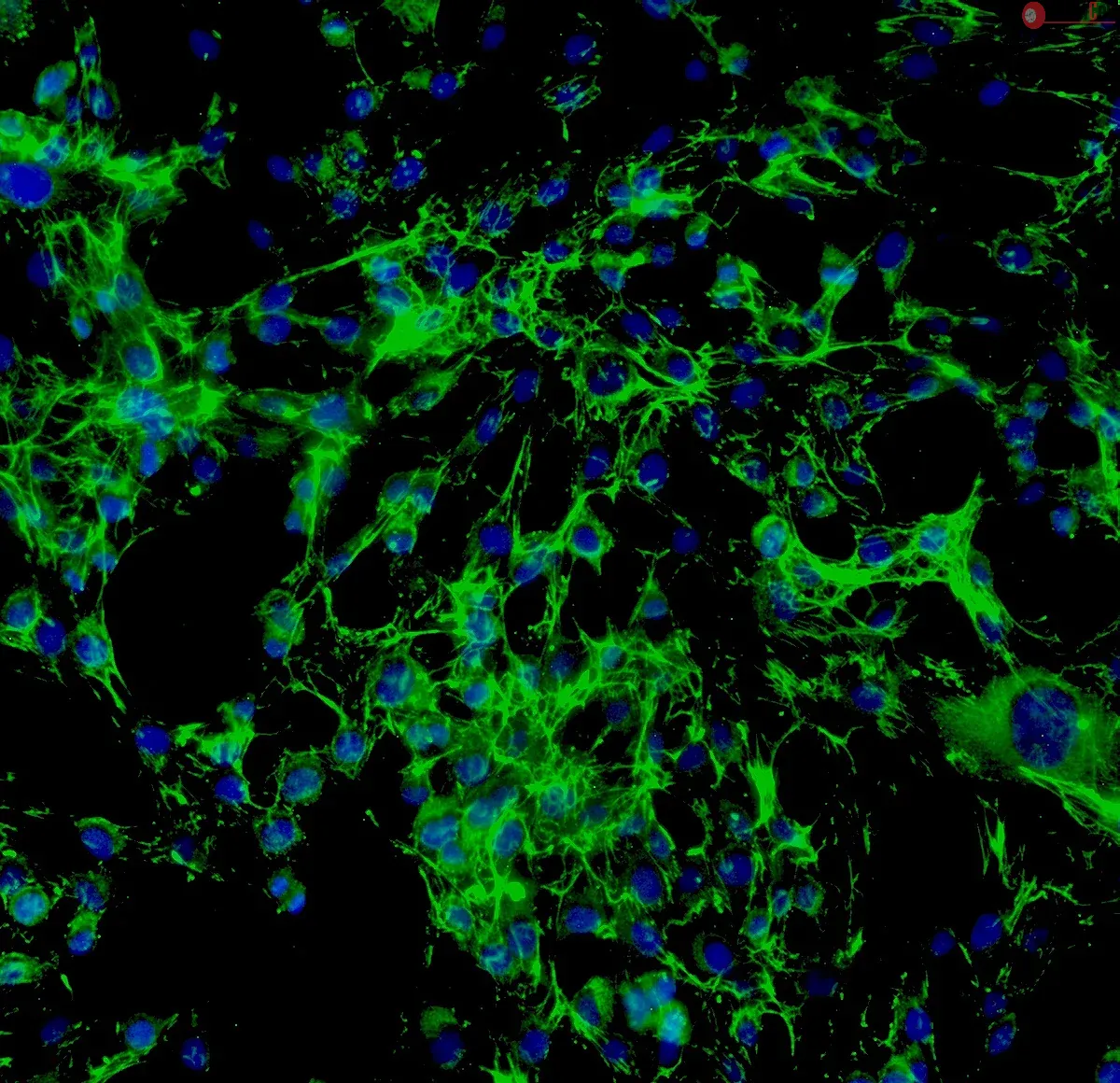
HThF from ScienCell Research Laboratories are isolated from human thyroid tissue. HThF are cryopreserved at passage one and delivered frozen. Each vial contains >5 x 10⁵ cells in 1 ml volume. HThF are characterized by their spindle morphology and immunofluorescence with antibodies specific to fibronectin. HThF are negative for HIV-1, HBV, HCV, mycoplasma, bacteria, yeast and fungi. HThF are guaranteed to further expand for 15 population doublings under the conditions provided by ScienCell Research Laboratories.
Recommended Medium
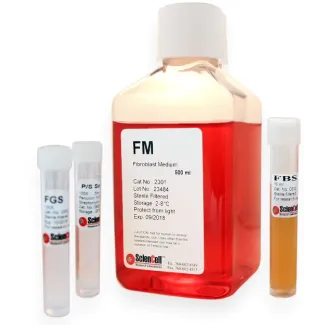
It is recommended to use Fibroblast Medium (FM, Cat. #2301) for the culturing of HThF in vitro.
成纤维细胞是来源于胚胎中胚层的间充质细胞。由于成纤维细胞是最容易进行体外培养的细胞类型之一,因此被广泛应用于各种细胞和分子生物学研究。其较强的耐受性也使其适用于多种实验操作,包括基因转染和显微注射等研究。研究表明,人体不同部位来源的成纤维细胞在生物学特性上存在内在差异。成纤维细胞可分泌富含Ⅰ型和/或Ⅲ型胶原蛋白的非刚性细胞外基质。它们负责结缔组织中大量细胞外基质的合成,并在创伤愈合过程中发挥重要作用。许多疾病均与成纤维细胞相关,这些关联可能源于成纤维细胞参与疾病发生机制,或由于其他组织细胞损伤后伴随发生的纤维化过程。甲状腺易受到炎症性自身免疫疾病的影响,进而导致组织损伤,这提示甲状腺成纤维细胞可能在调节甲状腺功能及其对疾病的应答过程中发挥重要作用。
ScienCell Research Laboratories 提供的人源甲状腺成纤维细胞(HThF)分离自人源甲状腺组织。HThF 以第 1 代细胞进行冻存,并以冷冻状态运输。每瓶含有超过 5 x 10⁵ 个细胞,体积为 1 ml。HThF 根据其梭形细胞形态以及采用针对纤连蛋白的特异性抗体进行免疫荧光鉴定。HThF 经检测为 HIV-1、HBV、HCV、支原体、细菌、酵母菌和真菌阴性。根据 ScienCell Research Laboratories 提供的培养条件,HThF 可保证进一步扩增 15 个群体倍增周期。
推荐培养基
建议使用成纤维细胞培养基(FM,产品编号 #2301)对 HThF 进行体外培养。
| 目录编号 | 3730 |
|---|---|
| 制造国家 | 美国 |
| 产品编码 | HThF |
| 规格/数量 | 5 x 10^5 cells/vial |
| 产品用途 | 本产品仅供研究使用。未经批准,不得用于人体、动物或体外诊断程序。 |
| 储存 | 收到后请立即将细胞从干冰直接转移至液氮中,并在进行细胞培养实验前始终保存在液氮中。 |
| 运输 | 干冰。 |
Product Sheets

Search for a Certificate of Analysis by Lot Number below:
Find answers to common questions about ScienCell products, cell culture, handling, and research applications.
ScienCell Research Laboratories (SRL) takes pride in being a resource for researchers all over the world. The publications listed here are not meant as an endorsement or confirmation of the reliability of the products.