
人肠系膜成纤维细胞
ScienCell Research Laboratories 提供的人肠系膜成纤维细胞(HMeF)分离自人肠系膜组织。HMeF 在第一代(P1)阶段进行冻存,并以冷冻形式运输。每瓶含有超过 5 × 10⁵ 个细胞,总体积为 1 ml。
The mesentery, recently classified as an organ, plays a vital functional role by securing all digestive organs to the posterior abdominal wall. The mesentery also produces cytokines that direct the migration of cells during development of the enteric nervous system. It also houses adipose stem cells which can cause an inflammatory response in the intestines. Fibroblasts located in the mesentery help to maintain the structural integrity of connective tissue. During wound healing or during tumor development, fibroblasts can become activated and switch to a myofibroblast morphology and synthesize increased levels of extracellular matrix. Fibroblasts have been implicated in mesenteric fibrosis and Crohn’s disease, however, their role in the development and progression of these disease is not well understood. Primary Human Mesenteric Fibroblasts (HMeF) can be used to study the role of the mesentery and fibroblasts in mesenteric fibrosis and Crohn’s disease.
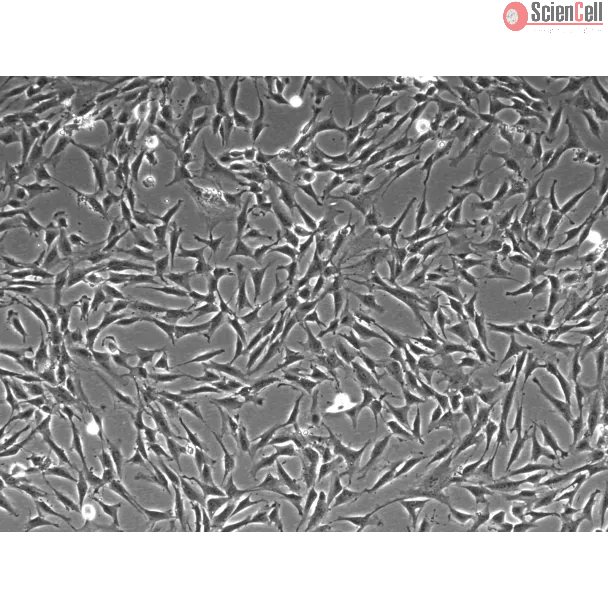
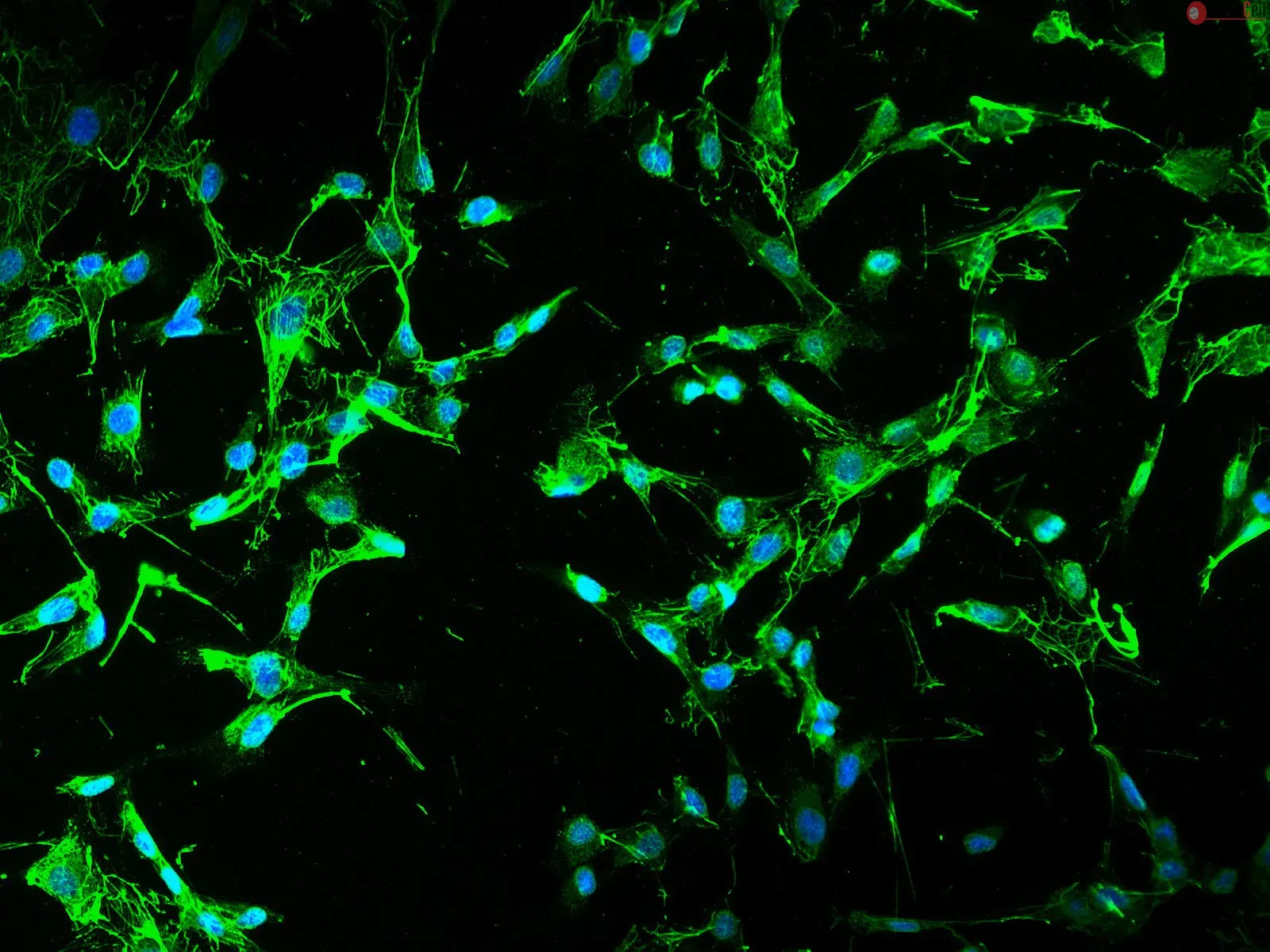
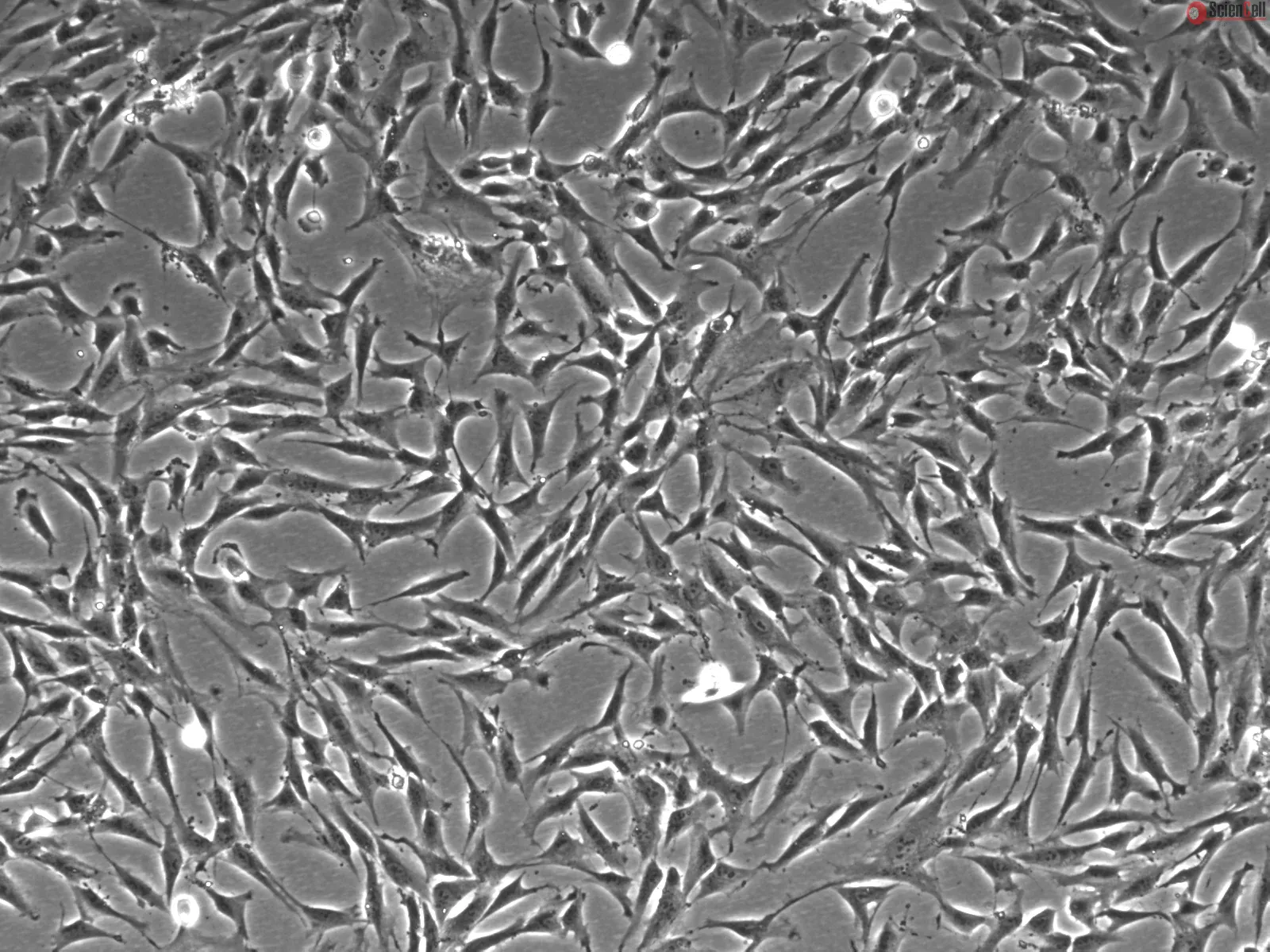
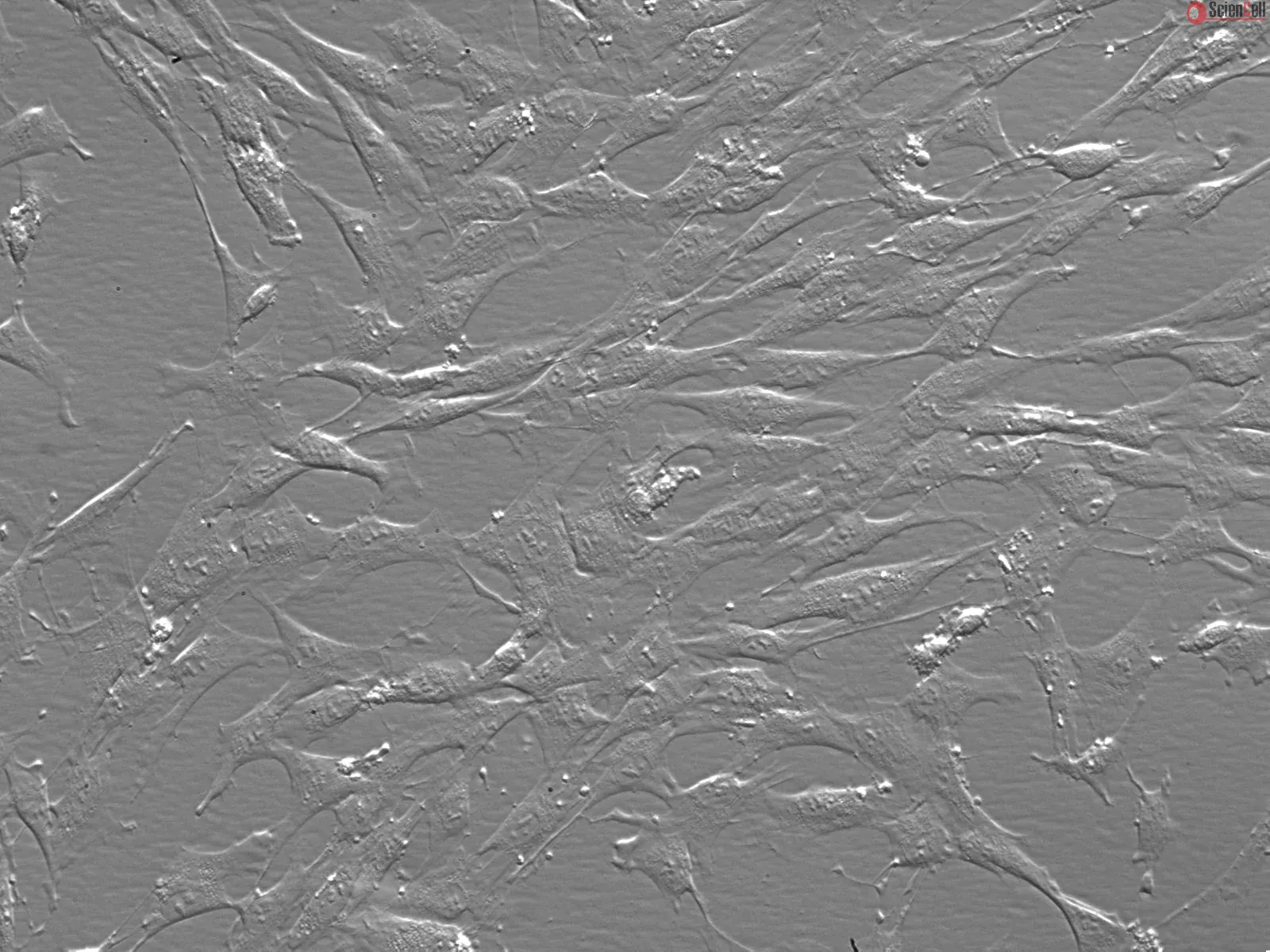
HMeF from ScienCell Research Laboratories are isolated from human mesentery. HMeF are cryopreserved at passage one and delivered frozen. Each vial contains >5 x 10⁵ cells in 1 ml volume. HMeF are characterized by their spindle morphology and immunofluorescence with antibody specific to fibronectin. HMeF are negative for HIV-1, HBV, HCV, mycoplasma, bacteria, yeast, and fungi. HMeF are guaranteed to further expand for 15 population doublings under the conditions provided by ScienCell Research Laboratories.
Recommended Medium
It is recommended to use Fibroblast Medium (FM, Cat. #2301) for culturing HMeF in vitro.
肠系膜近期被重新定义为一个独立的器官,在人体内发挥重要的功能性作用,将整个消化系统器官固定于腹后壁。肠系膜还可产生多种细胞因子,引导肠神经系统发育过程中细胞的迁移。此外,肠系膜中还含有脂肪来源的干细胞,这些细胞可能诱发肠道炎症反应。位于肠系膜中的成纤维细胞有助于维持结缔组织的结构完整性。在伤口愈合或肿瘤发生过程中,成纤维细胞可被激活并转变为肌成纤维细胞形态,同时合成更多细胞外基质。研究表明,成纤维细胞与肠系膜纤维化和克罗恩病有关,但其在这些疾病发生和进展中的具体作用尚未得到充分阐明。原代人肠系膜成纤维细胞(HMeF)可用于研究肠系膜及成纤维细胞在肠系膜纤维化和克罗恩病中的作用。
ScienCell Research Laboratories 提供的人肠系膜成纤维细胞(HMeF)分离自人肠系膜组织。HMeF 在第一代(P1)阶段进行冻存,并以冷冻形式运输。每瓶含有超过 5 × 10⁵ 个细胞,总体积为 1 ml。HMeF 通过其梭形细胞形态以及使用针对纤连蛋白(fibronectin)的特异性抗体进行免疫荧光染色鉴定。HMeF 经检测不含 HIV-1、HBV、HCV、支原体、细菌、酵母菌及真菌。在 ScienCell Research Laboratories 提供的培养条件下,HMeF 可保证进一步扩增至少 15 次群体倍增。
推荐培养基
建议使用成纤维细胞培养基(Fibroblast Medium,FM,产品编号 #2301)对 HMeF 进行体外培养。
| 目录编号 | 2860 |
|---|---|
| 制造国家 | 美国 |
| 产品编码 | HMeF |
| 规格/数量 | 5 x 10^5 cells/vial |
| 产品用途 | 本产品仅供研究使用。未经批准,不得用于人体、动物或体外诊断程序。 |
| 储存 | 收到后请立即将细胞从干冰直接转移至液氮中,并在进行细胞培养实验前始终保存在液氮中。 |
| 运输 | 干冰。 |
Product Sheets

Search for a Certificate of Analysis by Lot Number below:
Find answers to common questions about ScienCell products, cell culture, handling, and research applications.
No Publication available at this time.