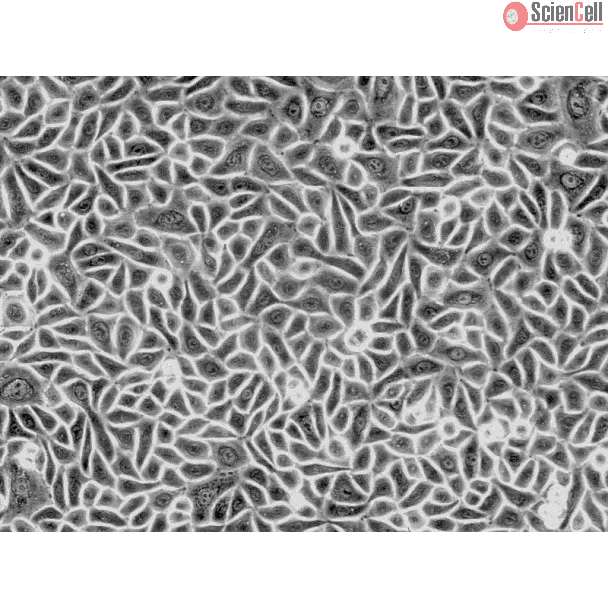
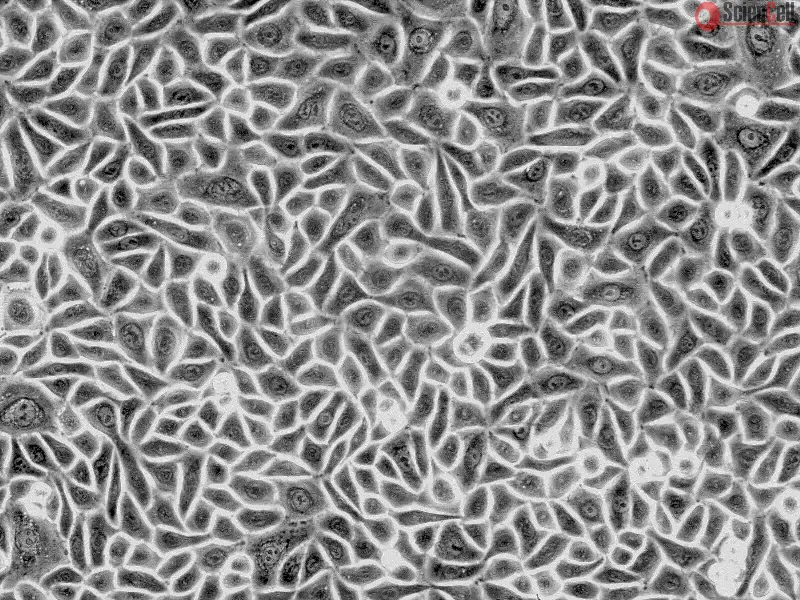
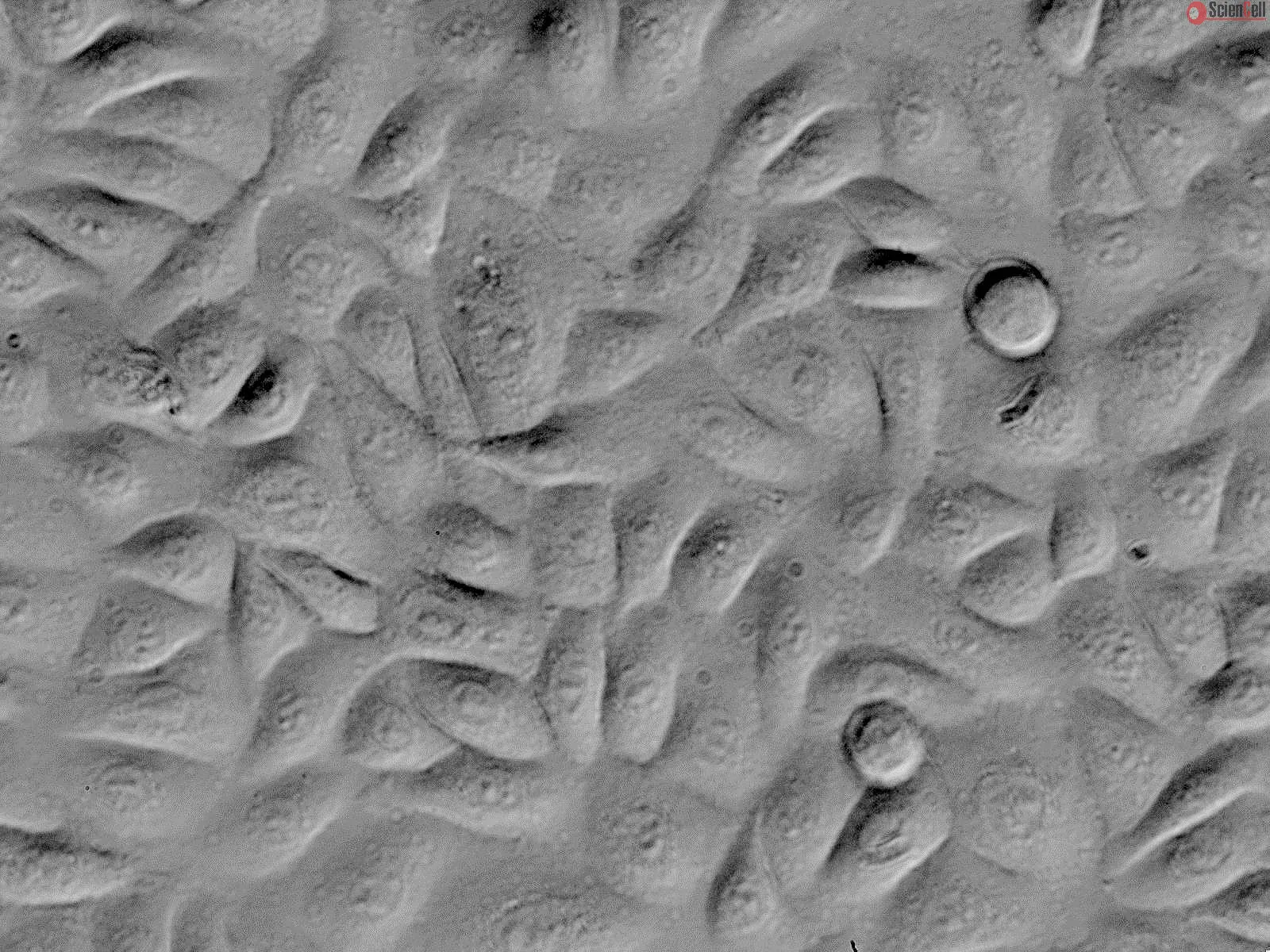
毛囊是自我更新的结构,终生周期性地更新并再生,同时为角质形成细胞干细胞提供关键的微环境。角质形成细胞与下方间充质之间的相互作用对于毛囊形态发生和周期性变化至关重要。多个关键的发育途径参与决定毛囊角质形成细胞的命运,以及在毛发生长阶段分化成毛囊的多个不同细胞层。研究表明,毛囊角质形成细胞在增殖能力和 CD34 表达方面与表皮角质形成细胞不同。
ScienCell Research Laboratories 提供的 HHFK 来源于人类头皮。HHFK 在 P1 阶段被冷冻保存并以冷冻状态交付。每瓶包含超过 5 x 10⁵ 细胞,体积为 1 毫升。HHFK 的表征通过对细胞角蛋白-18 特异性抗体的免疫荧光标记进行。HHFK 对 HIV-1、HBV、HCV、支原体、细菌、酵母和真菌为阴性。HHFK 保证在 ScienCell Research Laboratories 提供的条件下进一步扩增 15 次群体倍增。
推荐培养基
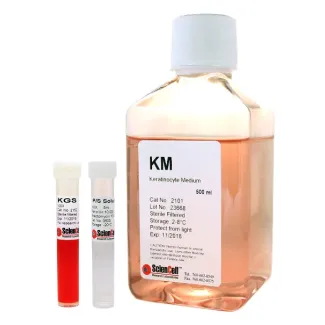
建议使用角质形成细胞培养基(KM,Cat. #2101)在体外培养 HHFK。
Product Sheets
 2440
2440
Search for a Certificate of Analysis by Lot Number below:
In vitro models of human hair follicle-like tissue could be fundamental tools to better understand hair follicle morphogenesis and hair drug screening. During prenatal de... More
In vitro models of human hair follicle-like tissue could be fundamental tools to better understand hair follicle morphogenesis and hair drug screening. During prenatal development and postnatal cyclic hair regeneration, hair follicle morphogenesis is triggered by reciprocal interactions and the organization of the epithelial and mesenchymal cell populations. Given this mechanism, we developed an approach to induce hair peg-like sprouting in organoid cultures composed of epithelial and mesenchymal cells. Human fetal/adult epithelial and mesenchymal cells were cultured in a medium supplemented with a low concentration of either Matrigel or collagen I. These extracellular matrices significantly enhanced the self-organization capabilities of the epithelial and mesenchymal cells, resulting in spherical aggregation and subsequent hair peg-like sprouting. The length of the hair peg sprouting and associated gene expression significantly increased in the presence of a well-known hair drug, minoxidil. This approach may be beneficial for testing hair growth-promoting drug candidates. Less
The dermal papilla, located in the hair follicle, expresses androgen receptor and plays an important role in hair growth. Androgen/Androgen receptor actions have been imp... More
The dermal papilla, located in the hair follicle, expresses androgen receptor and plays an important role in hair growth. Androgen/Androgen receptor actions have been implicated in the pathogenesis of androgenetic alopecia, but the exact mechanism is not well known. Recent studies suggest that balding dermal papilla cells exhibit premature senescence, upregulation of p16(INK4a), and nuclear expression of DNA damage markers. To investigate whether androgen/AR signaling influences the premature senescence of dermal papilla cells, we first compared frontal scalp dermal papilla cells of androgenetic alopecia patients with matched normal controls and observed that premature senescence is more prominent in the dermal papilla cells of androgenetic alopecia patients. Exposure of androgen induced premature senescence in dermal papilla cells from non-balding frontal and transitional zone of balding scalp follicles but not in beard follicles. Overexpression of the AR promoted androgen-induced premature senescence in association with p16(INK4a) upregulation, whereas knockdown of the androgen receptor diminished the effects of androgen. An analysis of γ-H2AX expression in response to androgen/androgen receptor signaling suggested that DNA damage contributes to androgen/androgen receptor-accelerated premature senescence. These results define androgen/androgen receptor signaling as an accelerator of premature senescence in dermal papilla cells and suggest that the androgen/androgen receptor-mediated DNA damage-p16(INK4a) axis is a potential therapeutic target in the treatment of androgenetic alopecia. Less
The dermal papilla, located in the hair follicle, expresses androgen receptor and plays an important role in hair growth. Androgen/Androgen receptor actions have been imp... More
The dermal papilla, located in the hair follicle, expresses androgen receptor and plays an important role in hair growth. Androgen/Androgen receptor actions have been implicated in the pathogenesis of androgenetic alopecia, but the exact mechanism is not well known. Recent studies suggest that balding dermal papilla cells exhibit premature senescence, upregulation of p16(INK4a), and nuclear expression of DNA damage markers. To investigate whether androgen/AR signaling influences the premature senescence of dermal papilla cells, we first compared frontal scalp dermal papilla cells of androgenetic alopecia patients with matched normal controls and observed that premature senescence is more prominent in the dermal papilla cells of androgenetic alopecia patients. Exposure of androgen induced premature senescence in dermal papilla cells from non-balding frontal and transitional zone of balding scalp follicles but not in beard follicles. Overexpression of the AR promoted androgen-induced premature senescence in association with p16(INK4a) upregulation, whereas knockdown of the androgen receptor diminished the effects of androgen. An analysis of γ-H2AX expression in response to androgen/androgen receptor signaling suggested that DNA damage contributes to androgen/androgen receptor-accelerated premature senescence. These results define androgen/androgen receptor signaling as an accelerator of premature senescence in dermal papilla cells and suggest that the androgen/androgen receptor-mediated DNA damage-p16(INK4a) axis is a potential therapeutic target in the treatment of androgenetic alopecia. Less
ScienCell Research Laboratories (SRL) takes pride in being a resource for researchers all over the world. The publications listed here are not meant as an endorsement or confirmation of the reliability of the products.