真皮乳头是来源于真皮间充质的一组高度活跃的细胞。位于毛囊底部,真皮乳头通过诱导毛囊从表皮发育来产生毛发纤维,在毛发生长周期中起着至关重要的作用。毛发生长由毛囊细胞的上皮-间充质相互作用严格调控,这涉及包括BMP和Wnt信号通路在内的多种分子通路。以往的研究表明,真皮乳头细胞在长期培养中逐渐失去其毛发生长诱导性和增殖能力。培养技术的持续进步将有助于提供更好的模型,以研究毛发生物学和再生医学中的毛发重建。
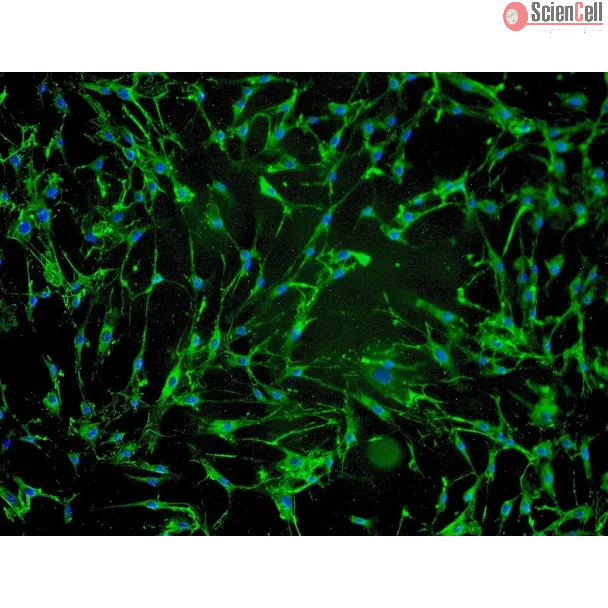
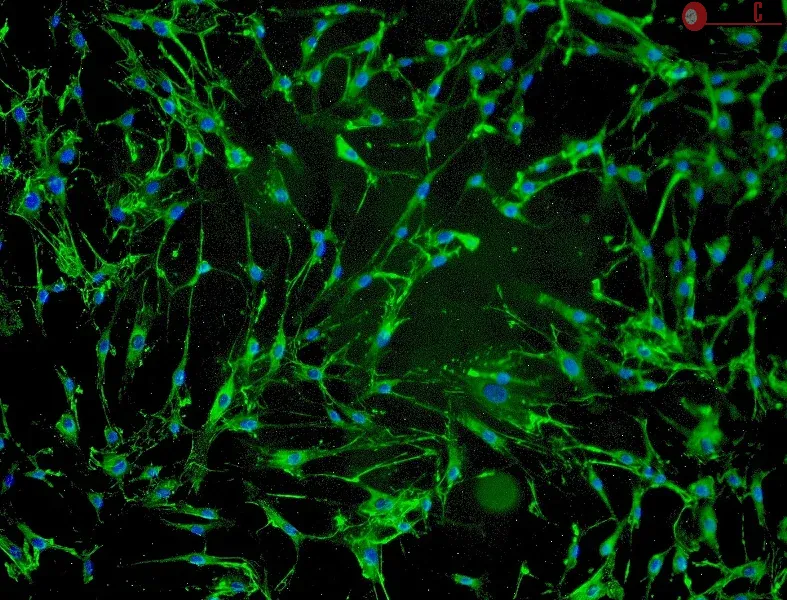
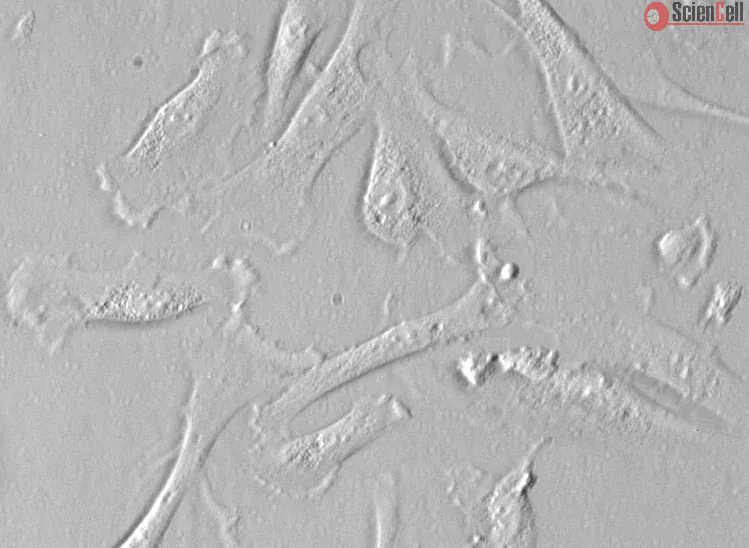
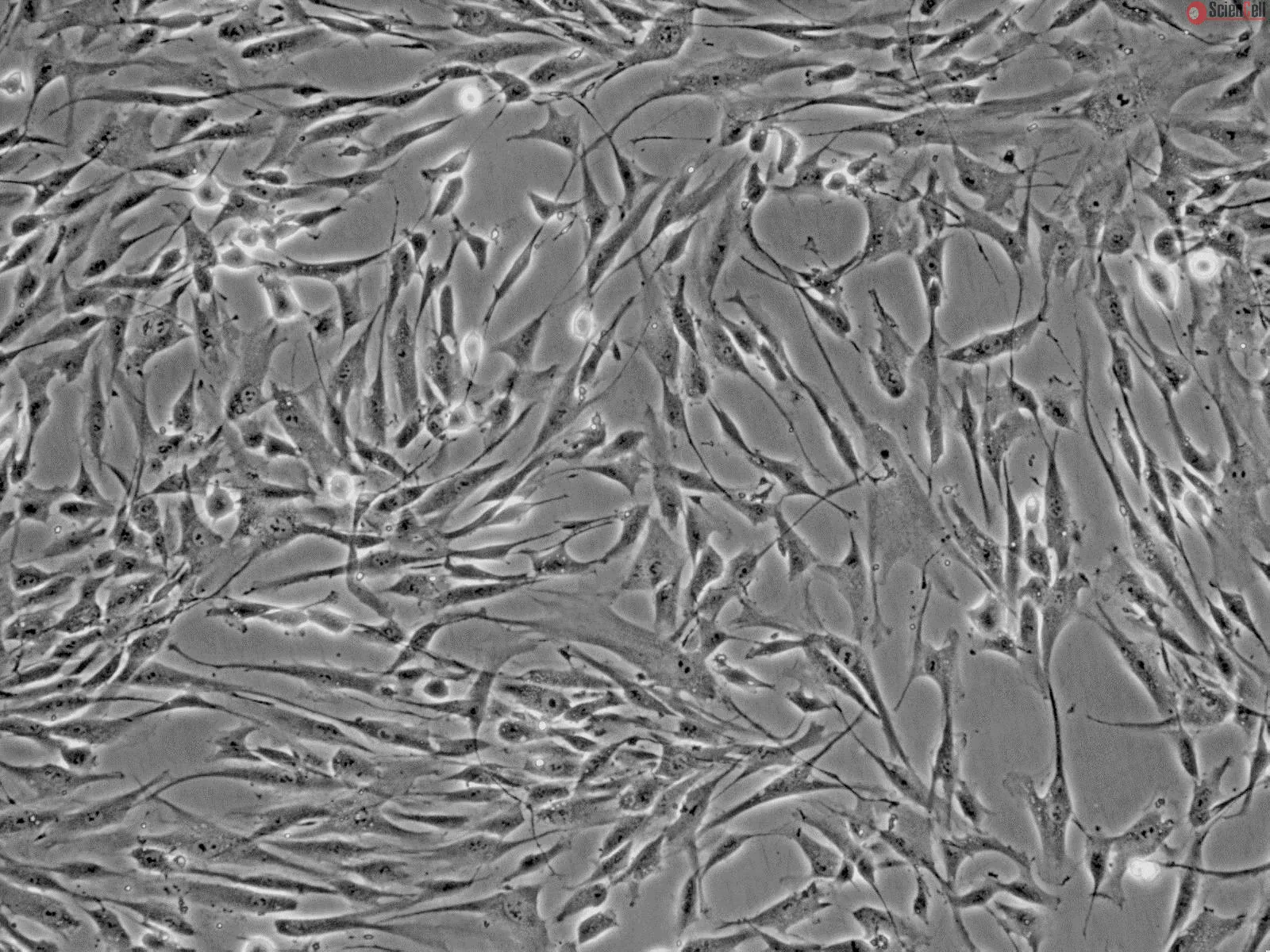
来自ScienCell Research Laboratories的HHDPC是从人类头皮中分离的。HHDPC在第一代时冷冻保存并以冷冻状态交付。每瓶包含超过5 x 10⁵个细胞,体积为1毫升。HHDPC的特点是其间充质细胞形态,并通过与纤维连接蛋白和/或CD105特异性抗体的免疫荧光标记进行表征。HHDPC对HIV-1、HBV、HCV、支原体、细菌、酵母和真菌均为阴性。HHDPC在ScienCell Research Laboratories提供的条件下,保证可进一步扩展5代。
推荐培养基
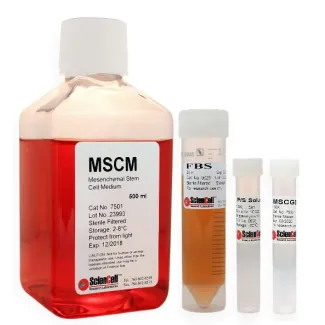
推荐使用间充质干细胞培养基(MSCM,Cat. #7501)进行HHDPC的体外培养。
Product Sheets
 2400
2400
Search for a Certificate of Analysis by Lot Number below:
Background Androgenic alopecia (AGA) is a major type of human scalp hair loss, which is caused by two androgens: testosterone (T) and 5α-dihydrotestosterone (5α-DHT). B... More
Background Androgenic alopecia (AGA) is a major type of human scalp hair loss, which is caused by two androgens: testosterone (T) and 5α-dihydrotestosterone (5α-DHT). Both androgens bind to the androgen receptor (AR) and induce androgen-sensitive genes within the human hair dermal papilla cells (HHDPCs), but 5α-DHT exhibits much higher binding affinity and potency than T does in inducing the involved androgen-sensitive genes. Changes in the induction of androgen-sensitive genes during AGA are caused by the over-production of 5α-DHT by the 5α-reductase (5α-R) enzyme; therefore, one possible method to treat AGA is to inhibit this enzymatic reaction. Methods RT-PCR was used to identify the presence of the 5α-R and AR within HHDPCs. A newly developed AGA-relevant HHDPC-based assay combined with non-radioactive thin layer chromatography (TLC) detection was used for screening crude plant extracts for the identification of new 5α-R inhibitors. Results HHDPCs expressed both 5α-R type 1 isoform of the enzyme (5α-R1) and AR in all of the passages used in this study. Among the thirty tested extracts, Avicennia marina (AM) displayed the highest inhibitory activity at the final concentration of 10 μg/ml, as the production of 5α-DHT decreased by 52 % (IC50 = 9.21 ± 0.38 μg/ml). Conclusions Avicennia marina (AM) was identified as a potential candidate for the treatment of AGA based on its 5α-R1-inhibitory activity. Less
ScienCell Research Laboratories (SRL) takes pride in being a resource for researchers all over the world. The publications listed here are not meant as an endorsement or confirmation of the reliability of the products.

.jpg)