椎间盘退变是引起腰痛的重要病理过程。腰痛的成因包括遗传、环境因素以及社会心理因素。纤维环构成椎间盘结构的外围部分,由纤维软骨以及 I 型和 II 型胶原组成。椎间盘细胞受其局部环境中的生物物理和机械因素影响。白细胞介素-1β 可刺激纤维环细胞产生与局部降解和炎症过程相关的因子。虽然机械应力是退变的重要调节因子,但其潜在的分子机制仍不清楚。人椎间盘纤维环细胞为研究椎间盘退变相关的细胞和分子事件、组织工程以及椎间盘疾病的细胞治疗提供了一种体外模型。
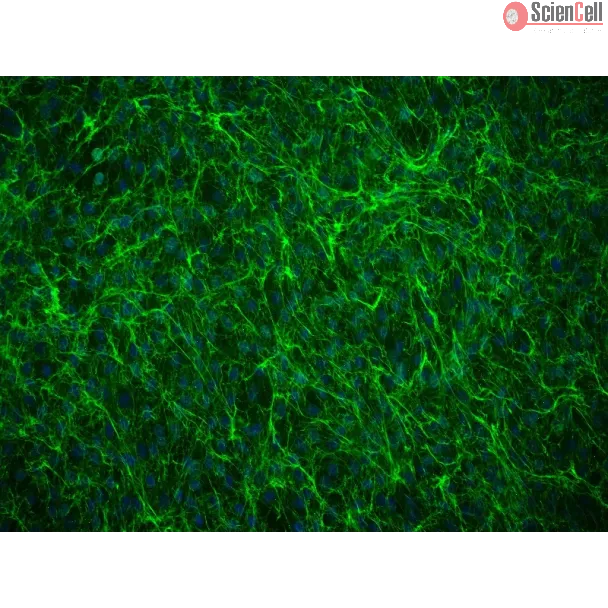
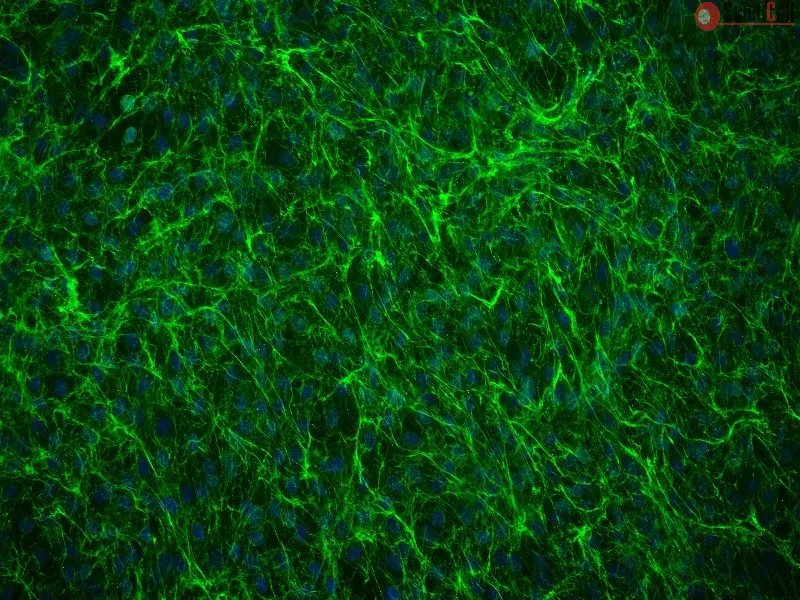
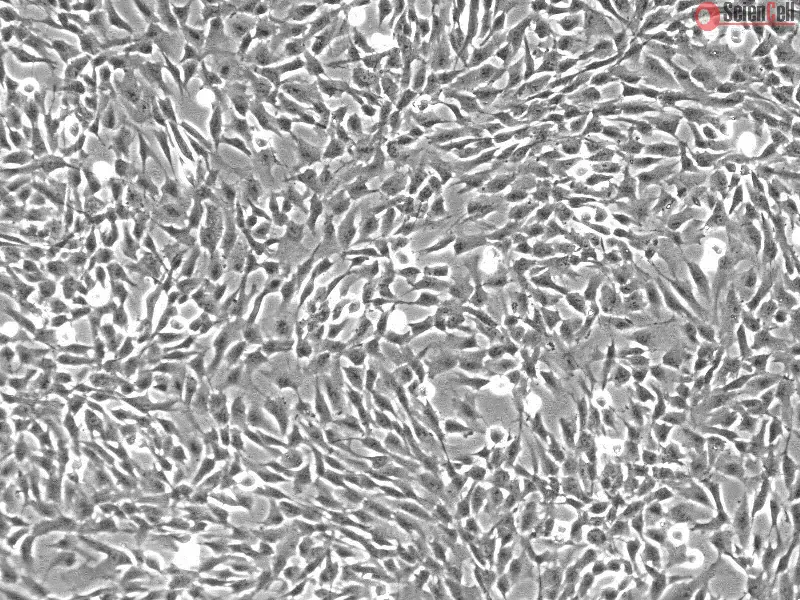
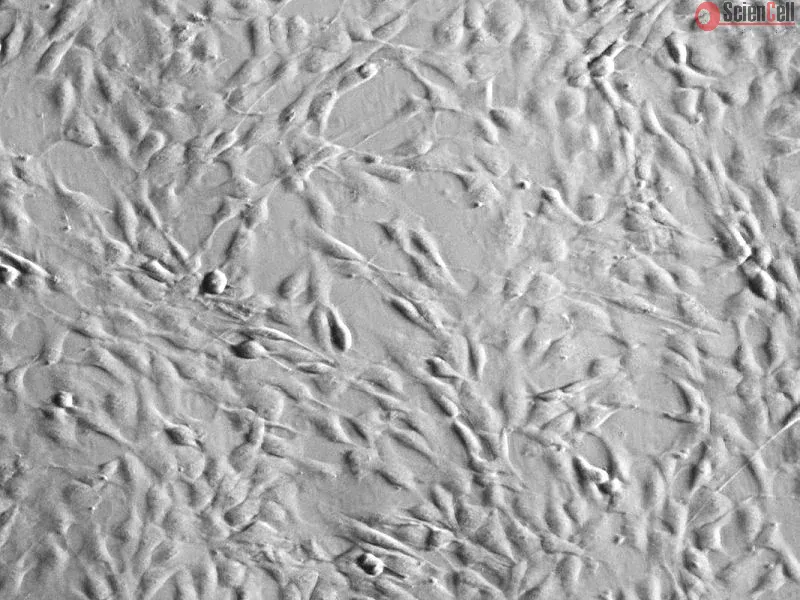
来自 ScienCell Research Laboratories 的人椎间盘纤维环细胞(HAFC)分离自人椎间盘的纤维环。HAFC 在第 1 代传代时冷冻保存并以冻存形式交付。每管含有 >5 x 10⁵ 个细胞,体积为 1 ml。HAFC 通过针对纤维连接蛋白和波形蛋白的抗体免疫荧光鉴定。HAFC 经检测为 HIV-1、HBV、HCV、支原体、细菌、酵母和真菌阴性。在 ScienCell Research Laboratories 提供的条件下,HAFC 保证可继续扩增 15 代群体倍增。
推荐培养基
建议在体外培养 HAFC 时使用椎间盘髓核细胞培养基(NPCM, Cat. #4801)。
Product Sheets
 4810
4810
Search for a Certificate of Analysis by Lot Number below:
Objectives Interleukin 18 (IL-18) is a regulatory cytokine that degrades the disc matrix. Bone morphogenetic protein-2 (BMP-2) stimulates synthesis of the disc extracellu... More
Objectives Interleukin 18 (IL-18) is a regulatory cytokine that degrades the disc matrix. Bone morphogenetic protein-2 (BMP-2) stimulates synthesis of the disc extracellular matrix. However, the combined effects of BMP-2 and IL-18 on human intervertebral disc degeneration have not previously been reported. The aim of this study was to investigate the effects of the anabolic cytokine BMP-2 and the catabolic cytokine IL-18 on human nucleus pulposus (NP) and annulus fibrosus (AF) cells and, therefore, to identify potential therapeutic and clinical benefits of recombinant human (rh)BMP-2 in intervertebral disc degeneration. Methods Levels of IL-18 were measured in the blood of patients with intervertebral disc degenerative disease and in control patients. Human NP and AF cells were cultured in a NP cell medium and treated with IL-18 or IL-18 plus BMP-2. mRNA levels of target genes were measured by real-time polymerase chain reaction, and protein levels of aggrecan, type II collagen, SOX6, and matrix metalloproteinase 13 (MMP13) were assessed by western blot analysis. Results The serum level of patients (IL-18) increased significantly with the grade of IVD degeneration. There was a dramatic alteration in IL-18 level between the advanced degeneration (Grade III to V) group and the normal group (p = 0.008) Furthermore, IL-18 induced upregulation of the catabolic regulator MMP13 and downregulation of the anabolic regulators aggrecan, type II collagen, and SOX6 at 24 hours, contributing to degradation of disc matrix enzymes. However, BMP-2 antagonised the IL-18 induced upregulation of aggrecan, type II collagen, and SOX6, resulting in reversal of IL-18 mediated disc degeneration. Conclusions BMP-2 is anti-catabolic in human NP and AF cells, and its effects are partially mediated through provocation of the catabolic effect of IL-18. These findings indicate that BMP-2 may be a unique therapeutic option for prevention and reversal of disc degeneration. Cite this article: S. Ye, B. Ju, H. Wang, K-B. Lee. Bone morphogenetic protein-2 provokes interleukin-18-induced human intervertebral disc degeneration. Bone Joint Res 2016;5:412–418. DOI: 10.1302/2046-3758.59.BJR-2016-0032.R1. Keywords: Bone morphogenetic protein-2 (BMP-2), Interleukin-18 (IL-18), Nucleus pulposus and annulus fibrosus cells, Intervertebral disc degeneration (IVD) Less
Inflammation and cytokines have been recognized to correlate with intervertebral disc (IVD) degeneration (IDD), via mediating the development of clinical signs and sympto... More
Inflammation and cytokines have been recognized to correlate with intervertebral disc (IVD) degeneration (IDD), via mediating the development of clinical signs and symptoms. However, the regulation mechanism remains unclear. We aimed at investigating the regulatory role of interleukin (IL)β and high mobility group box 1 (HMGB1) in the inflammatory response in human IVD cells, and then explored the signalling pathways mediating such regulatory effect. Firstly, the promotion to inflammatory cytokines in IVD cells was examined with ELISA method. And then western blot and real time quantitative PCR were performed to analyse the expression of toll-like receptors (TLRs), receptors for advanced glycation endproducts (RAGE) and NF-κB signalling markers in the IL-1β- or (and) HMGB1-treated IVD cells. Results demonstrated that either IL-1β or HMGB1 promoted the release of the inflammatory cytokines such as prostaglandin E2 (PGE2), TNF-α, IL-6 and IL-8 in human IVD cells. And the expression of matrix metalloproteinases (MMPs) such as MMP-1, -3 and -9 was also additively up-regulated by IL-1β and HMGB1. We also found such additive promotion to the expression of TLR-2, TLR-4 and RAGE, and the NF-κB signalling in intervertebral disc cells. In summary, our study demonstrated that IL-1β and HMGB1 additively promotes the release of inflammatory cytokines and the expression of MMPs in human IVD cells. The TLRs and RAGE and the NF-κB signalling were also additively promoted by IL-1β and HMGB1. Our study implied that the additive promotion by IL-1β and HMGB1 to inflammatory cytokines and MMPs might aggravate the progression of IDD. Keywords: high mobility group box 1 (HMGB1); interleukin (IL)β; intervertebral disc degeneration (IDD). © 2016 The Author(s). Less
ScienCell Research Laboratories (SRL) takes pride in being a resource for researchers all over the world. The publications listed here are not meant as an endorsement or confirmation of the reliability of the products.