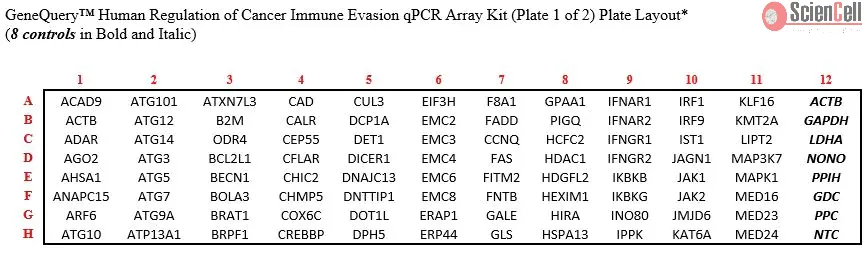
GeneQuery™ 人癌症免疫逃逸调控 qPCR 阵列试剂盒(第1板/共2板)

-
This Item:
US$233.00
-
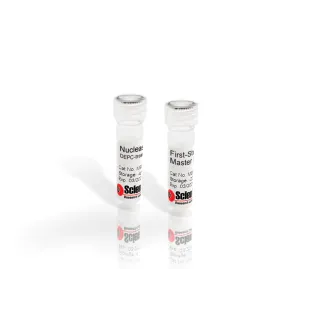
First-Strand cDNA Synthesis Master Mix, 4x
US$207.00
-
GoldNStart TaqGreen qPCR Master Mix
低至 US$82.00Show details
The immune system can effectively recognize cancer cells. However, a hallmark of cancer cells is they acquire the ability to evade immune destruction. The genetic basis for cancer immune evasion remains largely elusive. Cancer immunotherapy, an emerging and effective way to treat many types of cancer, utilizes the ability of the immune system to recognize cancer cells while depriving cancer cells of their immune evasion. ScienCell’s GeneQuery™ Human Regulation of Cancer Immune Evasion qPCR Array kits (GQH-CIE1 and GQH-CIE2) are designed to facilitate a better understanding of the mechanisms by which cancer cells evade immune control. The genes selected have been shown to enhance or decrease the resistance of cancer cells to immune control when disrupted. Genes selected are based on genome-wide CRISPR screens1, and brief examples of how included genes may be grouped according to their functions are shown below:
- Necroptosis: FADD, FAS, TNFRSF1A, TRADD, TRAF2, FAS, IRF9, CFLAR, TRPM7, IFNAR1, IFNAR2, IFNGR1, IFNGR2, RBCK1, TNFAIP3, RNF31, VPS4B, CHMP5, VDAC2
- Autophagy: MAPK1, MAP3K7, CFLAR, BECN1, ATG12, ATG7, ATG5, ATG3, RB1CC1, ATG14, ATG9A, ATG101, BECN1, ATG10, ATG14
- Endocytosis: TGFBR2, TFRC, ARF6, VPS4B, CHMP5, VPS35, IST1
- TNF signaling: MAP3K7, FADD, TNFRSF1B, TNFRSF1A, TNFAIP3, TRADD, CFLAR, MAPK1, TAB2, FAS, TRAF2, TAB1, BCL2L1, CREBBP, TBK1, MAPK1, FAS, IRF1
- Interferon signaling: IFNAR1, IFNGR1, IFNGR2, STAT1, JAK1, JAK2, PTPN2, STAT2, IFNAR2, SOCS1, UBE2N, IRF9, IRF1, TAP1, PSMB9
- NOD-like receptor signaling: FADD, TRAF2, MAPK1, IRF9, TRPM7, IFNAR1, IFNAR2, ATG12, ATG5, RBCK1, JAK1, TNFAIP3, RNF31, VDAC2, PKN2
- NFKB signaling: IKBKB, IKBKG, TNFRSF1A, TRADD, TRAF2, TAB1, TAB2, MAP3K7, CFLAR, TNFAIP3
- JAK-STAT signaling: JAK2, IRF9, SOCS1, IFNAR1, IFNAR2, IFNGR1, IFNGR2, JAK1, STAT1, STAT2, PTPN2, PKN2
- MAPK signaling: TNFRSF1A, TRADD, TRAF2, MAPK1, TGFBR2, FAS, TAB1, TAB2, MAP3K7, MAPK1, FAS, TAB2, TAB1, PKN2
- IL-17 signaling: FADD, TRADD, TRAF2, MAPK1, TNFAIP3
- Th17 cell differentiation: MAPK1, TGFBR2, JAK2, IFNGR1, IFNGR2, JAK1, STAT1
- GPI anchor biosynthesis: PIGK, PIGS, PIGT, PIGU, GPAA1
- Antigen presentation: TAP2, B2M, TAP1, CALR, PDIA3, TAPBP
- Ubiquitin mediated proteolysis: CUL3, UBR5, SOCS1, UBE2N, UBE2G2, RBCK1, ATG7, UFL1
- Protein processing in ER: UBE2G2, MOGS, PRKCSH, NPLOC4, TRAF2, PDIA3, CALR
- Other innate immunity signaling pathways: HDAC1, SRSF7, PPP1CA, HCFC2, USP7, ADAR, NXT1, PPP2R2A, PPP2R3C
References
1. K. A. Lawson et al. Functional genomic landscape of cancer-intrinsic evasion of killing by T cells. Nature, 586, 120-6 (2020)
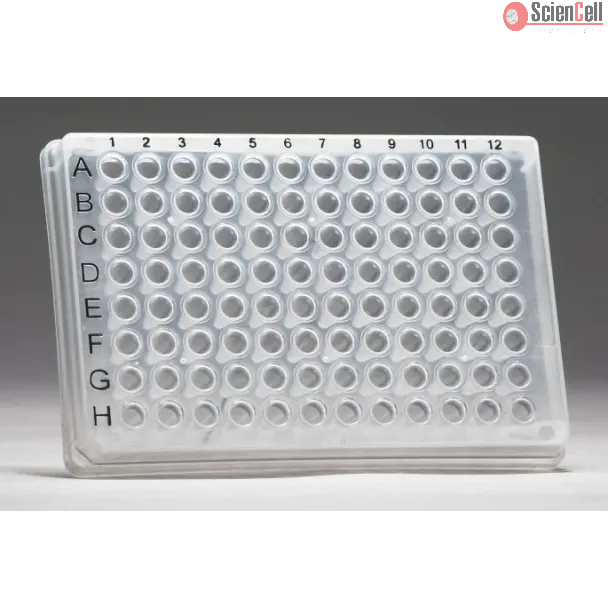
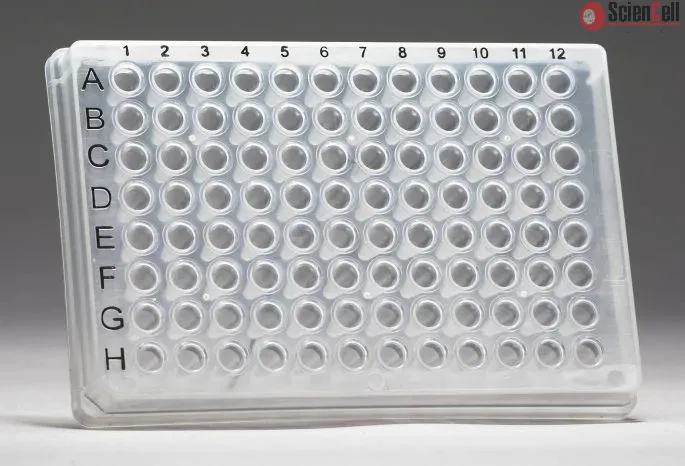
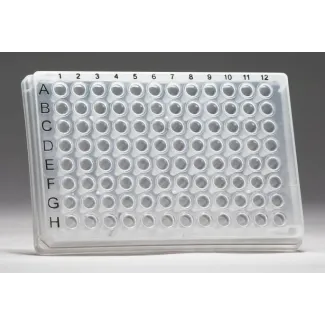
GeneQuery™ qPCR array kits are qPCR ready in a 96-well plate format, with each well containing one primer set that can specifically recognize and efficiently amplify a target gene's cDNA. The carefully designed primers ensure that: (i) the optimal annealing temperature in qPCR analysis is 65°C (with 2 mM Mg2+, and no DMSO); (ii) the primer set recognizes all known transcript variants of target gene, unless otherwise indicated; and (iii) only one gene is amplified. Each primer set has been validated by qPCR with melt curve analysis, and gel electrophoresis.
免疫系统可以有效识别癌细胞。然而,癌细胞的一个显著特征是它们能够逃避免疫系统的清除。癌症免疫逃逸的遗传基础仍然在很大程度上未知。癌症免疫疗法作为一种新兴且有效的治疗手段,通过利用免疫系统识别癌细胞的能力,同时削弱癌细胞的免疫逃逸能力,从而发挥作用。ScienCell 的 GeneQuery™ 人癌症免疫逃逸调控 qPCR 阵列试剂盒(GQH-CIE1 和 GQH-CIE2)旨在帮助深入了解癌细胞逃避免疫控制的机制。所选基因经证实在被干扰时能够增强或降低癌细胞对免疫控制的抵抗力,这些基因的选择基于全基因组 CRISPR 筛选研究。以下是部分基因按功能分组的示例:
- 程序性坏死(Necroptosis): FADD, FAS, TNFRSF1A, TRADD, TRAF2, IRF9, CFLAR, TRPM7, IFNAR1, IFNAR2, IFNGR1, IFNGR2, RBCK1, TNFAIP3, RNF31, VPS4B, CHMP5, VDAC2
- 自噬(Autophagy): MAPK1, MAP3K7, CFLAR, BECN1, ATG12, ATG7, ATG5, ATG3, RB1CC1, ATG14, ATG9A, ATG101, ATG10
- 内吞作用(Endocytosis): TGFBR2, TFRC, ARF6, VPS4B, CHMP5, VPS35, IST1
- TNF 信号通路: MAP3K7, FADD, TNFRSF1B, TNFRSF1A, TNFAIP3, TRADD, CFLAR, MAPK1, TAB2, FAS, TRAF2, TAB1, BCL2L1, CREBBP, TBK1, IRF1
- 干扰素信号通路(Interferon signaling): IFNAR1, IFNGR1, IFNGR2, STAT1, JAK1, JAK2, PTPN2, STAT2, IFNAR2, SOCS1, UBE2N, IRF9, TAP1, PSMB9
- NOD 样受体信号通路: FADD, TRAF2, MAPK1, IRF9, TRPM7, IFNAR1, IFNAR2, ATG12, ATG5, RBCK1, JAK1, TNFAIP3, RNF31, VDAC2, PKN2
- NF-κB 信号通路: IKBKB, IKBKG, TNFRSF1A, TRADD, TRAF2, TAB1, TAB2, MAP3K7, CFLAR, TNFAIP3
- JAK-STAT 信号通路: JAK2, IRF9, SOCS1, IFNAR1, IFNAR2, IFNGR1, IFNGR2, JAK1, STAT1, STAT2, PTPN2, PKN2
- MAPK 信号通路: TNFRSF1A, TRADD, TRAF2, MAPK1, TGFBR2, FAS, TAB1, TAB2, MAP3K7, PKN2
- IL-17 信号通路: FADD, TRADD, TRAF2, MAPK1, TNFAIP3
- Th17 细胞分化: MAPK1, TGFBR2, JAK2, IFNGR1, IFNGR2, JAK1, STAT1
- GPI 锚定生物合成: PIGK, PIGS, PIGT, PIGU, GPAA1
- 抗原呈递: TAP2, B2M, TAP1, CALR, PDIA3, TAPBP
- 泛素介导的蛋白水解: CUL3, UBR5, SOCS1, UBE2N, UBE2G2, RBCK1, ATG7, UFL1
- 内质网蛋白加工: UBE2G2, MOGS, PRKCSH, NPLOC4, TRAF2, PDIA3, CALR
- 其他先天免疫信号通路: HDAC1, SRSF7, PPP1CA, HCFC2, USP7, ADAR, NXT1, PPP2R2A, PPP2R3C
参考文献:K. A. Lawson 等,《Functional genomic landscape of cancer-intrinsic evasion of killing by T cells》,Nature, 586, 120-126 (2020)。
GeneQuery™ qPCR 阵列试剂盒为 96 孔板格式,每孔含有可特异识别并高效扩增目标基因 cDNA 的引物。精心设计的引物确保:(i)qPCR 分析的最佳退火温度为 65°C(2 mM Mg²⁺,不含 DMSO);(ii)引物可识别目标基因的所有已知转录变体(如无特别说明);(iii)每孔仅扩增单一基因。每套引物均通过 qPCR 融解曲线分析和凝胶电泳验证。
| 目录编号 | GK134 |
|---|---|
| 制造国家 | 美国 |
| 产品编码 | GQH-CIE1 |
| 规格/数量 | One 96-well plate, one 20ul reaction per well. |
| 产品用途 | 本产品仅供研究使用。未经批准,不得用于人体、动物或体外诊断程序。 |
| 储存 | 收到后,产品应储存在 4°C,可稳定保存达 12 个月。如需长期保存(超过 1 年),请将产品储存在 -20°C 的手动除霜冰箱中。 |
| 运输 | 常温。 |
Product Sheets

Search for a Certificate of Analysis by Lot Number below:
Find answers to common questions about ScienCell products, cell culture, handling, and research applications.
No Publication available at this time.