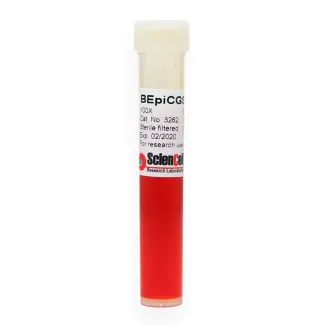
Immunometabolic reprogramming is increasingly recognized as a driver of asthma pathogenesis, yet the molecular mechanisms linking lactate accumulation to airway inflammat... More
Immunometabolic reprogramming is increasingly recognized as a driver of asthma pathogenesis, yet the molecular mechanisms linking lactate accumulation to airway inflammation via protein lactylation (Kla) remain elusive. In this study, we integrated a house dust mite (HDM)-induced asthma model with quantitative lactylomics to identify ATP6V1B2, a key V-ATPase subunit, as a core lactylation target. Combined molecular dynamics simulations and biochemical analyses revealed that intracellular l-lactate triggers lactylation at K108/K109. This modification restricts ATP6V1B2 conformational flexibility, leading to the disassembly of the V1–V0 complex and subsequent loss of proton pump activity. Crucially, the lactylation event was validated in primary human bronchial epithelial cells (HBEs), confirming that HDM and l-lactate stimulation induce ATP6V1B2 lactylation, thereby ensuring the clinical relevance of our findings. We demonstrate that this loss-of-function precipitates lysosomal alkalinization and membrane permeabilization (LMP). Crucially, LMP acts as a central node that bifurcates into two pathogenic cascades: it triggers a catastrophic mitochondrial ROS burst via Cathepsin B leakage. This oxidative burst functions as a pivotal redox signal that initiates a non-canonical Caspase-8/3/GSDME-dependent pyroptosis pathway, distinct from intrinsic apoptosis. In vivo, blocking ATP6V1B2 lactylation using an AAV-delivered lactylation-deficient (2 KR) mutant successfully severed this metabolic-inflammatory loop, significantly attenuating airway inflammation, Th2 cytokine release, and tissue pyroptosis. These findings characterize a novel "l-lactate–ATP6V1B2–GSDME" axis, establishing ATP6V1B2 lactylation as a critical metabolic switch connecting lysosomal damage to inflammatory cell death, thereby identifying a potential therapeutic target for metabolic dysregulation in chronic asthma with severe pathology. Less
Aberrant activation of the hedgehog (Hh) signaling pathway has been implicated in the epithelial-to-mesenchymal transition (EMT) and cancer stem-like cell (CSC) maintenan... More
Aberrant activation of the hedgehog (Hh) signaling pathway has been implicated in the epithelial-to-mesenchymal transition (EMT) and cancer stem-like cell (CSC) maintenance; both processes can result in tumor progression and treatment resistance in several types of human cancer. Hh cooperates with the epidermal growth factor receptor (EGFR) signaling pathway in embryogenesis. We found that the Hh signaling pathway was silenced in EGFRTKI-sensitive non-small-cell lung cancer (NSCLC) cells, while it was inappropriately activated in EGFR-TKI-resistant NSCLC cells, accompanied by EMT induction and ABCG2 overexpression. Upregulation of Hh signaling through extrinsic SHH exposure downregulated E-cadherin expression and elevated Snail and ABCG2 expression, resulting in gefitinib tolerance (P < 0.001) in EGFR-TKI-sensitive cells. Blockade of the Hh signaling pathway using the SMO antagonist SANT-1 restored E-cadherin expression and downregulate Snail and ABCG2 in EGFR-TKI-resistant cells. A combination of SANT-1 and gefitinib markedly inhibited tumorigenesis and proliferation in EGFR-TKI-resistant cells (P < 0.001). These findings indicate that hyperactivity of Hh signaling resulted in EGFR-TKI resistance, by EMT introduction and ABCG2 upregulation, and blockade of Hh signaling synergistically increased sensitivity to EGFR-TKIs in primary and secondary resistant NSCLC cells. E-cadherin expression may be a potential biomarker of the suitability of the combined application of an Hh inhibitor and EGFR-TKIs in EGFR-TKI-resistant NSCLCs. Less
Polyhedral oligomeric silsesquioxane poly(carbonate-urea) urethane (POSS-PCU) is a versatile nanocomposite biomaterial with growing applications as a bioscaffold for tiss... More
Polyhedral oligomeric silsesquioxane poly(carbonate-urea) urethane (POSS-PCU) is a versatile nanocomposite biomaterial with growing applications as a bioscaffold for tissue engineering. Integration of synthetic implants with host tissue can be problematic but could be improved by topographical modifications. We describe optimization of POSS-PCU by dispersion of porogens (sodium bicarbonate (NaHCO3), sodium chloride (NaCl) and sucrose) onto the material surface, with the principle aim of increasing surface porosity, thus providing additional opportunities for improved cellular and vascular ingrowth. We assess the effect of the porogens on the material's mechanical strength, surface chemistry, wettability and cytocompatibilty. Surface porosity was characterized by scanning electron microscopy (SEM). There was no alteration in surface chemistry and wettability and only modest changes in mechanical properties were detected. The size of porogens correlated well with the porosity of the construct produced and larger porogens improved interconnectivity of spaces within constructs. Using primary human bronchial epithelial cells (HBECs) we demonstrate moderate in vitro cytocompatibility for all surface modifications; however, larger pores resulted in cellular aggregation. These cells were able to differentiate on POSS-PCU scaffolds. Implantation of the scaffold in vivo demonstrated that larger pore sizes favor cellular integration and vascular ingrowth. These experiments demonstrate that surface modification with large porogens can improve POSS-PCU nanocomposite scaffold integration and suggest the need to strike a balance between the non-porous surfaces required for epithelial coverage and the porous structure required for integration and vascularization of synthetic scaffolds in future construct design. Keywords: Biocompatible materials; Nanocomposites; Porosity; Re-epithelialization; Tissue engineering; Trachea. Copyright © 2016 The Authors. Published by Elsevier Ltd.. All rights reserved. Less
P2Y receptor activation causes the release of inflammatory cytokines in the bronchial epithelium, whereas G protein-coupled estrogen receptor (GPER), a novel estrogen (E2... More
P2Y receptor activation causes the release of inflammatory cytokines in the bronchial epithelium, whereas G protein-coupled estrogen receptor (GPER), a novel estrogen (E2) receptor, may play an anti-inflammatory role in this process. We investigated the cellular mechanisms underlying the inhibitory effect of GPER activation on the P2Y receptor-mediated Ca2+ signaling pathway and cytokine production in airway epithelia. Expression of GPER in primary human bronchial epithelial (HBE) or 16HBE14o- cells was confirmed on both the mRNA and protein levels. Stimulation of HBE or 16HBE14o- cells with E2 or G1, a specific agonist of GPER, attenuated the nucleotide-evoked increases in [Ca2+]i, whereas this effect was reversed by G15, a GPER-specific antagonist. G1 inhibited the secretion of two proinflammatory cytokines, interleukin (IL)-6 and IL-8, in cells stimulated by adenosine 5′-(γ-thio)triphosphate (ATPγS). G1 stimulated a real-time increase in cAMP levels in 16HBE14o- cells, which could be inhibited by adenylyl cyclase inhibitors. The inhibitory effects of E2 or G1 on P2Y receptor-induced increases in Ca2+ were reversed by treating the cells with a protein kinase A (PKA) inhibitor. These results demonstrated that the inhibitory effects of G1 or E2 on P2Y receptor-mediated Ca2+ mobilization and cytokine secretion were due to GPER-mediated activation of a cAMP-dependent PKA pathway. This study has reported, for the first time, the expression and function of GPER as an anti-inflammatory component in human bronchial epithelia, which may mediate through its opposing effects on the pro‐inflammatory pathway activated by the P2Y receptors in inflamed airway epithelia. Less
Autophagy, a type II programmed cell death, is essential for cell survival under stress, e.g. lung injury, and bone marrow-derived mesenchymal stem cells (BM-MSCs) have g... More
Autophagy, a type II programmed cell death, is essential for cell survival under stress, e.g. lung injury, and bone marrow-derived mesenchymal stem cells (BM-MSCs) have great potential for cell therapy. However, the mechanisms underlying the BM-MSC activation of autophagy to provide a therapeutic effect in ischaemia/reperfusion-induced lung injury (IRI) remain unclear. Thus, we investigate the activation of autophagy in IRI following transplantation with BM-MSCs. Seventy mice were pre-treated with BM-MSCs before they underwent lung IRI surgery in vivo. Human pulmonary micro-vascular endothelial cells (HPMVECs) were pre-conditioned with BM-MSCs by oxygen-glucose deprivation/reoxygenation (OGD) in vitro. Expression markers for autophagy and the phosphoinositide 3-kinase/protein kinase B (PI3K/Akt) signalling pathway were analysed. In IRI-treated mice, administration of BM-MSCs significantly attenuated lung injury and inflammation, and increased the level of autophagy. In OGD-treated HPMVECs, co-culture with BM-MSCs attenuated endothelial permeability by decreasing the level of cell death and enhanced autophagic activation. Moreover, administration of BM-MSCs decreased the level of PI3K class I and p-Akt while the expression of PI3K class III was increased. Finally, BM-MSCs-induced autophagic activity was prevented using the inhibitor LY294002. Administration of BM-MSCs attenuated lung injury by improving the autophagy level via the PI3K/Akt signalling pathway. These findings provide further understanding of the mechanisms related to BM-MSCs and will help to develop new cell-based therapeutic strategies in lung injury. Less
TRIM protein family is an evolutionarily conserved gene family implicated in a number of
Epithelial denudation is one of the characteristics of chronic asthma. To restore its functions, the airway epithelium has to rapidly repair the injuries and regenerate i... More
Epithelial denudation is one of the characteristics of chronic asthma. To restore its functions, the airway epithelium has to rapidly repair the injuries and regenerate its structure and integrity. Mesenchymal stem cells (MSCs) have the ability to differentiate into many cell lineages. However, the differentiation of MSCs into epithelial cells has not been fully studied. Here, we examined the differentiation of MSCs into epithelial cells using three different media compositions with various growth supplementations. The MSCs were isolated from porcine bone marrow by density gradient centrifugation. The isolated MSCs were CD11(-) CD34(-) CD45(-) CD44(+) CD90(+) and CD105(+) by immunostaining and flow cytometry. MSCs were stimulated with EpiGRO (Millipore), BEpiCM (ScienCell) and AECGM (PromoCell) media for 5 and 10 days, and epithelial differentiation was assessed by qPCR (keratin 14, 18 and EpCAM), fluorometry (cytokeratin 7-8, cytokeratin 14-15-16-19 and EpCAM), western blot analysis (pancytokeratin, EpCAM) and flow cytometry (cytokeratin 7-8, cytokeratin 14-15-16-19 and EpCAM). The functional marker MUC1 was also assessed after 10 days of air-liquid interface (ALI) culture in optimized media. Cells cultured in BEpiCM containing fibroblast growth factor and prostaglandin E2 showed the highest expression of the epithelial markers: CK7-8 (85.90%); CK-14-15-16-19 (10.14%); and EpCAM (64.61%). The cells also expressed functional marker MUC1 after ALI culture. The differentiated MSCs when cultured in BEpiCM medium ex vivo in a bioreactor on a decellularized trachea for 10 days retained the epithelial-like phenotype. In conclusion, porcine bone marrow-derived MSCs demonstrate commitment to the epithelial lineage and might be a potential therapy for facilitating the repair of denuded airway epithelium. Keywords: decellularization; differentiation; epithelial cells; epithelial repair; growth factors; lung injury; mesenchymal stem cells. Less

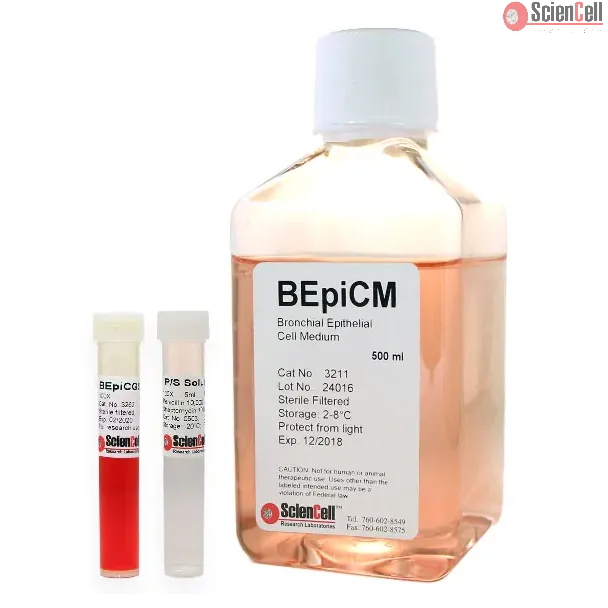
 3211-b-prf (Basal & Phenol Red Free Medium)