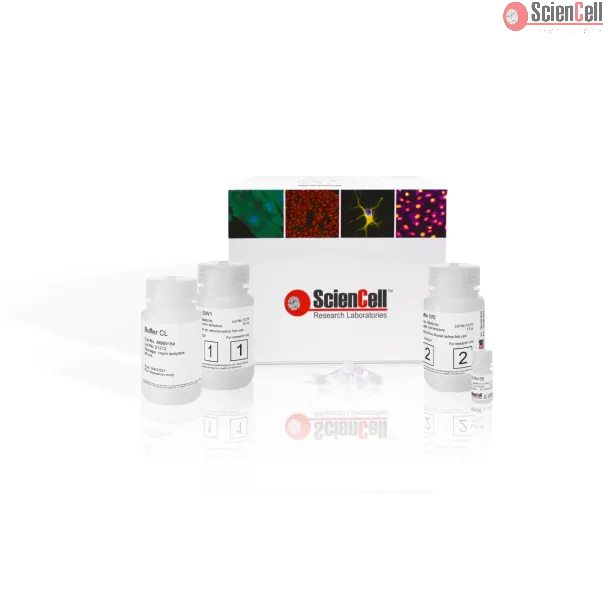
ScienCell SpeeDNA Isolation Kit provides a fast and reliable way to purify total DNA (e.g., genomic, mitochondrial and pathogen) from biological samples including whole blood, plasma, serum, human or animal tissue or cultured cell. The SPDNAI isolates DNA with minimal handling while excluding organic denaturants. The buffer system is optimized Purified DNA is suitable for downstream applications such as PCR, Southern blot analysis, and genotyping.
Product Sheets
 MB6918
Search for a Certificate of Analysis by Lot Number below:
Autosomal dominant polycystic kidney disease (ADPKD) mainly results from mutations in the PKD1 gene, which encodes polycystin 1. It is the most common inherited kidney di... More
Autosomal dominant polycystic kidney disease (ADPKD) mainly results from mutations in the PKD1 gene, which encodes polycystin 1. It is the most common inherited kidney disease and is characterized by a progressive bilateral increase in cyst number and size, often leading to kidney failure. The cellular energy sensor and regulator adenosine monophosphate stimulated protein kinase (AMPK) has been implicated as a promising new therapeutic target. To address this hypothesis, we determined the effects of a potent and selective clinical stage direct allosteric AMPK activator, PXL770, in canine and patient-derived 3D cyst models and an orthologous mouse model of ADPKD. PXL770 induced AMPK activation and dose-dependently reduced cyst growth in principal-like Madin-Darby Canine Kidney cells stimulated with forskolin and kidney epithelial cells derived from patients with ADPKD stimulated with desmopressin. In an inducible, kidney epithelium-specific Pkd1 knockout mouse model, PXL770 produced kidney AMPK pathway engagement, prevented the onset of kidney failure (reducing blood urea by 47%), decreased cystic index by 26% and lowered the kidney weight to body weight ratio by 35% compared to untreated control Pkd1 knockout mice. These effects were accompanied by a reduction of markers of cell proliferation (-48%), macrophage infiltration (-53%) and tissue fibrosis (-37%). Thus, our results show the potential of direct allosteric AMPK activation in the treatment of ADPKD and support the further development of PXL770 for this indication. Less
Compelling evidence shows that brown and beige adipose tissue are protective against metabolic diseases1,2. PR domain-containing 16 (PRDM16) is a dominant activator of th... More
Compelling evidence shows that brown and beige adipose tissue are protective against metabolic diseases1,2. PR domain-containing 16 (PRDM16) is a dominant activator of the biogenesis of beige adipocytes by forming a complex with transcriptional and epigenetic factors and is therefore an attractive target for improving metabolic health3,4,5,6,7,8. However, a lack of knowledge surrounding the regulation of PRDM16 protein expression hampered us from selectively targeting this transcriptional pathway. Here we identify CUL2–APPBP2 as the ubiquitin E3 ligase that determines PRDM16 protein stability by catalysing its polyubiquitination. Inhibition of CUL2–APPBP2 sufficiently extended the half-life of PRDM16 protein and promoted beige adipocyte biogenesis. By contrast, elevated CUL2–APPBP2 expression was found in aged adipose tissues and repressed adipocyte thermogenesis by degrading PRDM16 protein. Importantly, extended PRDM16 protein stability by adipocyte-specific deletion of CUL2–APPBP2 counteracted diet-induced obesity, glucose intolerance, insulin resistance and dyslipidaemia in mice. These results offer a cell-autonomous route to selectively activate the PRDM16 pathway in adipose tissues. Less
ScienCell Research Laboratories (SRL) takes pride in being a resource for researchers all over the world. The publications listed here are not meant as an endorsement or confirmation of the reliability of the products.