Leydig Cell Medium
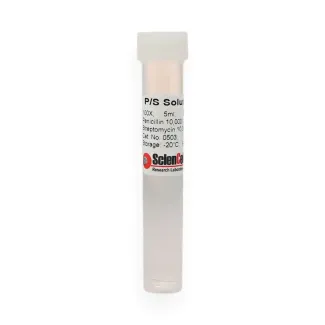
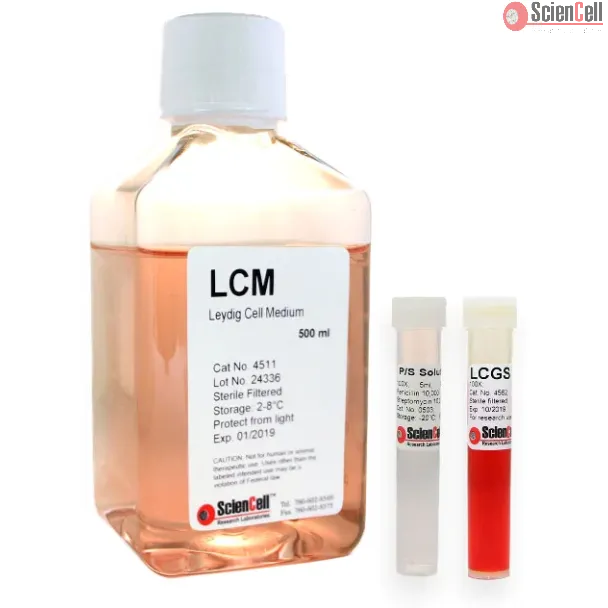
Leydig Cell Medium (LCM) consists of 500 ml of basal medium, 5 ml of Leydig Cell Growth Supplement (LCGS, Cat. #4562) and 5 ml of penicillin/streptomycin solution (P/S, Cat. #0503).
Leydig Cell Medium (LCM), when used with Leydig Cell Growth Supplement (LCGS, Cat #4562), is a complete medium designed for optimal growth of normal leydig cells in vitro. It is a sterile, liquid medium which contains essential and non-essential amino acids, vitamins, organic and inorganic compounds, hormones, growth factors and trace minerals. The medium is HEPES and bicarbonate buffered and has a pH of 7.4 when equilibrated in an incubator with an atmosphere of 5% CO2/95% air. The medium is formulated (quantitatively and qualitatively) to provide an optimally balanced nutritional environment that selectively supports the growth of normal leydig cells in vitro.
| Catalog No. | 4511 |
|---|---|
| Country of Manufacture | United States |
| Product Code | LCM |
| Size/Quantity | 500 ml |
| Product use | This product is for research use only. It is not approved for use in humans, animals, or in vitro diagnostic procedures. |
| Storage | Store the basal medium at 4°C, the LCGS and the P/S solution at -20°C. Protect from light. |
| Shipping | Basal medium: room temperature. Supplements: dry ice. |
Product Sheets
 4511-b-prf (Basal & Phenol Red Free Medium)
4511-prf (Complete Phenol Red Free Medium)
Search for a Certificate of Analysis by Lot Number below:
Find answers to common questions about ScienCell products, cell culture, handling, and research applications.
Write Your Own Review
The testicular interstitium relies on coordinated signaling among vascular, steroidogenic, and structural cells, yet the regulatory role of testicular endothelial cells (... More
Leydig cells are the primary source of testosterone or androgen production in male mammals. The blood–testis barrier (BTB) maintains structural integrity and safeguards... More
ScienCell Research Laboratories (SRL) takes pride in being a resource for researchers all over the world. The publications listed here are not meant as an endorsement or confirmation of the reliability of the products.
Related Products
Check items to add to the cart or