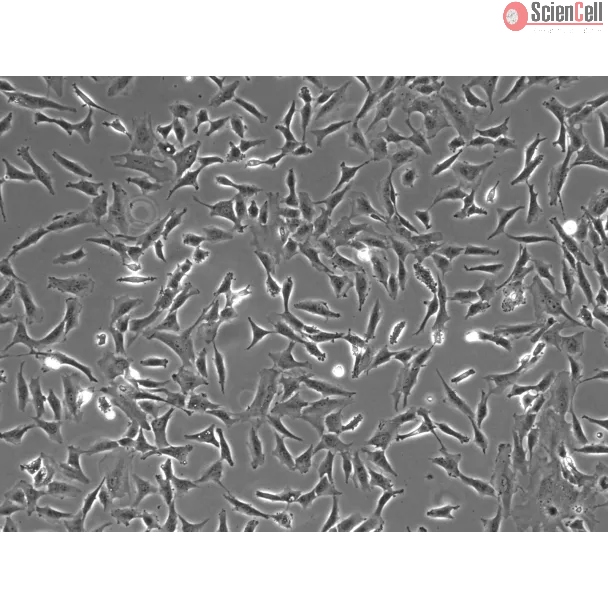
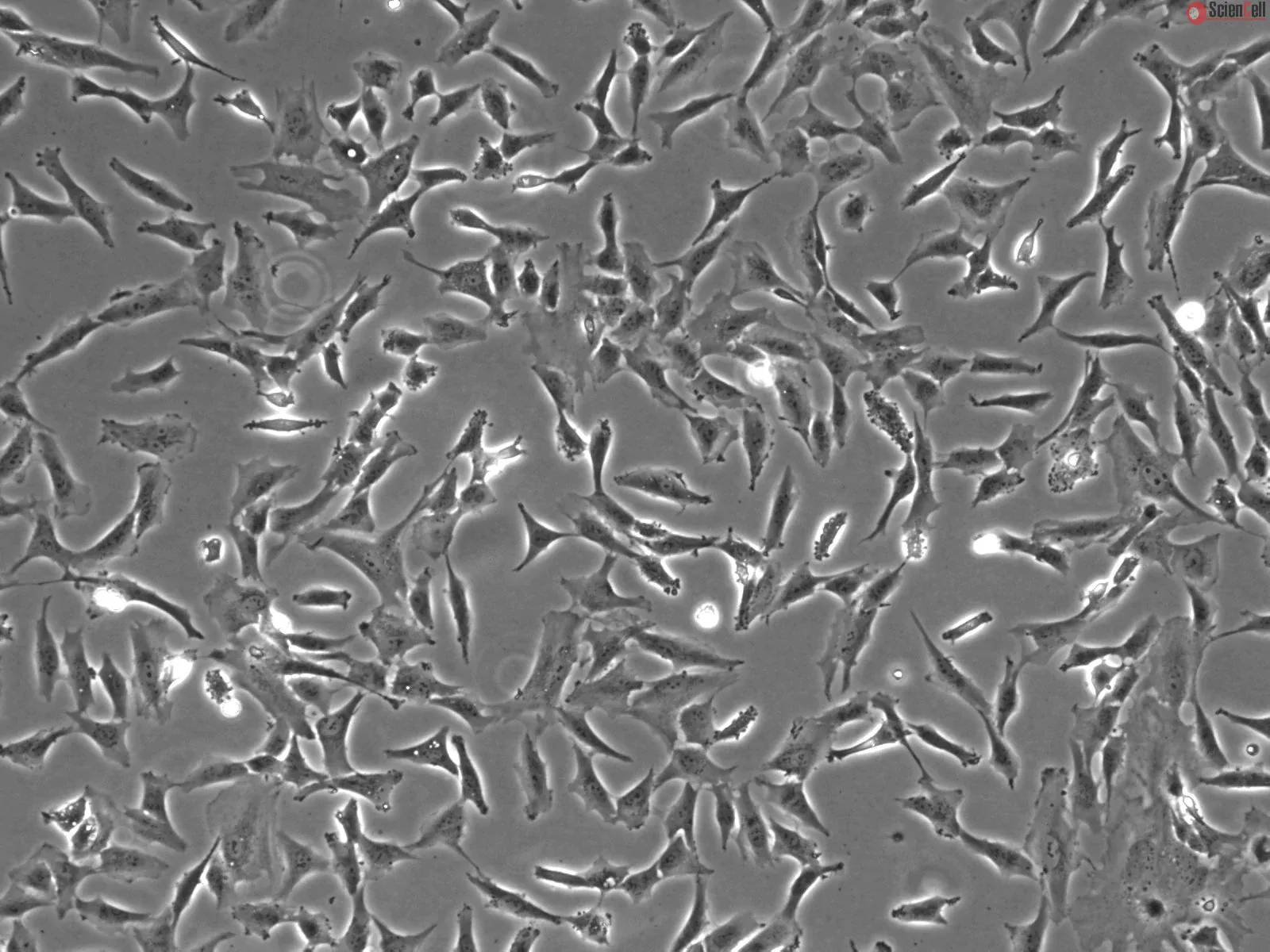
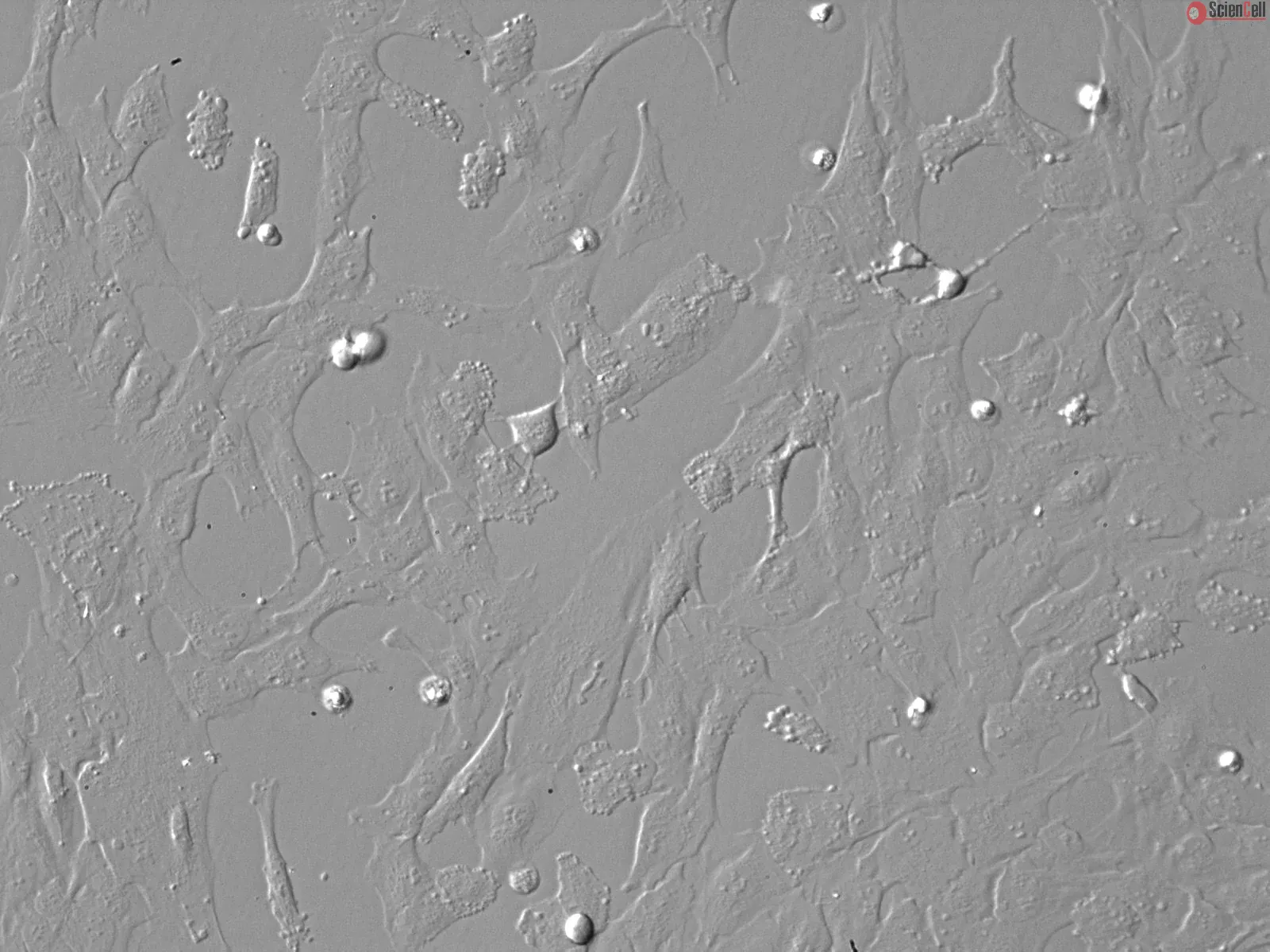
Human Retinal Astrocytes
Isolated from human retina. Human Retinal Astrocytes (HRA) are cryopreserved at passage one and delivered frozen. Each vial contains >5 x 10⁵ cells in 1 ml volume.
Astrocytes are the major cell type in the mammalian brain. They provide a variety of supportive functions to their partner neurons in the central nervous system (CNS), such as neuronal guidance during development, and nutritional and metabolic support throughout life. Numerous studies have demonstrated that astrocytes are among the most functionally diverse group of cells in the CNS. Impairment of normal astrocyte functions during stroke and other insults can critically influence neuron survival. Long-term recovery after brain injury, through neurite outgrowth, synaptic plasticity, or neuron regeneration, is also influenced by astrocyte surface molecule expression and trophic factor release. Apart from various neuropathological conditions, astrocytes play a particularly important role in retinal vascular disease and glaucoma. Much of what we have learned about astrocytes is from in vitro studies and astrocyte culture is a useful tool
for exploring the diverse properties of this cell type.
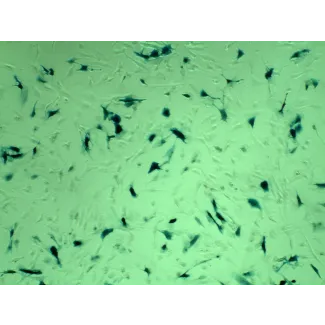
HRA from ScienCell Research Laboratories are isolated from human retina. HRA are cryopreserved at passage one and delivered frozen. Each vial contains >5 x 10⁵ cells in 1 ml volume. HRA are characterized by immunofluorescence with antibody specific to GFAP. HRA are negative for HIV1, HBV, HCV, mycoplasma, bacteria, yeast, and fungi. HRA are guaranteed to further expand for 15 population doublings under the conditions provided by ScienCell Research Laboratories.
Recommended Medium
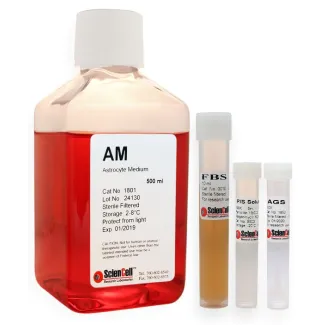
It is recommended to use Astrocyte Medium (AM, Cat. #1801) for culturing HRA in vitro.
| Catalog No. | 1870 |
|---|---|
| Country of Manufacture | United States |
| Product Code | HRA |
| Size/Quantity | 5 x 10^5 cells/vial. |
| Product use | HRA are for research use only. They are not approved for human or animal use, or for application in in vitro diagnostic procedures. |
| Storage | Upon receiving, directly and immediately transfer the cells from dry ice to liquid nitrogen and keep the cells in liquid nitrogen until they are needed for experiments. |
| Shipping | Dry ice. |
Product Sheets

Search for a Certificate of Analysis by Lot Number below:
Find answers to common questions about ScienCell products, cell culture, handling, and research applications.
ScienCell Research Laboratories (SRL) takes pride in being a resource for researchers all over the world. The publications listed here are not meant as an endorsement or confirmation of the reliability of the products.
.webp)
,-1-mg-ml--2.jpg)