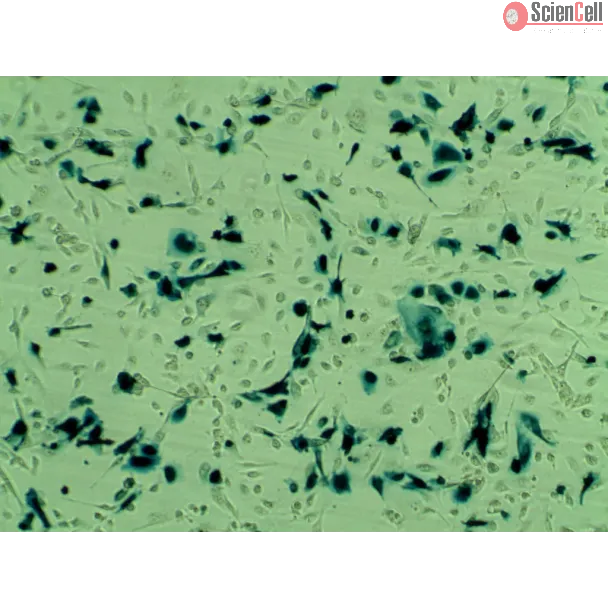
Transfection Optimization
Which transfection reagent do you recommend?
UniFectagen (UniF, Cat. #0983) is recommended and is optimized for reporter assays in HEK293T cells, typically achieving high transfection efficiency under optimized conditions. Mix DNA with UniFectagen in Transfection Max Medium (TMM, Cat. #9051), incubate for 15–20 minutes at room temperature to allow complex formation, and then add the complexes directly to the cells.
Is serum-free medium during transfection mandatory?
Serum free medium is not strictly mandatory, but it is strongly recommended during the DNA–reagent complex formation step because serum components can interfere with complex formation and reduce efficiency. Using Transfection Max Medium (TMM, Cat. #9051) during complex formation typically results in higher transfection efficiency than serum containing media.
What is the effect of antibiotics on transfection?
Low concentrations of antibiotics in the culture medium usually have minimal impact on transfection efficiency once complexes are formed. However, antibiotics should be avoided during the DNA–UniFectagen complex formation step in Transfection Max Medium (TMM, Cat. #9051), because they can increase cytotoxicity or slightly reduce efficiency in some cell lines.
Does the transfection work in suspension cells?
Yes, UniFectagen (UniF, Cat. #0983) can be used to transfect suspension cell lines, although efficiency and viability may vary by cell type. Optimization of DNA amount, reagent ratio, cell density, and incubation time is recommended for each suspension cell line.
What cell confluency is optimal for transfection?
70–90% confluency at the time of transfection for adherent cells, with healthy cells in log phase growth. Over-confluent or low-density cells reduce transfection efficiency.
Very low signal: what should I do?
First verify transfection efficiency, cell health, and timing after transfection, and ensure complete and uniform lysis. Using a standardized system such as Transfection Max Medium (TMM, Cat. #9051) with UniFectagen (UniF, Cat. #0983), together with Luciferase Assay Kit (LAK, Cat. #9048) and Firefly Assay Enhancer 100X (FAE, Cat. #7208), can substantially increase Firefly signal intensity compared with non-optimized conditions.
My Firefly signal is low. What can I do?
Confirm that cells are at optimal confluency (typically 70–90%) at the time of transfection, transfection efficiency is high, and lysis is complete and uniform across wells. Further improvement may come from optimizing DNA/reagent ratio, extending expression time, using a stronger promoter, or adding Firefly Assay Enhancer 100X (FAE, Cat. #7208) to the Luciferase Assay Kit (LAK, Cat. #9048).
What can cause high background in the negative control for the Luciferase Assay Kit?
High background can result from using only non-transfected wells instead of a dedicated negative control plasmid, or from overly harsh lysis conditions. Use the supplied negative control vector, reduce lysis time or agitation when using Luciferase Assay Kit (LAK, Cat. #9048), and check for contamination or unintended promoter activity in your constructs.
Is there signal loss after freeze–thaw of cells or lysates?
Yes. Both Firefly and Renilla signals can decrease after freeze–thaw, with Firefly typically being more sensitive. Whenever possible, assay freshly prepared lysates; when using Luciferase Assay Kit (LAK, Cat. #9048), adding Firefly Assay Enhancer 100X (FAE, Cat. #7208) can help improve Firefly signal recovery in suboptimal samples.
What if Firefly signal remains weak even after optimization?
If cell density, transfection conditions, and assay timing have already been optimized and Firefly remains weak, consider increasing reporter plasmid amount or extending expression time. Supplementing Luciferase Assay Kit (LAK, Cat. #9048) with Firefly Assay Enhancer 100X (FAE, Cat. #7208) can further enhance ATP-dependent Firefly signal in many assay setups.