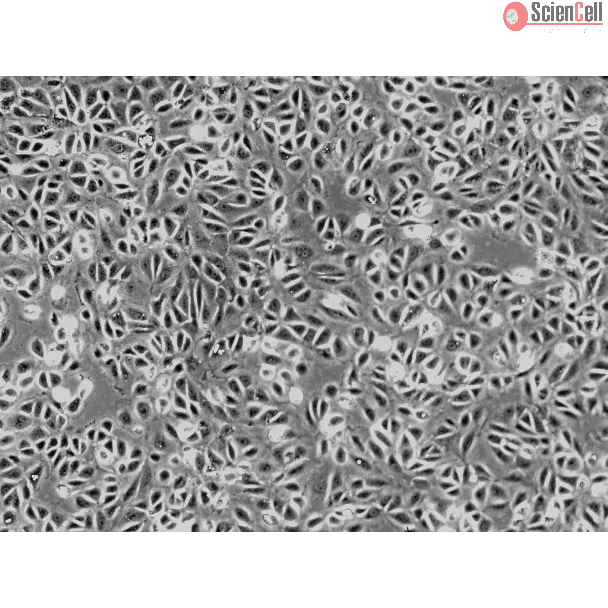
Rat Renal Proximal Tubular Epithelial Cells
Isolated from rat kidney. RRPTEpiC are cryopreserved at passage one and delivered frozen. Each vial contains >5 x 10⁵ cells in 1 ml volume.
Related Promotion:

Renal proximal tubular epithelial cells (RPTEpiC) play a crucial role in renal function. They reabsorb nearly all the glucose and amino acids in the glomerular filtrate, while allowing substances of no nutritional value to be excreted into the urine. They are also a major site of injury in a variety of congenital, metabolic, and inflammatory diseases. RPTEpiC can produce inflammatory mediators, such as cytokines or chemokines, and actively participate in acute inflammatory processes by affecting and directing leukocyte chemotaxis via the production of IL-8. RPTEpiC express IL-2R alpha and MHC class II antigens during inflammation, after renal transplantation, and during crescentic glomerulonephritis, suggesting that these cells have the capacity to participate in the pathogenesis of immune renal injury. To study the relationship between proximal tubular cells and a variety of renal diseases, the RPTEpiC culture is a useful in vitro model.
RRPTEpiC from ScienCell Research Laboratories are isolated from rat kidney. RRPTEpiC are cryopreserved at passage one and delivered frozen. Each vial contains >5 x 10⁵ cells in 1 ml volume. RRPTEpiC are characterized by immunofluorescence with antibodies specific to cytokeratin-18. RRPTEpiC are negative for mycoplasma, bacteria, yeast, and fungi. RRPTEpiC are guaranteed to further culture under the conditions provided by ScienCell Research Laboratories; however, RRPTEpiC are not recommended for long-term cultures due to limited expansion capacity and senescence after subculturing.
Recommended Medium
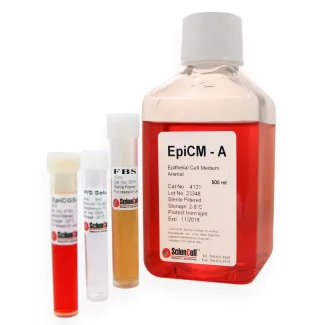
It is recommended to use Epithelial Cell Medium-animal (EpiCM-a, Cat. #4131) for curlturing RRPTEpiC in vitro.
| Catalog No. | R4100 |
|---|---|
| Country of Manufacture | United States |
| Product Code | RRPTEpiC |
| Size/Quantity | 5 x 10^5 cells/vial |
| Product use | This product is for research use only. It is not approved for use in humans, animals, or in vitro diagnostic procedures. |
| Storage | Directly and immediately transfer cells from dry ice to liquid nitrogen upon receiving and keep the cells in liquid nitrogen until cell culture is needed for experiments. |
| Shipping | Dry ice. |
No Publication available at this time.
,-1-mg-ml--2.jpg)