Astrocytes are the major cell type in the mammalian brain. They have been implicated in a variety of supportive functions for their partner neurons in the central nervous system, such as neuronal guidance during development, ion and water homeostasis, blood flow regulation, neurotransmission, energy metabolism, and immune defense. Recent studies have shown that spinal cord astrocytes contribute to neuroinflammation by chemokine expression, which leads to the recruitment of “inflammatory” monocytes and neutrophils to the lesion site. Experimentally, spinal cord astrocytes have also been used to study the wobbler mutation and astrogliosis. As the importance of astrocyte function in the nervous system becomes more recognized, particularly in regards to the modulation of neural activity, astrocyte cultures will provide a useful tool for exploring the diverse properties and functions of these cells.
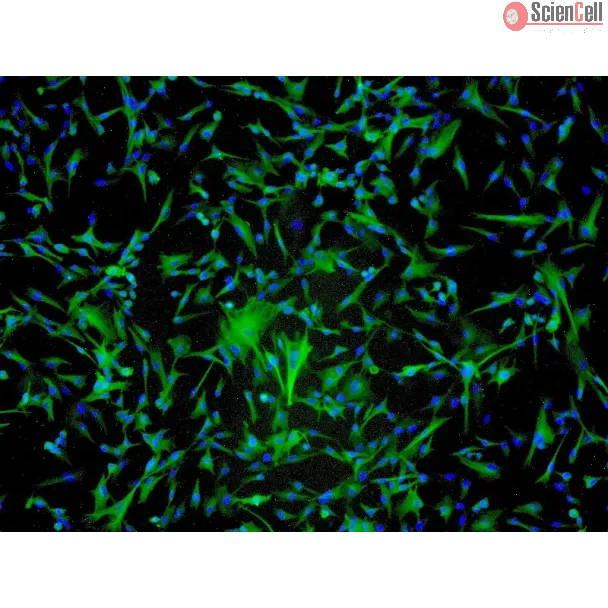
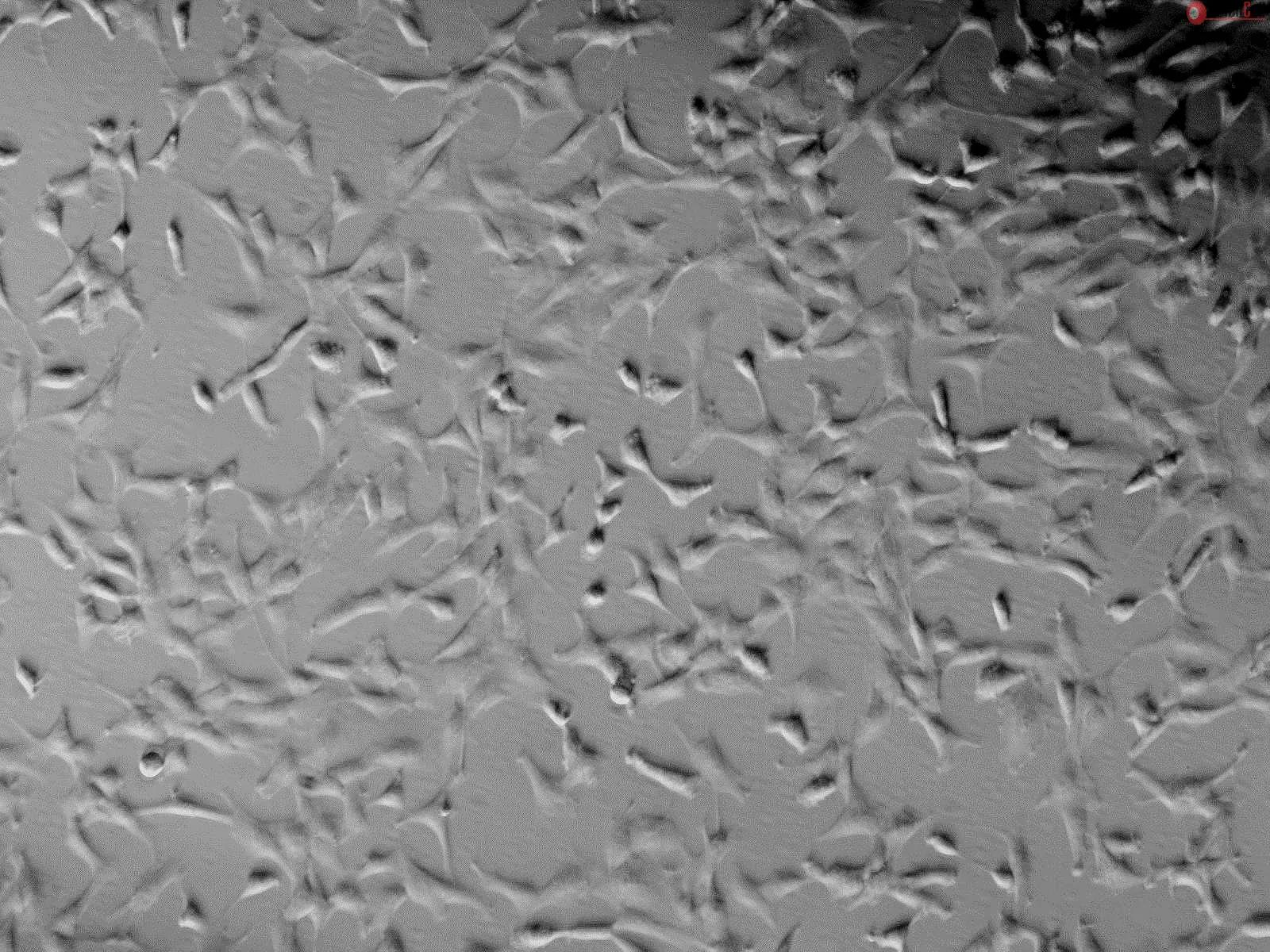
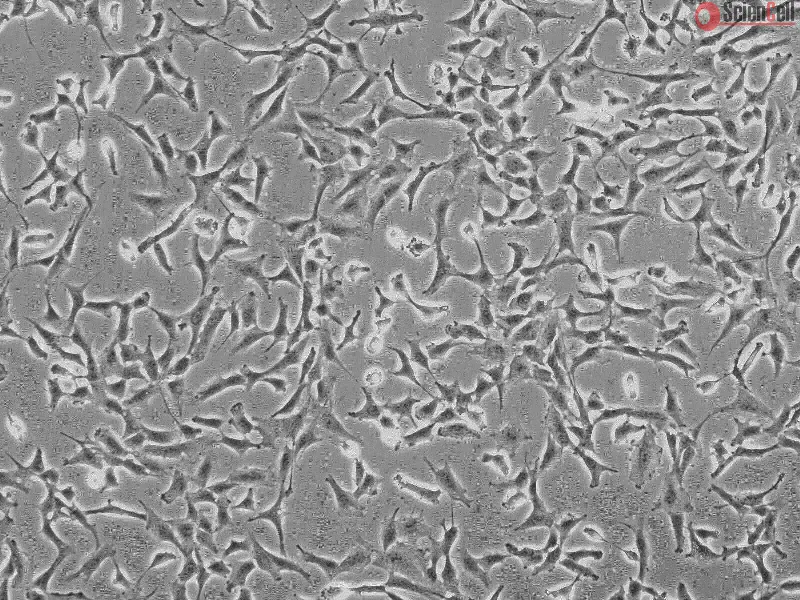
HA-sp from ScienCell Research Laboratories are isolated from human spinal cord. HA-sp are cryopreserved at passage one and delivered frozen. Each vial contains >5 x 10⁵ cells in 1 ml volume. HA-sp are characterized by immunofluorescence with antibody specific to GFAP. HA-sp are negative for HIV-1, HBV, HCV, mycoplasma, bacteria, yeast, and fungi. HA-sp are guaranteed to further expand for 15 population doublings under the conditions provided by ScienCell Research Laboratories.
Recommended Medium
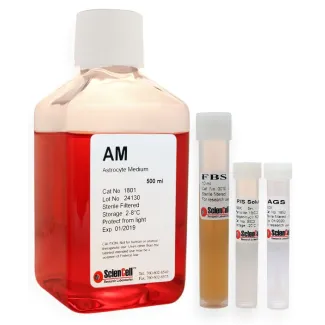
It is recommended to use Astrocyte Medium (AM, Cat. #1801) for culturing HA-sp in vitro.
Inflammation and oxidative stress are thought to promote tissue damage in multiple sclerosis. Thus, novel therapeutics enhancing cellular resistance to free radicals coul... More
Inflammation and oxidative stress are thought to promote tissue damage in multiple sclerosis. Thus, novel therapeutics enhancing cellular resistance to free radicals could prove useful for multiple sclerosis treatment. BG00012 is an oral formulation of dimethylfumarate. In a phase II multiple sclerosis trial, BG00012 demonstrated beneficial effects on relapse rate and magnetic resonance imaging markers indicative of inflammation as well as axonal destruction. First we have studied effects of dimethylfumarate on the disease course, central nervous system, tissue integrity and the molecular mechanism of action in an animal model of chronic multiple sclerosis: myelin oligodendrocyte glycoprotein induced experimental autoimmune encephalomyelitis in C57BL/6 mice. In the chronic phase of experimental autoimmune encephalomyelitis, preventive or therapeutic application of dimethylfumarate ameliorated the disease course and improved preservation of myelin, axons and neurons. In vitro, the application of fumarates increased murine neuronal survival and protected human or rodent astrocytes against oxidative stress. Application of dimethylfumarate led to stabilization of the transcription factor nuclear factor (erythroid-derived 2)-related factor 2, activation of nuclear factor (erythroid-derived 2)-related factor 2-dependent transcriptional activity and accumulation of NADP(H) quinoline oxidoreductase-1 as a prototypical target gene. Furthermore, the immediate metabolite of dimethylfumarate, monomethylfumarate, leads to direct modification of the inhibitor of nuclear factor (erythroid-derived 2)-related factor 2, Kelch-like ECH-associated protein 1, at cysteine residue 151. In turn, increased levels of nuclear factor (erythroid-derived 2)-related factor 2 and reduced protein nitrosylation were detected in the central nervous sytem of dimethylfumarate-treated mice. Nuclear factor (erythroid-derived 2)-related factor 2 was also upregulated in the spinal cord of autopsy specimens from untreated patients with multiple sclerosis. In dimethylfumarate-treated mice suffering from experimental autoimmune encephalomyelitis, increased immunoreactivity for nuclear factor (erythroid-derived 2)-related factor 2 was detected by confocal microscopy in neurons of the motor cortex and the brainstem as well as in oligodendrocytes and astrocytes. In mice deficient for nuclear factor (erythroid-derived 2)-related factor 2 on the same genetic background, the dimethylfumarate mediated beneficial effects on clinical course, axon preservation and astrocyte activation were almost completely abolished thus proving the functional relevance of this transcription factor for the neuroprotective mechanism of action. We conclude that the ability of dimethylfumarate to activate nuclear factor (erythroid-derived 2)-related factor 2 may offer a novel cytoprotective modality that further augments the natural antioxidant responses in multiple sclerosis tissue and is not yet targeted by other multiple sclerosis therapies. Less
ScienCell Research Laboratories (SRL) takes pride in being a resource for researchers all over the world. The publications listed here are not meant as an endorsement or confirmation of the reliability of the products.




,-1-mg-ml--2.jpg)