Astrocytes are the major cell type in the mammalian brain. They provide a variety of supportive functions to their partner neurons in the central nervous system (CNS), such as neuronal guidance during development, and nutritional and metabolic support throughout life. Astrocytes have also been implicated in various pathological processes. Impairment of normal astrocyte functions during stroke and other insults can critically influence neuron survival. Long-term recovery after brain injury, through neurite outgrowth, synaptic plasticity, or neuron regeneration, is also influenced by astrocyte surface molecule expression and trophic factor release. Numerous studies have demonstrated that astrocytes are among the most functionally diverse group of cells in the CNS. Much of what we have learned about astrocytes is from in vitro studies and astrocyte culture is a useful tool for exploring the diverse properties of this cell type.
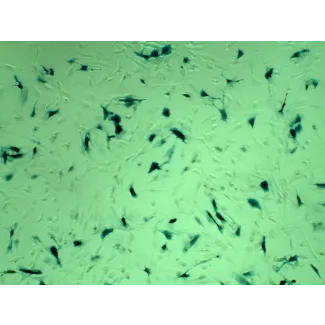
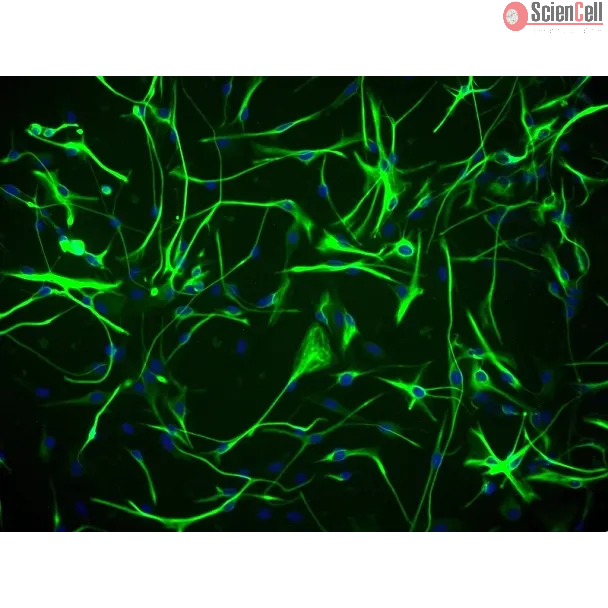
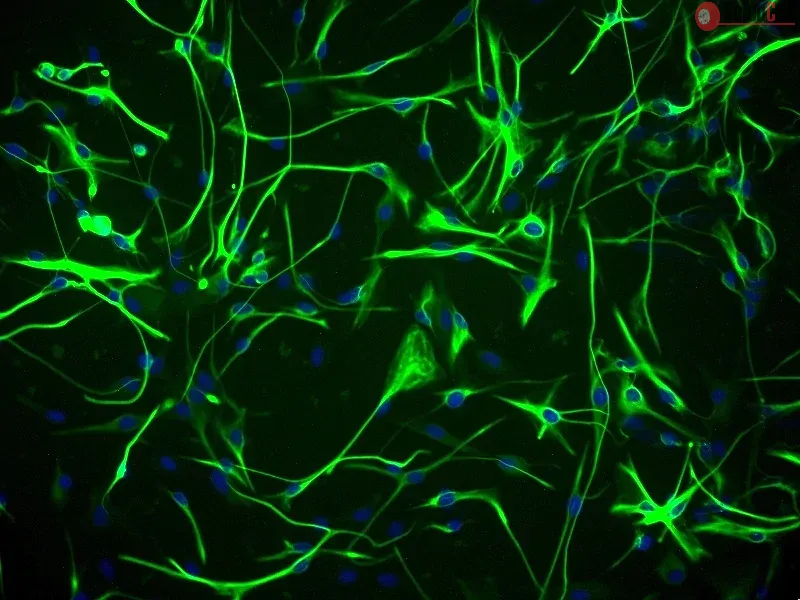
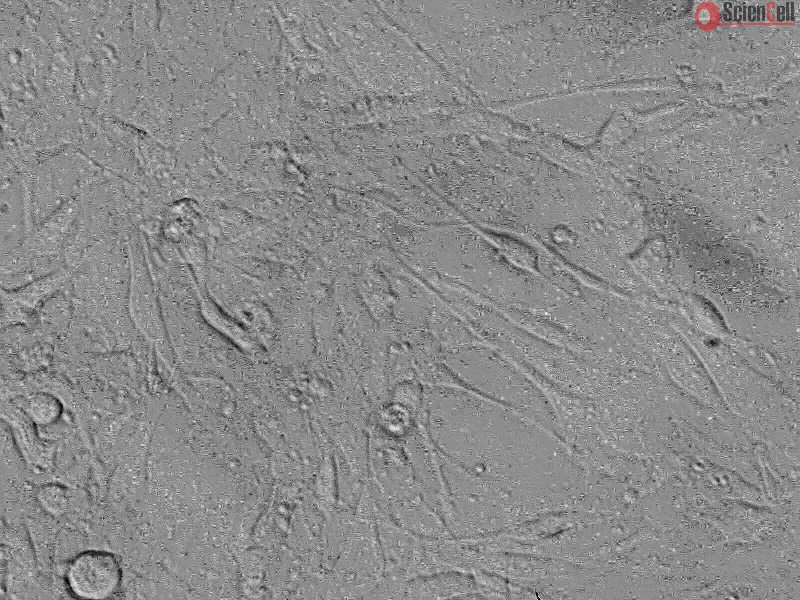
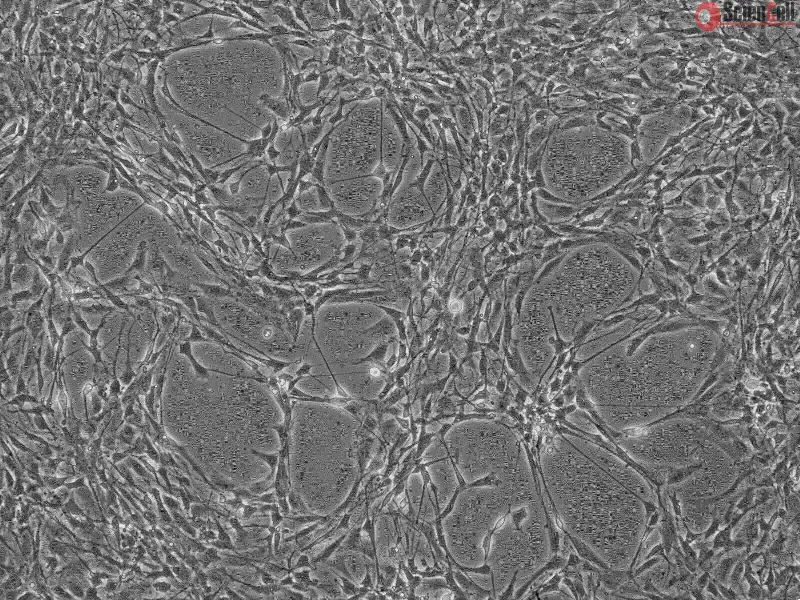
HA-h from ScienCell Research Laboratories are isolated from human hippocampus. HA-h are cryopreserved at passage one and delivered frozen. Each vial contains >5 x 10⁵ cells in 1 ml volume. HA-h are characterized by immunofluorescence with antibody specific to GFAP. HA-h are negative for HIV-1, HBV, HCV, mycoplasma, bacteria, yeast, and fungi. HA-h are guaranteed to further expand for 15 population doublings under the conditions provided by ScienCell Research Laboratories.
Recommended Medium
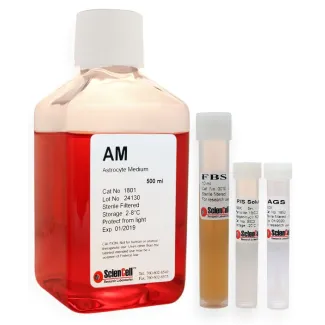
It is recommended to use Astrocyte Medium (AM, Cat. #1801) for culturing HA-h in vitro.
Accumulation of amyloid beta 1–42 (Aβ42) peptide in the extracellular space in the brain is a major observation in Alzheimer’s Disease (AD)-related pathology. Astroc... More
Accumulation of amyloid beta 1–42 (Aβ42) peptide in the extracellular space in the brain is a major observation in Alzheimer’s Disease (AD)-related pathology. Astrocytes are known to play pivotal role in clearing the extracellular aβ peptide from the brain, and the underlying mechanism of Aβ42 peptide clearance remains underappreciated. Like other cell types in the brain, astrocytes have primary cilia, a nonmotile microtubule-based organelle. Aβ42 peptide is reported to affect cilia length or structure in multiple cell types including neurons and inhibit ciliary p75 neurotrophin receptor (p75NTR). To date, the relationship between the extracellular Aβ42 and the astrocytic cilia has not been established. In this work, using primary human hippocampal astrocytes and post-mortem brain specimens obtained from AD patients, we performed molecular, flow cytometry and imaging approaches to investigate the relationship of astrocytic cilia and extracellular Aβ42 peptide. Our data demonstrate that the exogenous Aβ42 peptide treatment in vitro, induces expression of p75NTR in astrocyte cilia in a dose-dependent fashion. We also observed the enrichment of exogenous Aβ42 peptide in the astrocyte cilia and the plasma membrane of astrocytes. In exogenous Aβ42 peptide-treated groups, we observed aberrant proliferation and cell cycle, increased oxidative stress and apoptosis. Interestingly, we observed an enrichment of astrocytic p75NTR expression in the human post-mortem AD-brain. Silencing RNA (siRNA)-mediated knockdown of p75NTR gene significantly minimized the enrichment of exogenous Aβ peptide and the oxidative stress in primary hippocampal astrocytes in vitro. These studies unravel a molecular signaling mechanism that involves Aβ42 peptide-induced p75NTR-mediated oxidative stress that affects overall astrocyte health in AD-associated pathology. Less
The availability of human pluripotent stem cells (hPSCs) offers the opportunity to generate lineage-specific cells to investigate mechanisms of human diseases specific to... More
The availability of human pluripotent stem cells (hPSCs) offers the opportunity to generate lineage-specific cells to investigate mechanisms of human diseases specific to brain regions. Here, we report a differentiation paradigm for hPSCs that enriches for hippocampal dentate gyrus (DG) granule neurons. This differentiation paradigm recapitulates the expression patterns of key developmental genes during hippocampal neurogenesis, exhibits characteristics of neuronal network maturation, and produces PROX1+ neurons that functionally integrate into the DG. Because hippocampal neurogenesis has been implicated in schizophrenia (SCZD), we applied our protocol to SCZD patient-derived human induced pluripotent stem cells (hiPSCs). We found deficits in the generation of DG granule neurons from SCZD hiPSC-derived hippocampal NPCs with lowered levels of NEUROD1, PROX1, and TBR1, reduced neuronal activity, and reduced levels of spontaneous neurotransmitter release. Our approach offers important insights into the neurodevelopmental aspects of SCZD and may be a promising tool for drug screening and personalized medicine. Less
The availability of human pluripotent stem cells (hPSCs) offers the opportunity to generate lineage-specific cells to investigate mechanisms of human diseases specific to... More
The availability of human pluripotent stem cells (hPSCs) offers the opportunity to generate lineage-specific cells to investigate mechanisms of human diseases specific to brain regions. Here, we report a differentiation paradigm for hPSCs that enriches for hippocampal dentate gyrus (DG) granule neurons. This differentiation paradigm recapitulates the expression patterns of key developmental genes during hippocampal neurogenesis, exhibits characteristics of neuronal network maturation, and produces PROX1+ neurons that functionally integrate into the DG. Because hippocampal neurogenesis has been implicated in schizophrenia (SCZD), we applied our protocol to SCZD patient-derived human induced pluripotent stem cells (hiPSCs). We found deficits in the generation of DG granule neurons from SCZD hiPSC-derived hippocampal NPCs with lowered levels of NEUROD1, PROX1, and TBR1, reduced neuronal activity, and reduced levels of spontaneous neurotransmitter release. Our approach offers important insights into the neurodevelopmental aspects of SCZD and may be a promising tool for drug screening and personalized medicine. Less
ScienCell Research Laboratories (SRL) takes pride in being a resource for researchers all over the world. The publications listed here are not meant as an endorsement or confirmation of the reliability of the products.

,-1-mg-ml--2.jpg)