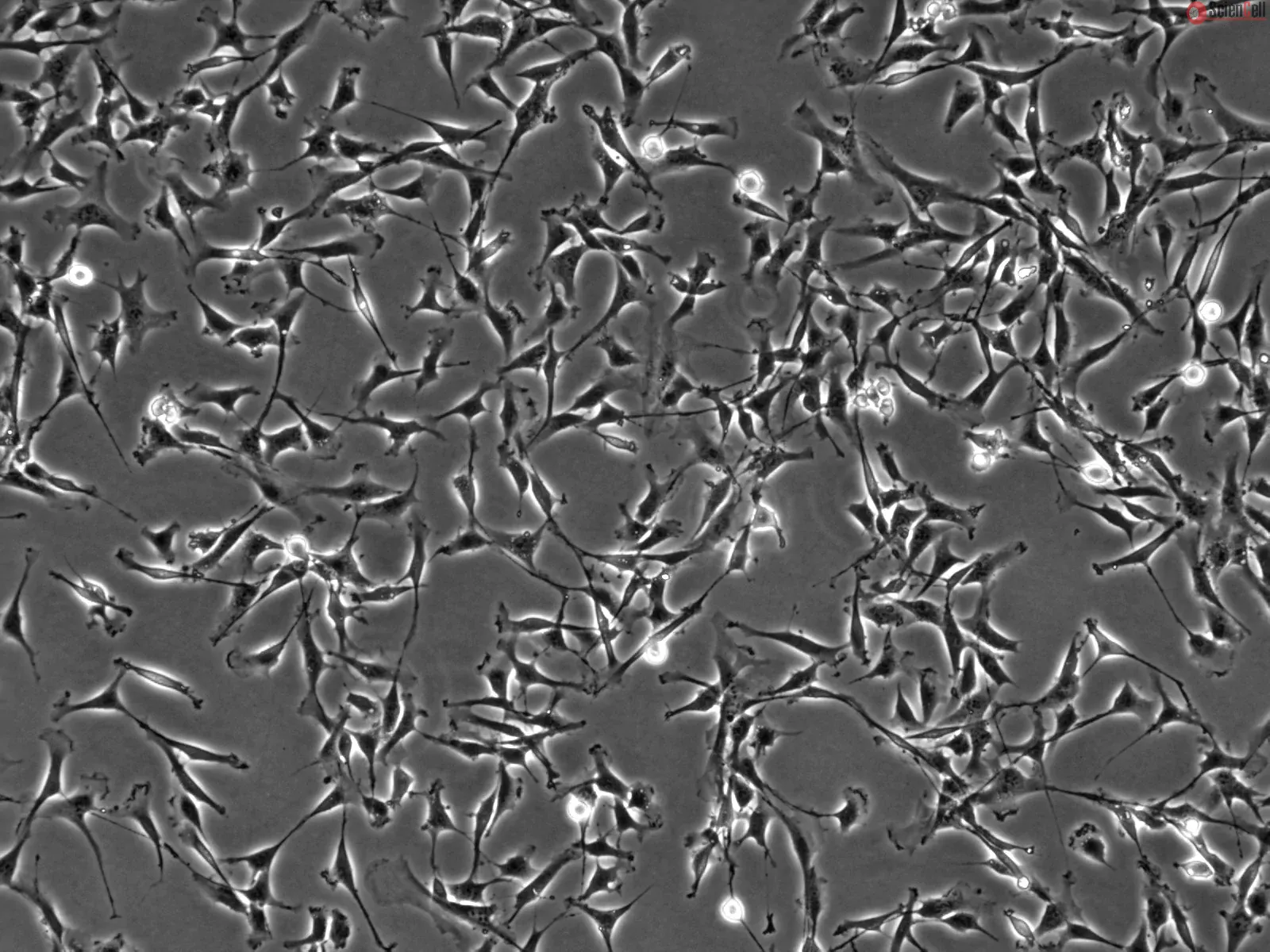
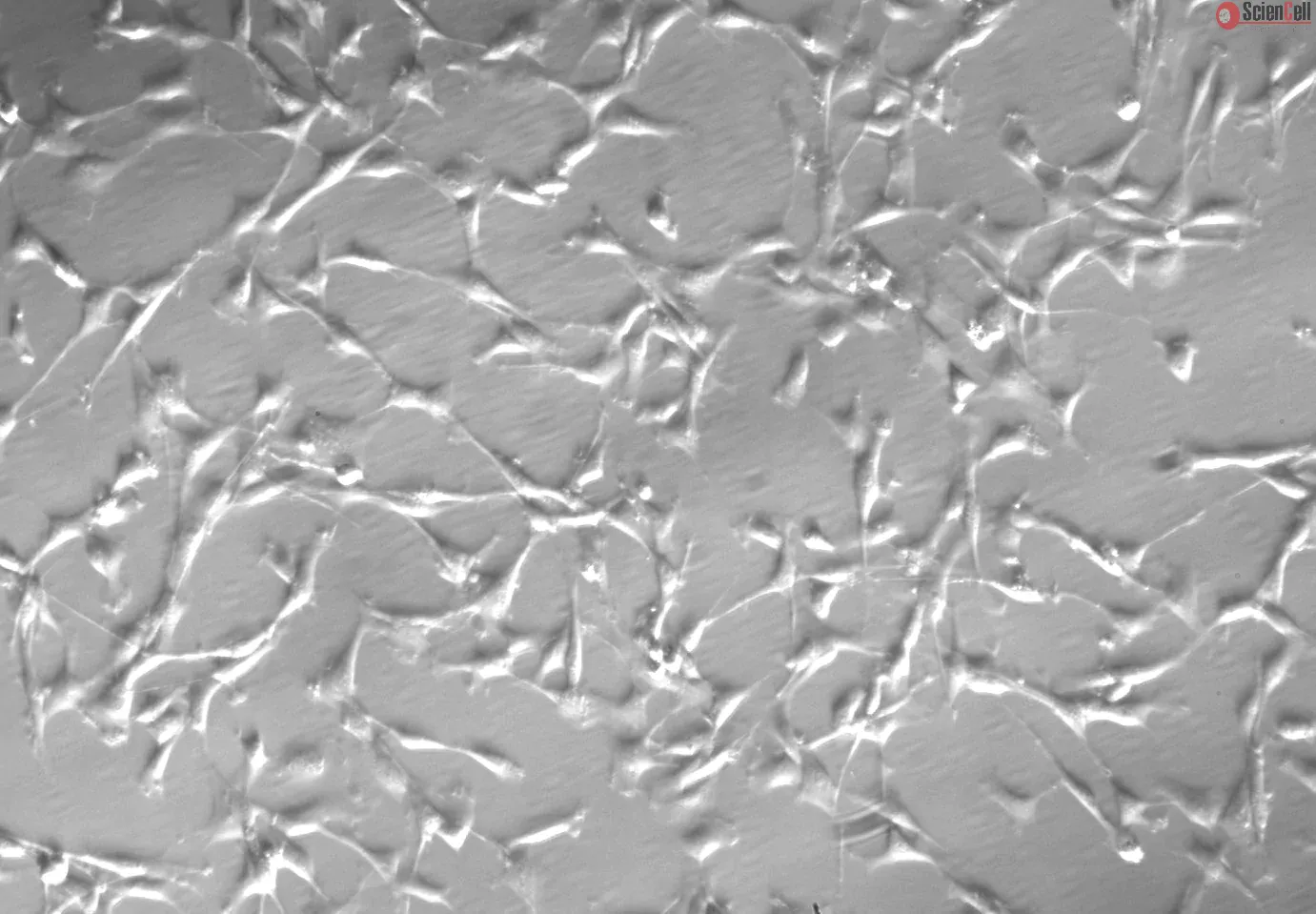
Bovine Dermal Fibroblasts
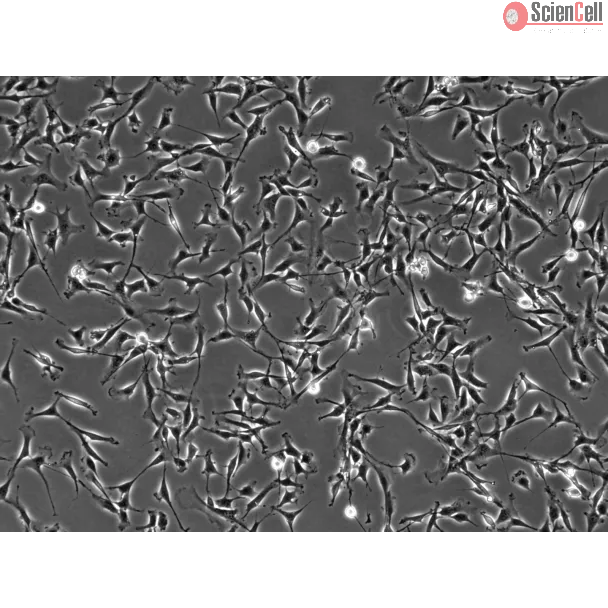
Isolated from fetal bovine skin. BDF are cryopreserved at passage one and delivered frozen. Each vial contains >5 x 10^5 cells in 1 ml volume.
Fibroblasts are mesenchymal cells derived from the embryonic mesoderm. They have been extensively used for a wide range of cellular and molecular studies as they are one of easiest types of cells to grow in culture. Their durability also makes them amenable to a variety of manipulations ranging from studies employing gene transfection to microinjection. In general, fibroblasts secrete a non-rigid extracellular matrix which is rich in type I and/or type III collagen. Dermal fibroblasts have the ability to switch from a proliferative, migratory phase to a contractile, matrix-remodeling phase during wound healing. After injury, integrins, extracellular matrix, and cytokines can modulate fibroblast function in order to stimulate tissue repair. Cultured Bovine Dermal Fibroblasts (BDF) are a useful in vitro model to study the mechanisms of wound healing and to develop therapeutic targets to reduce scarring and fibrosis.
BDF from ScienCell Research Laboratories are isolated from fetal bovine skin. BDF are cryopreserved at passage one and delivered frozen. Each vial contains >5 x 10^5 cells in 1 ml volume. BDF are characterized by immunofluorescence with antibody specific to fibronectin. BDF are negative for mycoplasma, bacteria, yeast, and fungi. BDF are guaranteed to further expand for 5 population doublings under the conditions provided by ScienCell Research Laboratories.
Recommended Medium
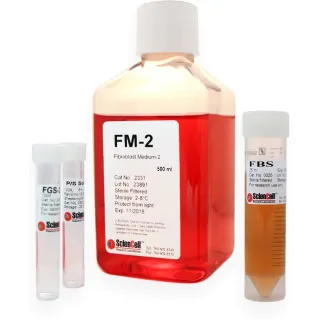
It is recommended to use Fibroblast Medium-2 (FM-2, Cat. #2331) for culturing BDF in vitro.
| Catalog No. | B2300 |
|---|---|
| Country of Manufacture | United States |
| Product Code | BDF |
| Size/Quantity | 1 x 10^6 cells/vial |
| Product use | This product is for research use only. It is not approved for use in humans, animals, or in vitro diagnostic procedures. |
| Storage | Upon receiving, directly and immediately transfer the cells from dry ice to liquid nitrogen and keep the cells in liquid nitrogen until they are needed for experiments. |
| Shipping | Dry ice. |

No Publication available at this time.
,-1-mg-ml--2.jpg)